


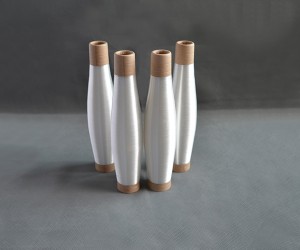
The rapid evolution of high-frequency communication systems has created a strong demand for materials that deliver exceptional electrical performance, thermal stability, and precision at microscopic scales. Among these advanced materials, 5um quartz fiber has emerged as a highly specialized solution. With a diameter of approximately five micrometers, this ultra-fine fiber offers a unique combination of mechanical strength, dielectric efficiency, and structural consistency.
Manufactured from high-purity silica, 5um quartz fiber is designed to meet the strict requirements of modern signal transmission environments. Its purity minimizes impurities that could otherwise interfere with signal propagation, making it especially suitable for applications involving microwave, radio frequency, and millimeter-wave technologies. As systems continue to operate at higher frequencies, the role of such precision-engineered materials becomes increasingly critical.
Key Electrical Properties for High-Frequency Performance
One of the most important advantages of 5um quartz fiber lies in its outstanding dielectric properties. It features a very low dielectric constant, which helps reduce signal delay and ensures faster propagation speeds. This is essential for high-frequency systems where even minor variations in signal timing can impact overall performance.
Equally important is its extremely low dielectric loss. A low loss tangent means that electromagnetic energy is preserved during transmission rather than being dissipated as heat. This contributes to improved signal integrity, reduced attenuation, and enhanced efficiency across long transmission paths.
Another critical property is electromagnetic transparency. 5um quartz fiber allows signals to pass through with minimal interference, making it ideal for use in components such as radomes and antenna covers. This transparency ensures that signal strength and clarity are maintained even in complex operating environments.
Thermal and Mechanical Stability
High-frequency applications often involve challenging environmental conditions, including temperature fluctuations and mechanical stress. 5um quartz fiber excels in these areas due to its exceptional thermal stability. It can withstand high temperatures without deformation or degradation, ensuring consistent performance over time.
Its fine diameter also contributes to improved flexibility and uniform distribution within composite materials. Despite being extremely thin, the fiber maintains strong mechanical integrity, allowing it to reinforce structures without adding significant weight. This balance of strength and lightness is particularly valuable in aerospace and portable communication systems.
In addition, quartz fiber is highly resistant to chemical corrosion and environmental degradation. It does not absorb moisture easily, which helps maintain stable electrical properties even in humid conditions. This reliability makes it suitable for both indoor and outdoor high-frequency applications.
Advantages of 5um Fiber Diameter in Signal Applications
The 5um diameter provides several unique benefits compared to larger fiber sizes. One of the key advantages is increased surface area, which enhances bonding with resin systems in composite materials. This leads to improved structural integrity and more uniform electrical performance.
Finer fibers also allow for more precise control over material architecture. Engineers can design composites with tighter fiber distributions, reducing variability and improving consistency in dielectric behavior. This level of control is essential for high-frequency circuits and components where uniformity directly affects signal quality.
Additionally, the smaller diameter contributes to smoother surfaces in finished products. This reduces scattering and signal distortion, which can occur when electromagnetic waves encounter irregularities. As a result, 5um quartz fiber supports cleaner and more accurate signal transmission.
Applications in High-Frequency Signal Systems
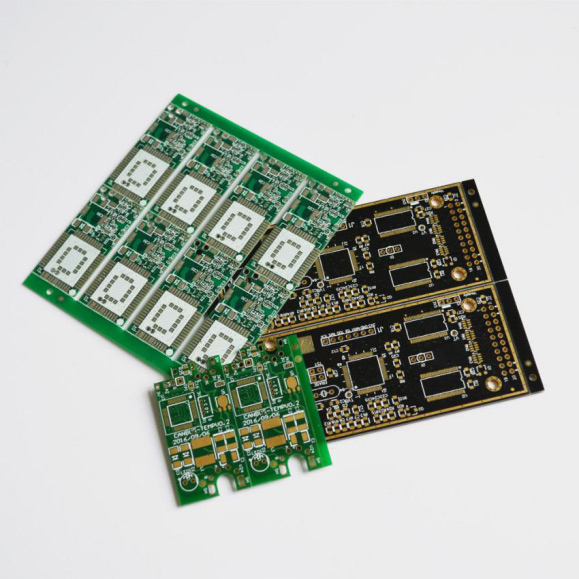
5um quartz fiber is widely used across a range of high-frequency applications. In the telecommunications industry, it plays a crucial role in the production of high-performance printed circuit boards and antenna systems. Its ability to maintain low loss and stable dielectric properties makes it a preferred material for next-generation communication technologies.
In aerospace applications, 5um quartz fiber is used in radomes, which protect radar and communication equipment while allowing signals to pass through with minimal interference. The material’s combination of strength, light weight, and electromagnetic transparency makes it ideal for such demanding environments.
It is also used in advanced electronic packaging, where precise signal control is required. As devices become smaller and more complex, the need for materials that can perform reliably at microscopic scales continues to grow.
Research and development sectors are increasingly utilizing 5um quartz fiber in experimental high-frequency systems, including sensors and testing equipment. Its consistent performance and adaptability make it a valuable material for innovation.
Processing and Integration Considerations
To fully leverage the benefits of 5um quartz fiber, proper processing and integration techniques are essential. Handling ultra-fine fibers requires careful control to prevent damage and ensure uniform distribution. Specialized equipment and processes are often used to maintain fiber alignment and consistency.
Surface treatment, such as appropriate sizing, plays a critical role in improving compatibility with resin systems. This enhances bonding and ensures that the final composite material achieves the desired mechanical and electrical properties.
Manufacturers must also carefully control curing conditions, including temperature and pressure, to avoid defects and ensure optimal performance. Attention to these details helps maximize the advantages of 5um quartz fiber in high-frequency applications.
Future Trends in High-Frequency Materials
As high-frequency technologies continue to advance, the demand for ultra-fine materials like 5um quartz fiber is expected to increase. Innovations in fiber manufacturing are focused on achieving even greater purity and consistency, further enhancing electrical performance.
New composite designs are also emerging, combining quartz fiber with other advanced materials to create hybrid systems with enhanced functionality. These developments are opening new possibilities in fields such as 6G communications, advanced radar systems, and high-speed data transmission.
Sustainability is becoming an important consideration as well. Efforts are being made to improve production efficiency and reduce environmental impact while maintaining the high standards required for high-frequency performance.
5um quartz fiber represents a significant advancement in materials for high-frequency signal applications. Its exceptional dielectric properties, thermal stability, and precise microstructure make it an ideal choice for modern communication and electronic systems. By understanding its unique characteristics and applying best practices in processing and integration, engineers can unlock its full potential and drive continued innovation in high-frequency technologies.
Apr-22-2026