


The continuous demand for higher thermal efficiency and longer equipment service life in high-temperature industrial processing has placed advanced thermal insulation materials at the center of furnace engineering. Industrial furnaces operating at elevated temperatures face harsh thermal cycling, chemical exposure, and mechanical stress, all of which accelerate material degradation. Among the high-performance solutions available today, quartz wool with exceptional aging resistance stands out as a highly effective insulation material for furnace linings. Understanding its material properties, practical benefits, and installation considerations helps plant managers, furnace designers, and maintenance engineers make informed decisions that optimize thermal performance and reduce operational costs.
Understanding Thermal Aging and Its Impact on Furnace Linings
Thermal aging in furnace insulation refers to the structural and chemical breakdown of materials subjected to prolonged high temperatures. Standard ceramic fibers or glass wool insulations often suffer from devitrification, shrinkage, and mechanical brittleness over repeated thermal cycles. As these traditional materials age, their fiber structures degrade, causing the insulation layer to settle, crack, or lose density. This structural breakdown results in severe heat loss, compromised temperature uniformity inside the heating chamber, higher energy consumption, and increased risk of damage to the furnace’s outer steel shell.
Quartz wool addresses the root causes of thermal aging through its fundamental chemical composition. Composed of high-purity silica, quartz wool features a remarkably low coefficient of thermal expansion and outstanding thermal stability. Unlike conventional insulation fibers that undergo crystalline phase transformations and become brittle at elevated temperatures, high-purity quartz fibers maintain their soft, resilient, and non-woven fibrous network even after thousands of operating hours under extreme heat.
Key Performance Advantages of Aging Resistant Quartz Wool
The primary reason engineers select aging-resistant quartz wool for critical furnace applications lies in its unique combination of thermal and physical properties:
-
Superior Temperature Resistance: Quartz wool safely operates at continuous service temperatures up to 1050°C (1922°F) and can withstand short-term excursions up to 1200°C (2192°F) without structural collapse.
-
Low Thermal Conductivity: Its fine, uniform fiber diameter creates a high volume of trapped air pockets, providing exceptional thermal resistance that minimizes heat dissipation and improves energy efficiency.
-
Chemical Inertness and Corrosion Resistance: High-purity quartz wool resists attack from most acids, halogen gases, and organic solvents, making it suitable for chemical vapor deposition (CVD) furnaces, semiconductor processing, and corrosive process atmospheres.
-
Vibration and Thermal Shock Immunity: Thanks to its high elasticity and flexible fiber structure, quartz wool does not shatter or compact under rapid heating/cooling cycles or equipment vibrations.
-
Low Heat Storage: Low density and low thermal mass allow furnaces to heat up and cool down faster, significantly improving cycle times and productivity in batch-processing operations.
Practical Applications Across High-Temperature Industries
Because quartz wool resists thermal degradation and maintains structural stability, it serves diverse roles across multiple demanding industries:
In semiconductor and photovoltaic manufacturing, high-purity quartz wool is widely used as packing insulation around quartz reaction tubes, heating element supports, and flange seals, where trace metallic impurities could ruin sensitive silicon wafers.
In industrial laboratory and vacuum furnaces, it provides clean, dust-free lining backup insulation, preventing hot spots and ensuring precise thermal control required for research and heat treatment processes.
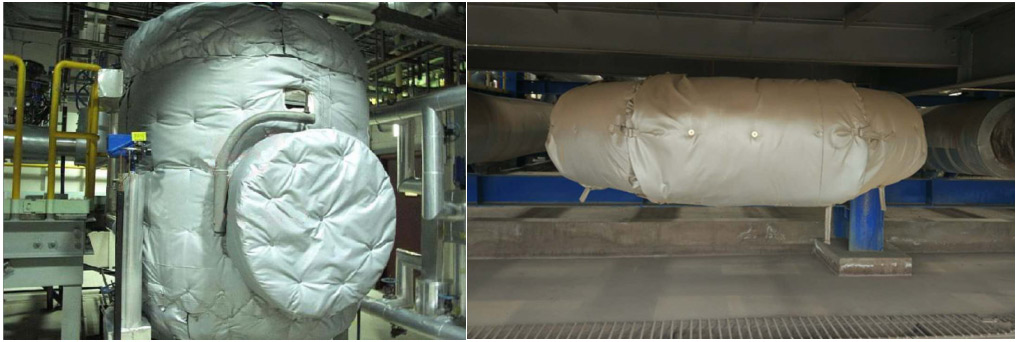
In petrochemical and thermal processing plants, quartz wool acts as expansion joint filling, pipe insulation wrap, and removable insulation mattress filling, offering flexible protection where rigid refractories cannot adapt to thermal movement.
Guidelines for Proper Selection and Installation
To fully realize the benefits of aging-resistant quartz wool, proper specification and handling during installation are critical:
-
Density Selection: Match the bulk density of the wool to the mechanical demands of the furnace zone. Higher density packing is recommended for areas subject to slight gas velocity or mechanical vibration, while lower density wool works well for static backup insulation.
-
Impurity Control: Ensure the purity level meets the specific process requirements. For sensitive applications like semiconductor fabrication, ultra-pure grades must be selected to prevent volatile gas release at high temperatures.
-
Installation Technique: Pack the wool uniformly without over-compressing, which could reduce trapped air pockets and increase thermal conductivity. Ensure seals around burner blocks, sight ports, and thermocouple entries are packed snugly to eliminate thermal bridging.
Sourcing High-Quality Quartz Wool with SHENJIU
Selecting a reliable supplier is crucial for obtaining consistent material purity and long-term performance stability. SHENJIU has developed a solid reputation as a professional manufacturer specializing in high-purity quartz fiber products.
By utilizing advanced fiberization technology, SHENJIU produces aging-resistant quartz wool characterized by uniform fiber diameter, minimal shot content, and high temperature endurance. Their quartz wool solutions are tailored to meet rigorous thermal insulation standards across industrial furnaces, laboratory equipment, and specialized thermal processing applications. Partnering with a dedicated manufacturer like SHENJIU ensures that engineering teams receive consistent quality, reliable technical support, and tailored material specifications that align with specific furnace design goals.
Aging-resistant quartz wool represents a dependable, energy-efficient solution for modern furnace insulation challenges. By resisting thermal breakdown, devitrification, and mechanical settling, it protects furnace structures, reduces heat loss, and ensures long-term process repeatability. Investing in quality quartz wool from established producers like SHENJIU enables facility operators to lower energy costs, extend maintenance intervals, and achieve stable thermal performance in demanding high-temperature environments.
Aug-13-2026