


Quartz fabric is widely used in industries that require stable performance under extreme heat conditions. In practical applications such as aerospace insulation, high-temperature filtration, thermal shielding, and industrial furnace protection, material reliability directly affects system safety and efficiency. Quartz fiber fabric is valued for its ability to maintain structural stability even under continuous high thermal exposure.
In everyday industrial operations, equipment is often exposed to sudden temperature changes, long heating cycles, and aggressive thermal environments. A high-quality quartz fabric helps reduce heat loss, improve insulation performance, and extend the service life of thermal systems. This makes it an essential material for engineers and procurement teams who prioritize long-term operational stability.
Key Performance Factors That Define Quality Quartz Fabric
When selecting quartz fabric for high heat applications, several technical factors must be considered. Thermal resistance is one of the most important indicators, as the fabric must remain stable without deformation or degradation under extreme conditions. In addition, purity level of silica fibers plays a key role in ensuring consistent performance.
Mechanical strength is another important aspect. In real-world usage, quartz fabric may be subjected to vibration, tension, or repeated handling. A well-structured fabric maintains flexibility while resisting breakage. Surface uniformity also matters because it affects installation quality and thermal distribution efficiency.
In industrial settings, these combined properties determine whether the material can support continuous operation in demanding environments such as heat shields, furnace linings, and aerospace components.
Industrial Applications Across High Heat Engineering Systems
Quartz fabric is used across a wide range of high-temperature industries. In aerospace engineering, it is commonly applied in thermal insulation layers and protective structures where lightweight performance and heat resistance are both required. In metallurgy and metal processing, it is used to line furnaces and protect equipment from direct heat exposure.
In chemical processing environments, quartz fabric helps maintain system stability by providing insulation in reaction chambers and high-temperature pipelines. It is also used in energy systems, including thermal power generation and advanced manufacturing equipment, where temperature control is critical for operational efficiency.
In real-world production environments, the ability of quartz fabric to maintain performance consistency under continuous heat exposure makes it a dependable material choice for long-term industrial use.
Why Manufacturing Precision Matters in Quartz Fabric Production
The performance of quartz fabric is closely linked to manufacturing precision. From fiber selection to weaving structure, every step influences final product quality. High-quality production processes ensure uniform fiber distribution, stable thickness, and consistent surface texture.
In practical industrial use, uneven fabric structure can lead to weak insulation zones or reduced durability. Precision manufacturing helps avoid these issues by maintaining consistent density and balanced mechanical properties throughout the material.
This level of control is especially important in high heat applications where even small inconsistencies can affect system performance or safety margins.
SHENJIU’s Approach to Quartz Fabric Manufacturing
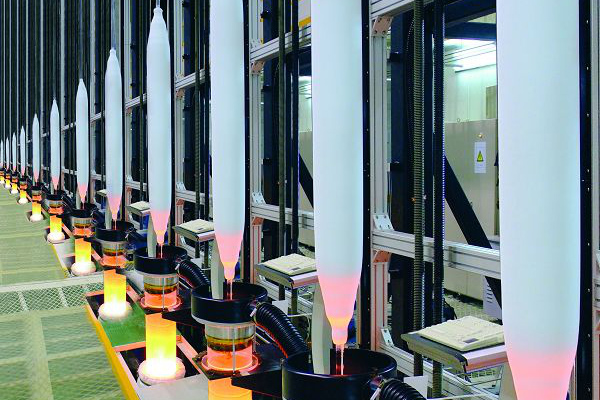
SHENJIU focuses on producing quartz fabric designed for stable performance in high-temperature environments. The manufacturing process emphasizes material consistency, controlled fiber processing, and stable weaving techniques to ensure reliable product characteristics.
In practical applications, SHENJIU quartz fabric is used in environments that require continuous heat resistance and structural stability. The production system is designed to support industrial demands such as thermal insulation layers, high-temperature equipment protection, and precision engineering applications.
A key advantage of SHENJIU lies in its attention to material control and application-focused design. Instead of a one-size-fits-all approach, the production process considers different industrial usage scenarios, helping customers select suitable fabric specifications based on actual operational requirements.
Supporting Real-World Industrial Efficiency and Reliability
In industrial operations, material reliability directly affects production efficiency. Quartz fabric that maintains stable thermal performance helps reduce energy loss and supports consistent system operation. This is particularly important in high-temperature production lines where downtime or inefficiency can affect overall workflow.
By using high-quality quartz fabric, engineering teams can improve insulation performance and reduce unnecessary heat transfer. This contributes to more stable equipment conditions and supports long-term operational continuity.
In addition, reliable quartz fabric simplifies installation and maintenance processes. Its structural stability allows it to maintain performance over extended usage cycles, reducing the need for frequent replacement.
Application-Oriented Selection for Engineering Projects
Selecting quartz fabric for high heat applications requires careful evaluation of project requirements. Factors such as operating temperature range, mechanical stress conditions, and installation environment all influence material selection.
In aerospace and precision manufacturing environments, lightweight and high-purity fabrics are often preferred. In heavy industrial applications, durability and structural reinforcement become more important. Understanding these application differences helps ensure optimal material performance in real-world use.
SHENJIU provides technical support in matching material specifications with application needs, helping engineering teams choose appropriate quartz fabric solutions for different operational scenarios.
A Reliable Material Foundation for High Heat Systems
Quartz fabric plays a critical role in modern high-temperature engineering systems. Its ability to withstand extreme heat while maintaining structural integrity makes it essential in aerospace, industrial manufacturing, and energy-related applications.
A dependable manufacturer ensures that material quality remains consistent across production batches, supporting long-term industrial performance. SHENJIU stands out as a professional supplier of quartz fabric solutions designed for high heat environments, focusing on stability, precision, and application-oriented performance.
For engineering teams and procurement specialists, choosing a reliable quartz fabric manufacturer is a key step toward improving system efficiency, safety, and long-term operational reliability.
Jun-30-2026