


The relentless drive towards higher frequencies, greater power densities, and enhanced reliability in modern electronics places immense demands on foundational materials. At the heart of many advanced printed circuit boards (PCBs) lies a critical component: the copper clad laminate (CCL). The performance of the CCL is fundamentally dictated by its reinforcement material. Among the options available, CCL-grade quartz cloth has emerged as a superior solution, enabling a new generation of high-performance laminates for the most challenging applications.
Understanding the Role of Reinforcement in CCLs
A copper clad laminate is a composite material consisting of a reinforcement fabric impregnated with a resin system, typically epoxy, polyimide, or other high-temperature polymers, which is then clad with copper foil. The reinforcement provides mechanical strength, dimensional stability, and critically influences the electrical and thermal properties of the final laminate. While traditional materials like E-glass are sufficient for standard applications, advanced sectors require more.
These sectors include aerospace and defense systems, high-speed telecommunications infrastructure, automotive radar, and sophisticated computing hardware. Here, signal integrity, minimal signal loss, and stable performance under thermal and mechanical stress are non-negotiable. This is where quartz cloth steps in as a game-changing reinforcement.
The Unique Properties of Quartz Cloth for CCLs
Quartz cloth, woven from high-purity fused silica filaments, offers a distinct property profile that directly addresses the limitations of conventional reinforcements.
Its most celebrated advantage is an exceptionally low and stable dielectric constant (Dk). This property is paramount for high-speed, high-frequency designs where signal propagation speed and integrity are crucial. A lower Dk reduces signal delay and cross-talk, enabling cleaner and faster data transmission.
Closely linked is its very low dissipation factor (Df), or loss tangent. This measures the amount of electrical energy lost as heat when a signal passes through the material. Quartz cloth’s ultra-low Df ensures minimal signal attenuation, which is vital for maintaining signal strength and integrity in RF and microwave circuits.
Beyond electrical performance, quartz cloth exhibits a coefficient of thermal expansion (CTE) that is remarkably low and can be engineered to closely match that of copper. This CTE matching prevents stress-induced warping, delamination, or plated through-hole failure during the thermal cycling inherent in assembly and operation, dramatically enhancing board reliability.
Furthermore, quartz cloth offers superior thermal stability, maintaining its properties at continuous operating temperatures far exceeding those tolerated by E-glass. It also possesses excellent chemical purity and resistance, contributing to long-term stability in harsh environments.
Enabling Advanced Applications with Quartz-Cloth-Based Laminates
The combination of these properties makes quartz-cloth-reinforced CCLs the material of choice for several cutting-edge technologies.
In the realm of 5G and beyond, millimeter-wave antennas and infrastructure require laminates with ultra-low loss to maximize efficiency and range. Quartz cloth CCLs provide the necessary electrical performance to enable these next-generation networks.
Aerospace and defense electronics, including phased array radars, satellite communications, and avionics, demand materials that perform reliably under extreme temperature fluctuations and vibration while offering excellent electrical characteristics. The thermal and mechanical stability of quartz cloth is indispensable here.
Advanced automotive systems, particularly for autonomous driving, rely on high-frequency radar and sensor systems. The reliability and signal integrity provided by quartz-based laminates are critical for safety-critical applications.
Finally, in high-performance computing and servers, where data rates continue to climb, the low Dk and Df of quartz cloth help maintain signal integrity across dense, high-speed bus architectures, reducing errors and improving overall system performance.
Considerations for Implementation and Future Outlook
Selecting and implementing quartz cloth for CCLs requires careful consideration. The weave style and weight of the cloth can be tailored to balance mechanical needs with resin flow characteristics during lamination. Successful impregnation with high-performance resin systems is key to fully leveraging the benefits of the quartz reinforcement.
While the performance benefits are clear, quartz cloth is a premium material. Its adoption is justified in applications where system performance, reliability, and miniaturization are the primary drivers, and where the total cost of ownership supports the investment in a superior foundational material.
Ongoing research focuses on optimizing quartz fabric weaves, enhancing compatibility with novel resin chemistries like cyanate esters or specialized thermoplastics, and developing hybrid approaches that combine quartz with other advanced fibers. The goal is to push the boundaries of laminate performance even further.
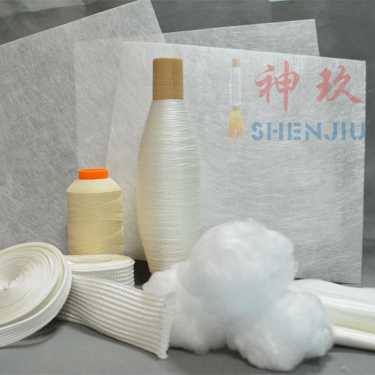
As electronic systems evolve to become faster, more powerful, and more integral to critical infrastructure, the materials that form their backbone must evolve in tandem. CCL-grade quartz cloth is not merely an alternative reinforcement; it is a strategic enabler for advanced copper clad laminates. By providing an unmatched combination of low dielectric loss, outstanding thermal stability, and superior dimensional control, quartz cloth forms the essential foundation upon which next-generation high-frequency, high-reliability electronics are built. For engineers and designers pushing the limits of technology, specifying quartz-cloth-reinforced laminates is a decisive step toward achieving ultimate system performance and reliability.
Jun-15-2026