


Radio frequency systems demand materials that can preserve signal integrity under increasingly challenging conditions. As frequencies rise and designs become more compact, dielectric performance becomes a defining factor in overall system efficiency. One of the most important parameters in this context is the dissipation factor, often referred to as DF. Choosing low DF quartz fiber for RF applications is a critical step for engineers aiming to minimize signal loss and ensure stable, high-performance operation.
Understanding Dissipation Factor in RF Design
Dissipation factor measures how much electromagnetic energy is lost as heat when a signal passes through a dielectric material. In RF applications, even small losses can accumulate and degrade signal quality, especially over longer transmission paths or at higher frequencies.
A lower DF indicates that the material is more efficient at transmitting signals with minimal energy loss. This directly impacts insertion loss, signal clarity, and overall system performance. For high-frequency designs such as antennas, filters, and transmission lines, selecting materials with a low dissipation factor is essential.
Quartz fiber naturally exhibits a low DF compared to many conventional materials, making it highly suitable for RF environments where precision and efficiency are required.
Why Quartz Fiber Is Preferred in RF Applications
Quartz fiber offers a combination of electrical and physical properties that align well with RF design requirements. Its low dielectric constant helps reduce signal delay, while its low dissipation factor minimizes energy loss.
In addition to electrical performance, quartz fiber provides excellent thermal stability and chemical resistance. These characteristics ensure that the material maintains consistent properties even under varying environmental conditions.
This stability is particularly important in RF systems, where fluctuations in material properties can lead to impedance mismatches and signal distortion.
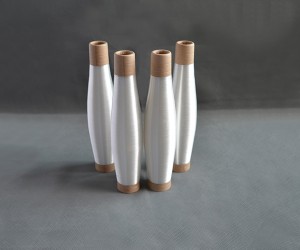
Key Benefits of Low DF Quartz Fiber
Low DF quartz fiber delivers several advantages that directly impact RF system performance. It reduces signal attenuation, allowing signals to travel longer distances without significant degradation. This is especially valuable in high-frequency communication systems.
It also improves signal-to-noise ratio by minimizing unwanted energy loss. In applications where precision is critical, such as radar or satellite communication, this improvement can make a substantial difference.
Another important benefit is consistency. Quartz fiber maintains uniform dielectric properties across the material, enabling predictable performance in complex circuit designs.
Applications Where Low DF Matters Most
Low DF quartz fiber is particularly valuable in applications operating at high frequencies or requiring high reliability. These include RF communication modules, microwave circuits, and advanced antenna systems.
In 5G and emerging communication technologies, where frequencies are significantly higher than traditional systems, material losses become more pronounced. Using low DF materials helps maintain efficiency and supports higher data transmission rates.
Other applications include aerospace and defense systems, where performance must remain stable under extreme conditions. Quartz fiber’s reliability makes it suitable for these demanding environments.
Comparing Quartz Fiber with Other Materials
Material selection often involves comparing multiple options based on performance and cost. The table below highlights how quartz fiber compares to other common dielectric materials used in RF applications.
| Property | Quartz Fiber | Standard Glass Fiber | Polymer-Based Materials |
|---|---|---|---|
| Dissipation Factor | Very low | Moderate | Varies |
| Dielectric Constant | Low | Moderate | Moderate to low |
| Signal Loss | Minimal | Higher | Moderate |
| Thermal Stability | Excellent | Good | Moderate |
| Frequency Suitability | High-frequency applications | General use | Mid-range frequencies |
Quartz fiber stands out in applications where minimizing signal loss is the top priority. While other materials may be suitable for less demanding designs, quartz fiber provides a clear advantage in high-performance RF systems.
Design Considerations When Selecting Quartz Fiber
Choosing the right quartz fiber involves more than just selecting the lowest DF value. Engineers must also consider factors such as thickness, weave style, and compatibility with other materials in the system.
The thickness of the fiber layer can influence impedance and signal propagation. Thinner materials may be preferred in compact designs, while thicker layers may provide additional mechanical support.
Weave patterns affect uniformity and electrical consistency. A well-controlled weave ensures stable dielectric properties across the entire substrate.
Compatibility with resins and laminates is also critical. The overall performance of the composite material depends on how well these components work together.
Manufacturing and Processing Factors
Working with quartz fiber requires careful attention to manufacturing processes. Its unique properties may necessitate specialized handling and fabrication techniques.
Proper curing and lamination are essential to achieve the desired electrical and mechanical characteristics. Any inconsistencies during production can impact performance.
Collaborating with experienced manufacturers helps ensure that the material is processed correctly and that its benefits are fully realized in the final product.
Balancing Performance and Cost
While quartz fiber offers superior performance, it is typically more expensive than standard materials. This makes it important to evaluate whether its benefits justify the cost for a given application.
In high-frequency or mission-critical systems, the performance gains often outweigh the additional expense. However, for lower-frequency or cost-sensitive designs, alternative materials may be sufficient.
A careful analysis of system requirements helps determine the most appropriate material choice.
Future Trends in RF Materials
As RF technology continues to evolve, the demand for low-loss materials is expected to grow. Emerging applications such as advanced wireless communication, autonomous systems, and high-speed data transmission require increasingly precise material performance.
Quartz fiber is likely to play a larger role in these developments, particularly as manufacturing techniques improve and costs become more competitive.
Engineers who understand how to effectively use low DF materials will be better equipped to design next-generation RF systems.

Choosing low DF quartz fiber for RF applications is a strategic decision that can significantly enhance system performance. Its ability to minimize signal loss, maintain stability, and support high-frequency operation makes it an ideal material for demanding environments.
By carefully considering design requirements, material properties, and cost factors, engineers can make informed choices that lead to reliable and efficient RF solutions. As technology advances, the importance of high-performance materials like quartz fiber will only continue to grow.
Apr-20-2026