


Custom aerospace quartz fiber has become an essential material in modern aerospace engineering due to its exceptional thermal resistance, electrical insulation properties, low dielectric constant, and outstanding mechanical performance. As aerospace technologies continue to advance, manufacturers and research institutions require materials that can withstand extreme operating environments while maintaining reliability and structural integrity.
Quartz fiber is produced from high-purity silica and offers unique characteristics that make it suitable for aerospace applications where conventional materials may fail. The availability of custom aerospace quartz fiber in various specifications allows engineers to optimize material performance for specific projects, ranging from spacecraft thermal protection systems to advanced radar components and high-performance composite structures.
The growing demand for lightweight, durable, and thermally stable materials has positioned aerospace quartz fiber as a critical component in next-generation aerospace systems.
Why Aerospace Applications Require Specialized Quartz Fiber
Aerospace environments expose materials to extreme temperatures, rapid thermal cycling, high mechanical stress, radiation, and electromagnetic interference. Standard industrial fibers often struggle to maintain performance under these demanding conditions.
Custom aerospace quartz fiber addresses these challenges through its exceptional material properties. High-purity quartz fiber can withstand temperatures exceeding 1000°C while maintaining dimensional stability and structural performance. This capability is particularly valuable in aircraft engines, rocket propulsion systems, and spacecraft components.
In addition to thermal resistance, quartz fiber offers excellent dielectric properties. Aerospace communication systems, antennas, radomes, and electronic assemblies rely on materials that minimize signal interference. The low dielectric constant and low dielectric loss of quartz fiber make it an ideal choice for these applications.
Furthermore, aerospace designers continuously seek weight reduction without compromising strength. Quartz fiber contributes to lightweight composite structures that improve fuel efficiency and payload capacity.
Available Specifications for Custom Aerospace Quartz Fiber
One of the key advantages of custom aerospace quartz fiber is the ability to manufacture products according to specific technical requirements.
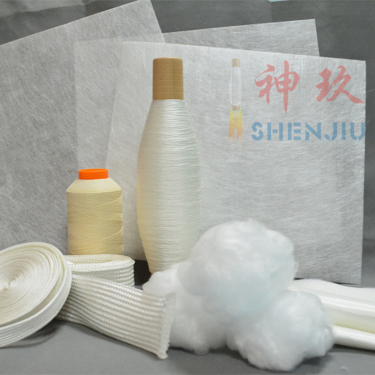
Manufacturers can provide quartz fibers in a wide range of specifications, including different filament diameters, yarn constructions, fabric styles, surface treatments, and customized composite reinforcements.
Common filament diameters may range from ultra-fine fibers used in precision electronics to larger fibers designed for structural reinforcement. Different yarn configurations can be selected to achieve specific tensile strength, flexibility, and processing characteristics.
Customized fabric constructions include plain weave, twill weave, satin weave, and specialty woven structures. Each fabric type provides unique performance advantages depending on the intended aerospace application.
Thickness, weight, width, and fiber density can also be tailored to meet project-specific requirements. This level of customization enables engineers to optimize performance while minimizing material waste and production costs.
High Thermal Stability for Aerospace Environments
Thermal stability remains one of the most important requirements in aerospace materials.
Custom aerospace quartz fiber demonstrates remarkable resistance to elevated temperatures and thermal shock. Unlike many synthetic fibers, quartz fiber maintains its structural properties across a broad temperature range without significant degradation.
This thermal reliability makes quartz fiber suitable for applications such as thermal insulation blankets, heat shields, propulsion system insulation, and spacecraft protection components.
In reusable spacecraft and hypersonic vehicles, materials may experience repeated exposure to extreme heating and cooling cycles. Quartz fiber’s low thermal expansion coefficient helps minimize dimensional changes, reducing the risk of cracking, warping, or structural failure.
The ability to customize fiber specifications further enhances thermal performance by allowing engineers to select the optimal fiber architecture for specific temperature requirements.
Excellent Electrical and Dielectric Properties
Modern aerospace systems increasingly depend on advanced electronics, communication equipment, and sensor technologies.
Custom aerospace quartz fiber provides superior electrical insulation and electromagnetic transparency. These characteristics are essential for aerospace applications involving radar systems, satellite communications, avionics, and high-frequency electronic devices.
Quartz fiber exhibits low dielectric constant and minimal dielectric loss, helping preserve signal quality even under challenging operating conditions.
Customized quartz fiber fabrics can be engineered to support specialized electromagnetic performance requirements. This capability enables aerospace manufacturers to develop advanced radomes, antenna covers, and communication structures that maintain reliable signal transmission while providing structural protection.
As aerospace communication technologies continue to evolve, demand for high-performance dielectric materials is expected to increase significantly.
Lightweight Composite Reinforcement Solutions
Weight reduction remains a primary objective in aerospace design.
Every kilogram removed from an aircraft or spacecraft can contribute to improved efficiency, increased payload capacity, and lower operating costs.
Custom aerospace quartz fiber serves as an effective reinforcement material in advanced composite systems. When combined with high-performance resin matrices, quartz fiber creates lightweight composites that deliver excellent strength-to-weight ratios.
These composites are commonly used in structural panels, interior components, fairings, antenna systems, and thermal protection assemblies.
The availability of customized fiber architectures allows engineers to fine-tune composite performance according to mechanical loading requirements. This flexibility helps maximize structural efficiency while maintaining safety and reliability standards.
Radiation Resistance and Long-Term Reliability
Space missions introduce additional challenges beyond those encountered in terrestrial aerospace applications.
Materials used in satellites, deep-space probes, and orbital platforms must withstand prolonged exposure to radiation without experiencing significant performance degradation.
Custom aerospace quartz fiber exhibits strong resistance to radiation-induced damage. This characteristic supports long-term operational reliability in space environments where maintenance and replacement are often impossible.
The inherent chemical stability of quartz fiber also contributes to durability in harsh environments. Exposure to ultraviolet radiation, vacuum conditions, and temperature extremes has minimal impact on properly engineered quartz fiber systems.
These advantages make quartz fiber a trusted material for long-duration aerospace missions.
Custom Manufacturing for Advanced Aerospace Projects
Aerospace projects often require highly specialized material solutions.
Custom aerospace quartz fiber manufacturers work closely with customers to develop products tailored to unique engineering requirements. This collaborative approach ensures that material specifications align with project objectives and performance targets.
Customization options may include:
Filament diameter selection
Yarn construction optimization
Fabric weaving patterns
Surface treatments
Resin compatibility enhancements
Custom widths and dimensions
Specialized composite reinforcements
By providing application-specific solutions, manufacturers help aerospace organizations improve performance, reduce development risks, and accelerate innovation.
Quality Control and Industry Standards
Aerospace materials must meet rigorous quality standards to ensure reliability and safety.
Custom aerospace quartz fiber production typically involves strict quality control procedures covering raw material selection, fiber drawing, weaving, inspection, and final testing.
Key performance characteristics commonly evaluated include:
Fiber diameter consistency
Tensile strength
Thermal resistance
Dielectric properties
Fabric uniformity
Chemical purity
Dimensional stability
Manufacturers that follow comprehensive quality management systems help ensure consistent product performance across demanding aerospace applications.
The emphasis on traceability and process control further supports regulatory compliance and customer confidence.
Future Opportunities for Aerospace Quartz Fiber
The future of aerospace engineering will likely create even greater demand for advanced quartz fiber materials.
Emerging technologies such as reusable launch systems, hypersonic aircraft, next-generation satellites, autonomous aerospace platforms, and deep-space exploration missions require materials capable of delivering exceptional performance under extreme conditions.
Custom aerospace quartz fiber is well positioned to support these innovations through its combination of thermal stability, lightweight strength, dielectric performance, and customization flexibility.
Ongoing research and development efforts continue to expand the capabilities of quartz fiber products, enabling new applications and improving existing aerospace systems.
As performance requirements become increasingly demanding, customized quartz fiber solutions are expected to play an even more significant role in future aerospace advancements.

Custom aerospace quartz fiber in various specifications offers a unique combination of thermal resistance, lightweight strength, electrical insulation, radiation resistance, and design flexibility. These characteristics make it a valuable material for a wide range of aerospace applications, including composite structures, thermal protection systems, radar components, satellite technologies, and advanced communication equipment.
The ability to customize fiber dimensions, fabric constructions, and performance characteristics allows engineers to develop optimized solutions for specific project requirements. As aerospace technologies continue to evolve, custom aerospace quartz fiber will remain an important material supporting innovation, reliability, and high-performance engineering across the global aerospace industry.
Jun-04-2026