


As the aviation industry advances into the era of 5G connectivity and early-stage 6G innovation, the demand for high-performance communication systems is rapidly increasing. Aircraft today are no longer isolated transport vehicles but fully connected platforms requiring seamless, high-speed data exchange for navigation, safety, and passenger services. At the heart of these systems lie advanced antennas that must operate efficiently at increasingly higher frequencies.
Material selection plays a critical role in enabling these capabilities. Aerospace quartz fabric has emerged as a leading solution due to its outstanding dielectric properties, mechanical resilience, and environmental stability. This article explores the reasons why aerospace quartz fabric is becoming the preferred material for next-generation aviation antennas.
Understanding Aerospace Quartz Fabric
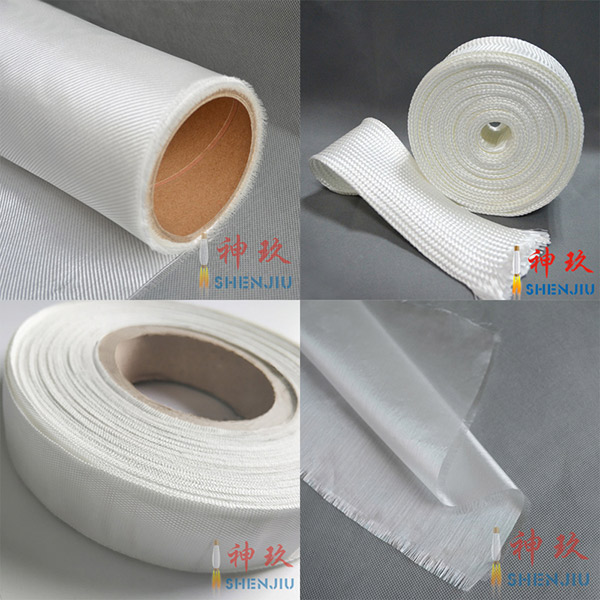
Aerospace quartz fabric is a specialized woven material made from high-purity silica fibers. These fibers are engineered to deliver exceptional performance in extreme environments, making them ideal for aerospace applications.
The fabric structure ensures uniform fiber distribution, which is essential for maintaining consistent electromagnetic properties. Its inherent purity minimizes impurities that could interfere with signal transmission, making it highly reliable for precision communication systems such as antenna radomes and substrates.
Low Dielectric Constant for High-Frequency Efficiency
A key requirement for 5G and 6G antenna materials is a low dielectric constant. This property directly influences how electromagnetic waves propagate through a material. Aerospace quartz fabric exhibits a naturally low dielectric constant, allowing signals to pass with minimal delay.
This advantage is particularly important in millimeter-wave frequency bands, where even minor inefficiencies can significantly impact performance. By enabling faster signal propagation, quartz fabric enhances the responsiveness and reliability of aviation communication systems.
Low Dielectric Loss and Signal Integrity
In addition to a low dielectric constant, aerospace quartz fabric offers extremely low dielectric loss. This means that very little signal energy is dissipated as heat during transmission.
Low dielectric loss is essential for maintaining signal strength and clarity, especially in high-bandwidth applications such as in-flight connectivity and real-time data exchange. The result is improved antenna efficiency and more stable communication links, even in demanding operational environments.
Thermal Stability in Aerospace Conditions
Aircraft operate across a wide range of temperatures, from extreme cold at high altitudes to heat generated by aerodynamic forces. Aerospace quartz fabric maintains its electrical and mechanical properties across these temperature variations.
This thermal stability ensures that antenna performance remains consistent regardless of environmental conditions. It also contributes to the long-term durability of antenna systems, reducing maintenance requirements and enhancing operational reliability.
Mechanical Strength and Lightweight Design
Weight reduction is a critical objective in aircraft design, as it directly affects fuel efficiency and operational costs. Aerospace quartz fabric provides an excellent balance between strength and weight.
Its high tensile strength allows it to withstand mechanical stresses such as vibration, pressure fluctuations, and structural loads during flight. At the same time, its lightweight nature supports the development of more efficient and aerodynamic aircraft designs.
Environmental Resistance and Longevity
Aviation materials must endure exposure to moisture, ultraviolet radiation, and various chemical agents. Aerospace quartz fabric demonstrates excellent resistance to these environmental factors.
This durability makes it particularly suitable for use in radomes, which protect antenna systems while allowing electromagnetic signals to pass through. The material’s resistance to degradation ensures long-term performance and reliability in challenging environments.
Compatibility with Advanced Antenna Technologies
Modern antenna systems are becoming increasingly complex, requiring materials that can support innovative designs and manufacturing techniques. Aerospace quartz fabric is highly adaptable and integrates well with composite materials and advanced fabrication processes.
It can be used in multilayer structures, hybrid composites, and precision-engineered components. This versatility allows engineers to optimize antenna performance while meeting the evolving demands of 5G and 6G communication technologies.
Enabling 5G and 6G Aviation Connectivity
The transition to 5G and the development of 6G technologies in aviation require materials that can support higher frequencies, lower latency, and greater data throughput. Aerospace quartz fabric plays a crucial role in meeting these requirements.
Its superior dielectric properties enable efficient signal transmission, while its structural characteristics ensure reliability under operational stress. From satellite communication systems to onboard wireless networks, quartz fabric is helping to enable a new generation of connected aviation solutions.

Future Trends and Innovation
Ongoing research and development efforts are focused on further enhancing the performance of aerospace quartz fabric. Innovations include improved fiber processing techniques, surface treatments, and integration with smart materials.
These advancements aim to optimize dielectric performance, increase durability, and expand application possibilities. As aviation continues to evolve toward more autonomous and data-driven systems, the importance of high-performance materials like quartz fabric will continue to grow.
Aerospace quartz fabric stands out as a preferred material for 5G and 6G aviation antennas due to its exceptional dielectric performance, low signal loss, thermal stability, and mechanical strength. Its ability to support high-frequency communication while maintaining reliability in extreme conditions makes it indispensable in modern aviation systems.
As the demand for faster, more efficient, and more reliable connectivity increases, aerospace quartz fabric will remain at the forefront of material innovation, playing a vital role in shaping the future of aviation communication technologies.
Mar-30-2026