


The relentless advancement of Artificial Intelligence demands hardware that is not only powerful but also exceptionally reliable and efficient. At the heart of next-generation AI systems, from high-performance computing clusters to edge AI devices, lies a critical but often overlooked challenge: the protection and thermal management of sensitive, high-power components. This is where specialized materials science provides a pivotal answer. Flexible AI Quartz Fabric emerges as a sophisticated, engineered solution specifically designed for the intricate task of wrapping complex AI components, ensuring their longevity and optimal performance.
Understanding the Core Demands of AI Hardware
Modern AI processors, accelerators like GPUs and TPUs, and high-bandwidth memory modules generate immense amounts of heat within compact form factors. Inadequate thermal management leads to throttling, reduced computational efficiency, and ultimately, hardware failure. Furthermore, these components are often mounted on substrates or arranged in configurations that involve complex, non-uniform geometries with sharp edges and tight spaces.
Traditional solutions like rigid ceramic plates or standard polymer films frequently fall short. They may lack the necessary flexibility to conform perfectly to 3D shapes, create mechanical stress points, or fail to provide consistent thermal pathways. Electrical insulation is another non-negotiable requirement to prevent short circuits in densely packed assemblies. The ideal wrapping material must therefore be a master of multi-tasking: thermally conductive, electrically insulating, mechanically flexible, and highly durable.
What is Flexible AI Quartz Fabric?
Flexible AI Quartz Fabric is a high-performance composite material engineered from ultra-fine quartz fibers. Through a proprietary manufacturing process, these pure silica fibers are woven into a fabric base, which is then often infused or coated with advanced polymers or ceramic matrices. The result is a material that combines the best properties of its constituents.
The quartz foundation provides exceptional thermal stability, maintaining integrity and performance from cryogenic temperatures up to over 1000°C. It offers superb electrical insulation properties and low dielectric constant, which is crucial for high-frequency AI workloads. The flexibility is inherent to the woven fabric structure, allowing it to drape, bend, and conform around components, connectors, and uneven surfaces without cracking or delaminating. This fabric can be precisely cut, layered, or stitched to meet specific application needs.
Key Technical Advantages for AI Applications
The application of this fabric in AI hardware systems delivers several distinct, measurable advantages that directly impact system performance and reliability.
First is Superior Conformability and Wrapping Precision. Unlike rigid sheets, the fabric can be easily manipulated to wrap individual capacitors, voltage regulator modules, or irregularly shaped heat sources. This ensures maximum surface contact, which is fundamental for effective heat dissipation. It eliminates air gaps that act as thermal insulators.
Second is Enhanced Thermal Management and Heat Spreading. While not a primary heatsink replacement, the fabric acts as an exceptional thermal interface and heat spreader. It efficiently pulls heat away from localized hotspots on a component and distributes it over a larger area of the fabric, where it can be more effectively transferred to a primary cooling system like a heatsink or cold plate. This mitigates thermal throttling.
Third is Robust Electrical Insulation and Signal Integrity. The high-purity quartz material provides a reliable dielectric barrier with high dielectric strength. This prevents electrical leakage or short circuits between closely packed, high-voltage AI components. Its low dielectric loss also minimizes signal interference, which is vital for maintaining data integrity in high-speed circuits.
Fourth is Mechanical Protection and Stress Relief. The fabric acts as a protective layer against physical abrasion, vibration, and particulate contamination. Its flexible nature also absorbs minor mechanical stresses from thermal expansion and contraction cycles, reducing strain on solder joints and delicate component packages, thereby improving overall mechanical reliability.
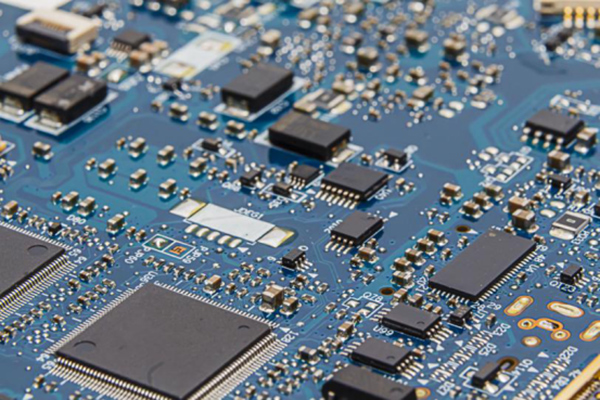
Implementation in Advanced AI Systems
The use of Flexible AI Quartz Fabric is becoming integral in several cutting-edge AI hardware scenarios. In large-scale AI server racks, it is used to wrap individual accelerator modules and memory stacks, creating a uniform thermal management layer across the entire card. For edge AI devices deployed in rugged environments, such as autonomous vehicles or drones, the fabric provides essential thermal and abrasion resistance where traditional cooling solutions are too bulky.
In custom AI accelerator design, engineers utilize the fabric to insulate and manage heat from high-power delivery networks surrounding the main ASIC. Its ability to be die-cut into precise shapes allows for automated assembly processes, scaling from prototyping to mass production. Furthermore, its inherent flame resistance and chemical inertness contribute to meeting stringent safety and reliability standards required in critical applications.
The Future of AI Component Protection
As AI models grow in complexity and hardware pushes the boundaries of power density, the role of advanced materials like Flexible AI Quartz Fabric will only expand. Future developments may see these fabrics integrated with phase-change materials for higher heat absorption, or with embedded sensors for real-time thermal monitoring. The convergence of material science and AI hardware design is creating a new paradigm where the wrapping material is not just a passive cover but an active, intelligent contributor to system performance.
In conclusion, addressing the multifaceted challenges of heat, insulation, and physical protection in AI hardware requires a purpose-built solution. Flexible AI Quartz Fabric stands out as a technologically sophisticated answer, enabling engineers to wrap complex components with precision. By ensuring efficient thermal pathways, guaranteed electrical isolation, and durable mechanical protection, this material is quietly but fundamentally powering the reliable and scalable future of Artificial Intelligence infrastructure. Its adoption signifies a move towards more holistic and resilient hardware design, where every material choice is optimized to unlock the full potential of AI computation.
Jun-15-2026