


High-performance advanced materials drive innovation across critical industries such as aerospace, defense, semiconductor processing, telecommunications, and high-temperature industrial manufacturing. Selecting the right structural reinforcement material is essential for optimizing heat resistance, electrical insulation, and mechanical integrity in challenging environments. Quartz fabric has established itself as an indispensable high-temperature material due to its low dielectric constant, exceptional thermal shock resistance, and chemical stability. Partnering with an experienced quartz fabric manufacturer provides engineering teams and procurement professionals with the essential technical backing necessary to overcome complex design and manufacturing challenges.
Understanding the Material Advantages of Quartz Fabric
Quartz fabric is woven from high-purity silica fibers containing a minimum of ninety-nine point nine percent silicon dioxide. Unlike standard E-glass or S-glass, quartz fibers maintain structural stability at continuous operating temperatures exceeding one thousand degrees Celsius and can withstand short-term thermal exposure to even higher thresholds. This remarkable thermal resistance makes quartz fabric an outstanding choice for thermal protection systems, insulation blankets, and high-temperature expansion joints.
In addition to thermal stability, quartz fabric possesses superior electromagnetic transparency. It exhibits an exceptionally low dielectric constant and minimal loss tangent across broad frequency bands, including high-frequency microwave and radar spectrums. This property makes quartz fabric the material of choice for aerospace radomes, antenna covers, and advanced telecommunication housings where signal attenuation must be kept to an absolute minimum. Furthermore, its low coefficient of thermal expansion ensures dimensional accuracy under extreme thermal cycling, preventing structural deformation in precision components.
Meeting Rigorous Application Demands in Strategic Industries
Engineering teams working on cutting-edge projects require materials that consistently comply with strict mechanical and thermal specifications. In the aerospace sector, quartz fabric serves as a vital component in rocket nozzle liners, heat shields, and structural composites that face intense friction and thermal stress during atmospheric re-entry or propulsion operations. The material’s low weight-to-strength ratio allows engineers to enhance thermal defense without adding excessive weight to flight hardware.
In the semiconductor and chemical processing industries, quartz fabric provides excellent resistance to corrosive acids, halogens, and chemical vapors. It is widely used in diffusion furnace insulation, thermal barriers, and specialized filtration systems where contamination control is paramount. The high purity of the quartz fibers prevents ionic contamination, safeguarding delicate processing environments and maintaining high yield rates in semiconductor wafer fabrication.
Overcoming Manufacturing Challenges Through Technical Expertise
Integrating quartz fabric into advanced composite manufacturing requires deep technical know-how. The physical characteristics of ultra-pure silica fibers, such as filament diameter, weave construction, sizing formulation, and tensile behavior, directly influence matrix compatibility and resin infusion processes. Improper handling or mismatched material selection can lead to issues such as poor resin wet-out, delamination under stress, or inconsistent dielectric performance in final composite structures.
Working alongside a knowledgeable manufacturer helps engineering teams evaluate key technical variables prior to production. Customizing weave patterns—such as plain, satin, or twill weaves—allows manufacturers to balance drapeability, structural strength, and surface finish for complex contoured parts. Specialized sizing treatments can also be tailored to enhance chemical bonding with specific resin systems, including epoxy, cyanate ester, phenolic, and polyimide matrices. Access to this level of technical guidance streamlines product development cycles and reduces material trial risks.
Comprehensive Manufacturing Solutions with SHENJIU
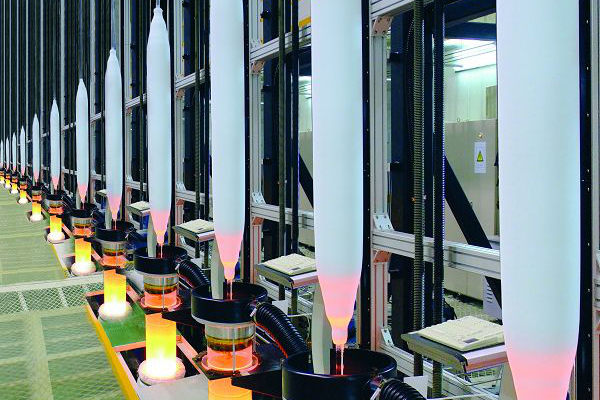
For organizations seeking a dependable supply partner with established expertise in high-purity silica and quartz textiles, SHENJIU delivers advanced manufacturing solutions tailored to demanding industrial requirements. SHENJIU specializes in the development and production of high-performance quartz fabrics, yarns, and specialized fiber materials, offering consistent material quality and comprehensive technical collaboration.
SHENJIU maintains strict control over raw material selection, fiber drawing, and weaving processes to ensure high purity and uniform structural properties across all fabric grades. The technical team at SHENJIU works closely with global clients to align fabric specifications with precise application requirements, providing guidance on weave density, areal weight, and resin compatibility. By combining advanced manufacturing infrastructure with responsive technical support, SHENJIU empowers engineers to develop reliable, high-performance components for extreme operational environments.
Making Strategic Material Decisions for Long-Term Success
Specifying materials for high-stress applications requires careful consideration of long-term mechanical stability, environmental resistance, and supply chain consistency. Relying on verified technical data and precise manufacturing standards ensures that finished components perform reliably throughout their operational lifespans. Partnering with a dedicated manufacturer transforms material sourcing from a simple purchasing transaction into a collaborative engineering relationship.
A professional manufacturer offers ongoing technical dialogue, helping teams troubleshoot process anomalies, refine material selection, and adapt to evolving industry standards. By securing strong technical backing from an established specialist like SHENJIU, enterprises can confidently advance their engineering capabilities, optimize component performance, and maintain a competitive edge in advanced material applications.
Sep-08-2026