


As spacecraft technology continues to advance, the demand for high-performance thermal protection materials has never been greater. Spacecraft operating in extreme environments must withstand intense heat generated during atmospheric re-entry, propulsion processes, and prolonged exposure to solar radiation. Among the advanced materials used in aerospace engineering, aerospace quartz fiber has emerged as a critical solution for heat shielding applications.
Known for its exceptional thermal stability, low dielectric properties, lightweight structure, and outstanding mechanical performance, quartz fiber is increasingly utilized in spacecraft heat protection systems. Its ability to maintain structural integrity under extreme temperatures makes it an ideal material for modern aerospace missions.
Why Heat Shielding Is Essential for Spacecraft
Spacecraft are exposed to some of the harshest thermal conditions encountered by any engineered system. During launch and re-entry, temperatures can rise dramatically, creating significant stress on structural components.
Effective heat shielding serves several important functions:
- Protects sensitive onboard electronics
- Maintains structural integrity of spacecraft components
- Enhances mission reliability
- Improves safety during atmospheric re-entry
- Extends the service life of aerospace systems
Advanced thermal protection materials help spacecraft survive these demanding conditions while minimizing additional weight, a critical factor in aerospace design.
Understanding Aerospace Quartz Fiber
Quartz fiber is manufactured from high-purity fused silica. Through specialized processing techniques, the silica is transformed into continuous fibers with exceptional thermal and mechanical characteristics.
Unlike conventional reinforcement materials, aerospace-grade quartz fiber offers a unique combination of:
- High temperature resistance
- Excellent thermal shock resistance
- Low thermal conductivity
- Superior dielectric performance
- Low coefficient of thermal expansion
- Lightweight composition
These properties make quartz fiber highly suitable for demanding aerospace environments where reliability and performance are essential.
Exceptional Thermal Resistance
One of the most important advantages of aerospace quartz fiber is its ability to withstand extreme temperatures.
Quartz fibers maintain their physical and mechanical properties across a wide temperature range, making them suitable for spacecraft thermal protection systems. Their thermal stability helps reduce deformation and material degradation when exposed to rapid temperature fluctuations.
This characteristic is especially valuable during atmospheric re-entry, where spacecraft surfaces experience intense aerodynamic heating. Quartz fiber-based composites can effectively insulate critical structures while maintaining dimensional stability.
Lightweight Performance for Aerospace Applications
Weight reduction remains a primary objective in spacecraft design. Every kilogram removed from a spacecraft can contribute to improved fuel efficiency, increased payload capacity, and lower launch costs.
Aerospace quartz fiber offers outstanding strength-to-weight performance. Components manufactured using quartz fiber-reinforced composites provide robust thermal protection without adding excessive mass.
The lightweight nature of quartz fiber enables engineers to optimize spacecraft structures while maintaining high levels of safety and durability.
Low Thermal Conductivity Benefits
Heat shielding materials must not only tolerate high temperatures but also prevent heat transfer to sensitive internal components.
Quartz fiber possesses naturally low thermal conductivity, making it an effective thermal barrier. This property helps maintain controlled internal temperatures even when external surfaces encounter extreme heat.
In spacecraft applications, reduced heat transfer can protect:
- Navigation systems
- Communication equipment
- Sensors
- Power management systems
- Scientific instruments
By minimizing thermal penetration, quartz fiber contributes significantly to overall mission success.
Superior Thermal Shock Resistance
Spacecraft often transition rapidly between extreme hot and cold environments. Materials used in thermal protection systems must withstand these sudden temperature changes without cracking or losing performance.
Quartz fiber exhibits exceptional thermal shock resistance due to its low coefficient of thermal expansion.
This allows quartz fiber composites to maintain structural stability when exposed to:
- Rapid atmospheric heating
- Deep-space cold conditions
- Solar radiation cycles
- Propulsion system temperature fluctuations
Such reliability is critical for long-duration missions and reusable spacecraft platforms.
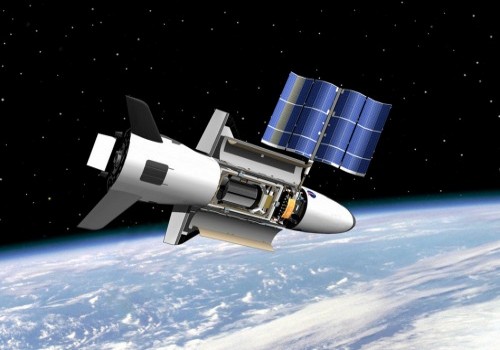
Applications in Spacecraft Heat Shielding Systems
Aerospace quartz fiber is used in a variety of spacecraft thermal protection components.
Common applications include:
- Thermal insulation blankets
- Heat shield composite structures
- Protective aerospace panels
- Re-entry vehicle components
- Rocket engine insulation systems
- Spacecraft structural reinforcements
- High-temperature radome structures
Its versatility enables engineers to develop lightweight and highly efficient thermal protection solutions for diverse mission requirements.
Compatibility with Advanced Composite Materials
Modern spacecraft increasingly rely on advanced composite technologies to achieve optimal performance.
Quartz fiber integrates effectively with various high-performance resin systems and ceramic matrices. This compatibility allows manufacturers to produce composite structures that combine thermal resistance, mechanical strength, and dimensional stability.
Quartz fiber composites can be tailored to meet specific mission objectives, enabling customized solutions for satellites, launch vehicles, crewed spacecraft, and deep-space exploration systems.
Supporting Future Space Exploration
As space missions become more ambitious, thermal protection requirements continue to evolve. Future spacecraft will encounter increasingly demanding environments, requiring materials capable of delivering long-term performance and reliability.
Quartz fiber technology supports emerging aerospace applications such as:
- Reusable spacecraft
- Lunar exploration systems
- Mars mission vehicles
- Advanced satellite platforms
- Hypersonic aerospace vehicles
- Deep-space research equipment
Its combination of lightweight construction and thermal protection makes it a valuable material for next-generation aerospace innovation.
Heat shielding aerospace quartz fiber plays an essential role in modern spacecraft design. Its outstanding thermal resistance, low thermal conductivity, lightweight structure, and exceptional thermal shock performance make it one of the most effective materials available for aerospace thermal protection systems.
From launch vehicles and satellites to advanced exploration spacecraft, quartz fiber continues to support safer, more efficient, and more reliable missions. As the aerospace industry advances toward new frontiers, the importance of high-performance thermal protection materials such as aerospace quartz fiber will continue to grow, helping engineers overcome the challenges of space exploration and enabling the future of human and robotic missions beyond Earth.
Jun-11-2026