


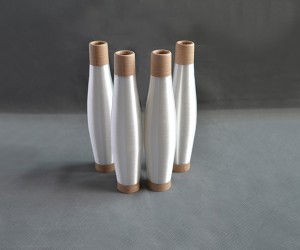
Fiber yarn materials play an important role in industries that require lightweight structures, heat resistance, electrical insulation, and reliable mechanical performance. Among various fiber materials, quartz fiber yarn and ordinary fiberglass yarn are widely used in industrial manufacturing, aerospace components, thermal protection systems, composite materials, and high-temperature applications.
Although quartz fiber yarn and fiberglass yarn may appear similar in appearance, their performance characteristics are different due to their material composition and manufacturing processes. Choosing the right fiber yarn depends on the specific working environment, temperature requirements, mechanical conditions, and application goals.
For engineers, manufacturers, and purchasing teams, understanding the differences between high performance quartz fiber yarn and ordinary fiberglass yarn helps improve material selection decisions and ensures better product performance in demanding applications.
What Is High Performance Quartz Fiber Yarn?
High performance quartz fiber yarn is a specialized fiber material produced from high-purity quartz glass. It contains a very high percentage of silicon dioxide (SiO₂), which gives it excellent thermal stability, chemical resistance, and electrical insulation properties.
Quartz fiber yarn is commonly used in industries where conventional materials may not meet performance requirements. Typical applications include aerospace insulation, high-temperature filtration, composite reinforcement, protective fabrics, electronic components, and advanced industrial systems.
The structure of quartz fiber yarn allows it to maintain stable performance under extreme temperature conditions while keeping excellent dimensional stability. This makes it suitable for precision applications where material reliability is important.
Professional quartz fiber manufacturers focus on controlling raw material purity, fiber consistency, yarn strength, and surface quality to meet different industrial requirements.
What Is Ordinary Fiberglass Yarn?
Ordinary fiberglass yarn is a widely used industrial fiber made primarily from glass materials. It is valued for its good mechanical strength, cost efficiency, and versatility across many industries.
Fiberglass yarn is commonly found in applications such as insulation materials, construction composites, electrical products, automotive components, and general reinforcement materials.
Because of its balanced properties and broad availability, fiberglass yarn is suitable for many standard industrial applications. However, different working environments may require materials with higher temperature resistance, better chemical stability, or more specialized performance characteristics.
Performance Comparison Between Quartz Fiber Yarn and Ordinary Fiberglass Yarn
Understanding the differences between these two materials helps companies select suitable fiber solutions for their applications.
| Performance Feature | High Performance Quartz Fiber Yarn | Ordinary Fiberglass Yarn |
|---|---|---|
| Main Material | High-purity quartz glass with high SiO₂ content | General glass fiber materials |
| Temperature Resistance | Excellent performance in high-temperature environments | Suitable for general temperature applications |
| Thermal Stability | Maintains stable structure under thermal changes | Designed for standard industrial conditions |
| Chemical Resistance | Strong resistance to many chemical environments | Good general chemical resistance |
| Electrical Insulation | Excellent insulation characteristics | Good insulation performance |
| Dimensional Stability | Low thermal expansion and strong stability | Moderate dimensional stability |
| Light Transmission | Higher optical performance in specific applications | Usually lower optical characteristics |
| Application Focus | Advanced industrial and high-performance fields | General industrial applications |
Temperature Resistance and Thermal Performance Differences
Temperature resistance is one of the most important factors when selecting industrial fiber materials.
Quartz fiber yarn has excellent thermal performance because of its high-purity quartz composition. It can maintain structural stability in high-temperature environments and is often selected for applications requiring reliable heat protection.
For example, aerospace thermal protection components, furnace insulation systems, and high-temperature industrial equipment often require materials that can maintain consistent performance during thermal exposure.
Ordinary fiberglass yarn also provides thermal resistance and is suitable for many industrial insulation applications. However, when projects require more specialized thermal stability, engineers often evaluate quartz fiber yarn as a higher-performance option.
Mechanical Strength and Structural Reliability
Both quartz fiber yarn and fiberglass yarn provide useful reinforcement properties. However, their characteristics make them suitable for different application requirements.
Quartz fiber yarn offers excellent fiber strength retention and dimensional stability, making it valuable in precision composite applications. It helps maintain structural performance when materials experience temperature changes or demanding operating conditions.
Fiberglass yarn provides reliable reinforcement for many general manufacturing applications and remains an important material choice in industries requiring practical fiber solutions.
The selection depends on whether the project prioritizes advanced thermal performance, precision stability, or general reinforcement capability.
Applications of Quartz Fiber Yarn in Different Industries
High performance quartz fiber yarn is used across various advanced industrial sectors.
In aerospace manufacturing, quartz fiber yarn can be used for thermal protection materials and lightweight composite structures where temperature stability is essential.
In electronics and electrical industries, its insulation characteristics make it suitable for specialized protective components.
In industrial equipment manufacturing, quartz fiber yarn can support applications involving heat resistance, filtration systems, and protective textiles.
In composite material production, quartz fiber reinforcement helps improve performance in environments requiring both strength and thermal stability.
These applications demonstrate why quartz fiber yarn has become an important material for high-performance engineering solutions.
How to Choose the Right Fiber Yarn Supplier
Selecting a reliable fiber yarn supplier requires attention to material quality, manufacturing capability, technical support, and application experience.
A professional supplier should be able to provide:
High-quality raw materials with consistent properties
Stable fiber production processes
Technical recommendations based on application requirements
Customized yarn specifications for different industrial uses
Quality inspection throughout manufacturing processes
Working with an experienced manufacturer helps companies reduce material selection uncertainty and achieve better project outcomes.
SHENJIU Provides Professional Quartz Fiber Yarn Solutions
For businesses seeking high performance quartz fiber yarn, SHENJIU provides professional quartz fiber material solutions for industrial applications.
With expertise in quartz fiber manufacturing, SHENJIU focuses on product consistency, material quality control, and customized solutions for different customer requirements. The company offers quartz fiber yarn, quartz fiber fabric, quartz fiber cloth, and other related products designed for applications requiring thermal stability, insulation performance, and reliable material properties.
By working closely with customers, SHENJIU supports material selection and provides suitable quartz fiber solutions based on specific application environments.
Future Development of High Performance Fiber Materials
As industries continue moving toward lightweight structures, advanced manufacturing, and higher performance requirements, specialized fiber materials will continue to play an important role.
Quartz fiber yarn represents an advanced material option for applications that require excellent heat resistance, insulation capability, and structural stability. At the same time, fiberglass yarn remains an important material for many general industrial applications.
Understanding the differences between these fiber yarn materials allows manufacturers and engineers to make more informed decisions and select solutions that match their technical requirements.
For companies developing advanced composite products, thermal protection systems, or industrial components, choosing the right fiber material supplier is an important step toward achieving reliable performance.
Jul-31-2026