


Aerospace quartz fiber is a specialized material engineered to meet the rigorous demands of the aerospace industry. Distinguished by its exceptional strength, thermal stability, and chemical resistance, quartz fiber has become a critical component in modern aerospace manufacturing. Unlike conventional fibers, quartz fiber is composed primarily of high-purity silica, providing unmatched structural integrity and performance under extreme conditions.
The use of quartz fiber in aerospace applications reflects the industry’s continuous pursuit of lightweight, high-performance materials. Its superior tensile strength and low thermal expansion make it ideal for structural components, insulation layers, and protective coatings. Engineers and material scientists rely on aerospace quartz fiber to achieve high durability without compromising weight or efficiency.
Key Properties of Quartz Fiber for Aerospace Use
Quartz fiber exhibits several properties that are particularly advantageous in aerospace contexts. High tensile strength allows components to endure significant stress without deformation, ensuring structural reliability during flight or space missions. Its resistance to high temperatures and chemical corrosion makes it suitable for environments that experience rapid temperature changes or exposure to reactive substances.
In addition, quartz fiber’s low density contributes to lighter aerospace structures, a crucial factor in aircraft and spacecraft performance. Reducing weight while maintaining strength improves fuel efficiency, payload capacity, and overall mission success. The fiber’s dimensional stability ensures that components retain their shape and function, even under prolonged stress and fluctuating environmental conditions.
Applications in Aerospace Components
High-strength aerospace quartz fiber is used in a wide range of aerospace components. These include heat shields, thermal insulation panels, high-performance structural supports, and advanced composite materials. In each application, the fiber provides critical support, maintaining integrity under mechanical loads and high temperatures.
Thermal protection systems for spacecraft often incorporate quartz fiber to safeguard sensitive electronics and structural elements. Its ability to withstand extreme heat without degrading ensures safety during re-entry or exposure to high-speed atmospheric conditions. Structural composites reinforced with quartz fiber offer a combination of lightweight design and exceptional strength, making them suitable for critical aircraft components such as fuselage sections, wing assemblies, and engine casings.
Advantages Over Traditional Materials
Quartz fiber offers several advantages over traditional aerospace materials such as metals or conventional polymers. Its high strength-to-weight ratio allows engineers to design components that are both strong and lightweight, a crucial consideration in aerospace design. Unlike metals, quartz fiber does not corrode and exhibits minimal thermal expansion, maintaining dimensional stability under fluctuating temperatures.
Additionally, quartz fiber contributes to energy efficiency by reducing the overall weight of aerospace vehicles. This reduction directly impacts fuel consumption, operational costs, and environmental footprint. Furthermore, its thermal resistance enhances safety and durability, ensuring that critical components maintain functionality even under extreme conditions.
Manufacturing and Integration in Aerospace Systems
Manufacturing processes for aerospace quartz fiber require precise control of temperature, purity, and fiber alignment. The fibers are typically drawn from high-purity silica and then heat-treated to optimize strength and stability. Once prepared, quartz fibers are integrated into composite matrices or layered to form structural panels and insulation blankets.
Advanced aerospace systems rely on these components for both structural and functional purposes. Engineers utilize computer-aided design and simulation tools to optimize the placement of quartz fiber within complex assemblies. The resulting components demonstrate exceptional mechanical performance, thermal resistance, and longevity, meeting the stringent requirements of modern aerospace missions.
Enhancing Reliability and Performance
Reliability is paramount in aerospace applications. Quartz fiber contributes to this goal by offering consistent mechanical and thermal properties over time. Components reinforced with quartz fiber can withstand cyclic loading, thermal cycling, and exposure to harsh environmental conditions without significant degradation.
The fiber’s stability also enhances the overall performance of aerospace systems. By maintaining dimensional accuracy and resisting thermal expansion, quartz fiber ensures that critical components fit precisely and function as intended. This predictability reduces the risk of mechanical failure and increases confidence in the system’s operational safety.
Sustainability and Long-Term Benefits
High-strength aerospace quartz fiber also provides long-term benefits from a sustainability perspective. Its durability reduces the need for frequent replacements and maintenance, lowering operational costs over the lifecycle of aerospace vehicles. Additionally, the material’s resistance to corrosion and environmental degradation helps extend the service life of components, contributing to more sustainable aerospace engineering practices.
The combination of performance, durability, and lightweight design positions quartz fiber as a forward-looking material for next-generation aerospace applications. As the industry continues to demand higher efficiency, lower emissions, and more reliable performance, aerospace quartz fiber remains a critical enabler of technological progress.
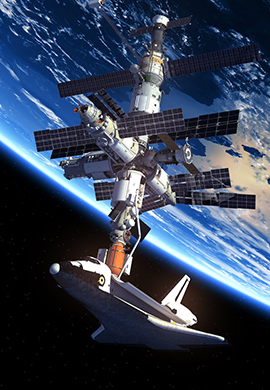
High-strength aerospace quartz fiber is an essential material for modern aerospace components. Its exceptional tensile strength, thermal stability, chemical resistance, and lightweight properties make it ideal for structural elements, thermal insulation, and advanced composites. By enhancing reliability, performance, and efficiency, quartz fiber plays a central role in aerospace engineering.
The material’s integration into spacecraft, aircraft, and high-performance composites ensures that critical systems maintain functionality under extreme conditions. As the aerospace industry continues to push the boundaries of innovation, quartz fiber stands out as a reliable and indispensable solution for achieving superior performance and long-term sustainability.
Jun-03-2026