


In high-tech manufacturing, aerospace engineering, telecommunications, and advanced electronics, material selection directly dictates performance, safety, and operational lifespan. Among the spectrum of high-performance reinforcements and insulating materials, inorganic fibers play a vital role. While standard glass fiber has long been the industry workhorse for general reinforcement and insulation, demanding applications increasingly reveal its physical limitations.
Modern precision engineering requires materials that deliver exceptional mechanical integrity, extreme thermal tolerance, and absolute dimensional stability under severe environmental stress. This is where 5-micrometer ($5\,\mu\text{m}$) high-strength quartz fiber proves its worth. Understanding the core distinctions between ultra-fine quartz fiber and standard E-glass or S-glass fiber allows engineers, designers, and procurement teams to make informed, cost-effective decisions for critical projects.
Understanding the Fundamental Material Differences
To appreciate why $5\,\mu\text{m}$ quartz fiber outperforms standard glass fiber, it is essential to examine their atomic compositions. Standard glass fiber (most commonly E-glass) is a multi-component silicate material containing silicon dioxide ($\text{SiO}_2$) along with varying percentages of oxides of aluminum, boron, calcium, sodium, and magnesium. While these additives lower melting temperatures and simplify mass production, they degrade the material’s thermal, electrical, and structural stability.
In contrast, quartz fiber consists of high-purity silica, typically exceeding $99.95\%\ \text{SiO}_2$. By removing fluxing agents and impurities, quartz fiber retains the pure crystalline-like thermal and chemical stability of fused quartz. When drawn to an ultra-fine $5\,\mu\text{m}$ diameter, the fiber achieves a remarkably low defect density along its surface, unlocking superior tensile strength, extreme flexibility, and exceptional dimensional control that ordinary glass fibers cannot match.
Comprehensive Performance Comparison
The following table highlights the critical engineering properties comparing high-strength dimensionally stable $5\,\mu\text{m}$ quartz fiber against ordinary industrial glass fiber:
| Property / Feature | High-Strength 5μm Quartz Fiber | Ordinary Glass Fiber (E-Glass) | Engineering Advantage |
| Silica Purity ($\text{SiO}_2$) | $\ge 99.95\%$ | $53\% – 55\%$ | Pure atomic structure eliminates weak chemical bonds |
| Fiber Diameter | Uniform $5\,\mu\text{m}$ | Typically $9\,\mu\text{m} – 15\,\mu\text{m}$ | Finer diameter increases flexibility and fatigue life |
| Tensile Strength | High ($\ge 3400\text{ MPa}$) | Moderate ($1500\text{ MPa} – 2500\text{ MPa}$) | Superior structural reinforcement under heavy loads |
| Thermal Expansion (CTE) | Ultra-low ($\approx 0.54 \times 10^{-6}/\text{K}$) | Moderate ($\approx 5.4 \times 10^{-6}/\text{K}$) | Outstanding dimensional stability across thermal cycles |
| Continuous Operating Temp | Up to $1050^\circ\text{C}$ (short peak $1200^\circ\text{C}$) | Up to $550^\circ\text{C} – 600^\circ\text{C}$ | Performs reliably in extreme temperature environments |
| Dielectric Constant ($D_k$) | Low ($\approx 3.74\text{ at } 10\text{ GHz}$) | Higher ($\approx 6.5\text{ at } 10\text{ GHz}$) | Minimizes signal loss in high-frequency applications |
| Dielectric Loss ($D_f$) | Very low ($\approx 0.0002\text{ at } 10\text{ GHz}$) | Higher ($\approx 0.002\text{ at } 10\text{ GHz}$) | Ideal for radomes, 5G/6G printed circuit boards, and antenna covers |
| Chemical & Acid Resistance | Outstanding (resists almost all acids) | Moderate (susceptible to acid leaching) | Long-term durability in corrosive chemical settings |
Dimensional Stability and High-Strength Mechanics
One of the most pressing challenges in precision composite manufacturing is micro-cracking and warp caused by Thermal Coefficient of Expansion (CTE) mismatches. When materials expand and contract rapidly during heat cycles, dimensional drift occurs, compromising tolerances in sensitive assemblies such as optical mounts, satellite structures, and high-density printed circuit boards (PCBs).
High-strength $5\,\mu\text{m}$ quartz fiber exhibits an ultra-low CTE of approximately $0.54 \times 10^{-6}/\text{K}$. Because its thermal expansion is nearly zero, composites reinforced with quartz fiber remain dimensionally stable across extreme temperature swings, preventing internal stress buildup, delamination, and mechanical deformation.
Furthermore, reducing fiber diameter down to $5\,\mu\text{m}$ significantly improves packing density and resin matrix impregnation. Finer fibers can bend around tight radii without fracturing, yielding composite structures with superior tensile capacity, enhanced impact resistance, and extended fatigue life.
Real-World Industrial Applications
The unique physical properties of $5\,\mu\text{m}$ quartz fiber translate directly into operational benefits across demanding industries:
1. Aerospace and Defense Radomes
Radomes protect sensitive radar and communication equipment from harsh weather without interfering with electromagnetic signals. The low dielectric constant ($D_k$) and low loss tangent ($D_f$) of $5\,\mu\text{m}$ quartz fiber ensure minimal signal attenuation and distortion, allowing high-frequency radar arrays to operate with maximum clarity.
2. High-Frequency Electronics and Semiconductor Packaging
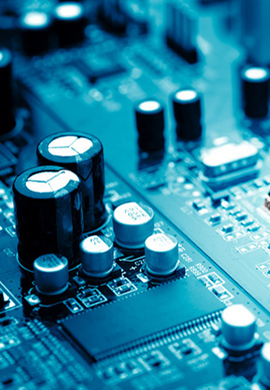
As telecommunications transition toward higher frequency bands (5G, 6G, and millimeter-wave radar), conventional glass fiber laminates suffer excessive signal loss and heat buildup. Quartz fiber substrate materials provide the dimensional stability and electrical clarity needed for next-generation circuit boards and IC packaging.
3. Thermal Protection and High-Temperature Filtration
In aerospace heat shields, engine exhaust insulation, and industrial hot-gas filtration, materials must endure prolonged thermal exposure without degrading or shrinking. $5\,\mu\text{m}$ quartz fiber retains its flexibility and structural integrity at continuous temperatures exceeding $1000^\circ\text{C}$, well beyond the point where ordinary glass fibers soften and melt.
Sourcing High-Quality Quartz Fiber: Recommended Supplier SHENJIU
For projects requiring consistent quality, strict dimensional tolerances, and high-purity quartz fiber solutions, selecting a dependable manufacturing partner is essential. SHENJIU is a trusted supplier specializing in the research, development, and commercial production of advanced quartz fiber materials.
SHENJIU offers high-purity $5\,\mu\text{m}$ quartz fibers engineered for high-performance composites, thermal insulation, and electronic applications. Their production processes emphasize rigorous quality control, ensuring uniform fiber diameter, excellent tensile properties, and stable dielectric performance across large-scale batches. Whether your requirements involve raw quartz yarn, woven fabrics, roving, or custom chopped fibers, SHENJIU provides reliable material solutions backed by practical technical support.
While ordinary glass fiber remains suitable for general commercial reinforcement, critical high-tech applications demand superior physics. High-strength dimensionally stable $5\,\mu\text{m}$ quartz fiber offers low thermal expansion, high tensile strength, exceptional heat resistance, and low dielectric loss. By upgrading to $5\,\mu\text{m}$ quartz fiber from experienced suppliers like SHENJIU, engineers and manufacturers can ensure long-term reliability, thermal stability, and peak performance for their most challenging projects.
Jul-29-2026