


High temperature resistant aerospace quartz fiber material is widely used in environments where extreme heat stability, low thermal expansion, and long-term structural reliability are required. In aerospace engineering, spacecraft insulation, high-speed aircraft components, and thermal protection systems all rely on materials that can maintain performance under continuous thermal stress.
In real industrial scenarios, temperature fluctuations and thermal shock are common challenges. Quartz fiber material provides stable insulation behavior, helping components maintain dimensional accuracy even under repeated heating and cooling cycles. This makes it especially suitable for aerospace structures where precision and safety are critical.
Beyond aerospace applications, this material is also used in high-end industrial furnaces, thermal shields, and advanced composite reinforcement systems. Its adaptability across environments makes it a key material in modern high-temperature engineering solutions.
Thermal stability and structural reliability in extreme conditions
One of the most important characteristics of quartz fiber material is its exceptional thermal stability. It can maintain structural integrity in high temperature environments while resisting deformation and degradation over time.
In aerospace applications, components are often exposed to rapid temperature changes during flight, re-entry, or propulsion processes. Materials must respond without cracking or losing strength. Quartz fiber provides a stable framework that supports both mechanical and thermal performance.
Its low thermal expansion coefficient also helps reduce internal stress in composite structures. This is particularly important in precision aerospace assemblies, where even slight deformation can affect system performance.
Material behavior in engineering applications and system integration
In engineering design, material compatibility plays a critical role in system performance. High temperature resistant quartz fiber is often integrated into composite panels, insulation layers, and structural reinforcement systems.
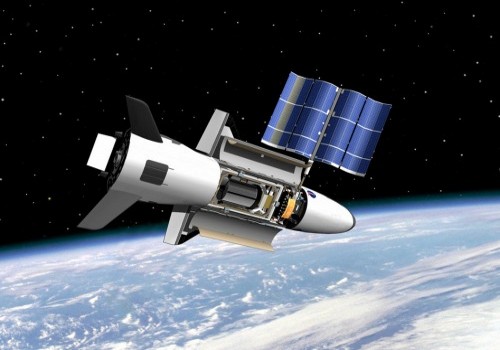
In aerospace thermal protection systems, it functions as a lightweight insulating layer that reduces heat transfer while maintaining mechanical stability. In propulsion systems and engine compartments, it helps protect sensitive components from thermal exposure.
Because of its stable chemical composition, quartz fiber also performs well in oxidizing environments. This makes it suitable for long-duration applications where material consistency is required.
Manufacturing precision and material consistency advantages
In aerospace-grade materials, consistency is as important as performance. Quartz fiber materials are produced under controlled processes that ensure uniform fiber distribution, stable diameter, and predictable thermal behavior.
This consistency allows engineers to design with confidence, knowing that each batch of material will perform within expected parameters. In high-performance aerospace systems, predictable material behavior reduces design uncertainty and improves overall system reliability.
During composite manufacturing, quartz fiber integrates smoothly with resin systems and structural matrices. This ensures strong bonding performance and minimizes defects during curing and shaping processes.
Long-term performance in industrial and aerospace environments
High temperature resistant quartz fiber material is designed for long-term use in demanding environments. In aerospace structures, durability is essential not only during operation but also throughout repeated thermal cycles and mechanical stress exposure.
Over time, materials must maintain their insulating properties and structural integrity without significant degradation. Quartz fiber meets these requirements by maintaining stable physical and chemical properties even under prolonged exposure to heat.
This makes it suitable for components that require extended service life and consistent performance, such as thermal shields, engine insulation layers, and structural reinforcement panels.
Integration into advanced aerospace and industrial systems
Modern aerospace systems rely on multi-layer material structures where each layer serves a specific function. Quartz fiber is often used as part of these layered systems, contributing thermal insulation, vibration resistance, and structural support.
In industrial applications, it is used in furnace linings, high-temperature filtration systems, and advanced composite manufacturing. Its versatility allows it to be adapted to different engineering requirements without compromising performance.
Because it is lightweight, it also supports aerospace design goals related to fuel efficiency and weight reduction. This combination of properties makes it a valuable material in both traditional and emerging aerospace technologies.
Professional supply capability from SHENJIU
In the field of aerospace-grade quartz fiber materials, SHENJIU provides professionally engineered solutions designed for high-temperature and high-performance applications.
SHENJIU focuses on material consistency, controlled manufacturing processes, and application-oriented product design. Its quartz fiber materials are developed to support aerospace insulation systems, industrial high-temperature environments, and advanced composite structures.
By maintaining strict material control standards and application-focused engineering support, SHENJIU helps ensure that customers can integrate quartz fiber materials into demanding technical systems with confidence in performance stability and compatibility.
Engineering material for extreme thermal environments
High temperature resistant aerospace quartz fiber material plays an essential role in modern aerospace and industrial engineering. Its thermal stability, structural reliability, and integration flexibility make it suitable for complex high-performance systems.
From insulation systems to composite reinforcement, it supports critical functions that ensure safety and efficiency in extreme conditions. With professional supply support from SHENJIU, it becomes a dependable material choice for advanced engineering applications where stability and precision are essential.
Jun-30-2026