


In high-temperature industrial processing, selecting the proper insulation material determines both operational safety and thermal efficiency. Quartz glass wool stands out as a premier high-performance insulation solution engineered specifically for extreme thermal environments. Unlike standard fiberglass or mineral wool, which degrade, shrink, or melt when exposed to temperatures above 600 degrees Celsius, quartz glass wool maintains its structural integrity and insulation performance under continuous operating temperatures reaching up to 1050 degrees Celsius, with peak temperature endurance extending even higher for short durations.
The exceptional thermal stability of quartz glass wool stems from its chemical composition. Made from high-purity silicon dioxide, this material possesses an extremely low coefficient of thermal expansion. Under prolonged heat exposure, quartz glass wool experiences virtually zero dimensional shrinkage or thermal deformation. This unique characteristic prevents the formation of thermal bridges, gaps, or heat leaks over extended operational cycles, ensuring that critical machinery and piping remain uniformly insulated.
Low Thermal Conductivity and Superior Energy Savings
Sustained thermal efficiency depends heavily on low thermal conductivity across elevated temperature ranges. Quartz glass wool features a fine, highly interwoven fibrous network that effectively traps static air within its matrix. This intricate structure minimizes heat transfer through conduction, convection, and radiation simultaneously.
During continuous high-temperature exposure, the low thermal conductivity of quartz glass wool significantly reduces heat loss from furnaces, kilns, reactors, and high-pressure steam pipes. By retaining heat within the system, operators achieve optimal thermal energy management, leading to reduced energy consumption and lowered fuel costs. Furthermore, its rapid thermal response time helps stabilize internal process temperatures, preventing sudden thermal fluctuations that could compromise sensitive industrial processes.
Exceptional Chemical Inertness and Corrosion Resistance
High-temperature operational environments are frequently accompanied by corrosive gases, chemical vapors, and aggressive atmospheric conditions. Quartz glass wool exhibits remarkable chemical inertness, making it virtually immune to attack from most acids, organic solvents, and halogens, even at elevated temperatures.
The high purity of the silicon dioxide fibers ensures that the material does not react with surrounding metals or structural components during continuous hot service. It contains no organic binders or synthetic additives that could burn off, smoke, or release hazardous volatile organic compounds when initially heated. This purity prevents structural breakdown and ensures clean, safe operation in sensitive applications such as semiconductor manufacturing, optical fiber processing, and analytical laboratory instrumentation.
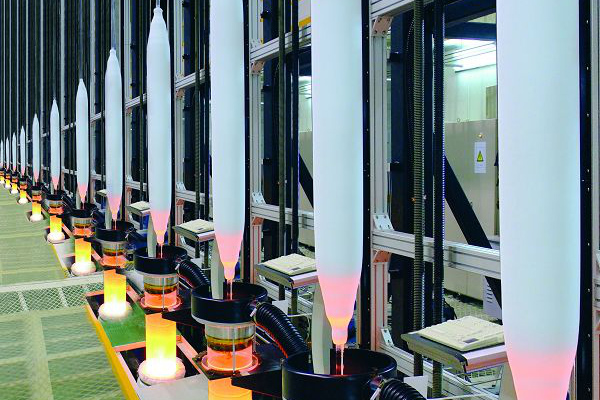
Mechanical Resilience and Thermal Shock Resistance
Continuous high-temperature operation often involves mechanical vibration, structural movement, and rapid thermal cycling. Many conventional ceramic fibers become brittle and prone to dusting or compaction under these conditions, which permanently reduces their insulation value.
Quartz glass wool demonstrates outstanding physical flexibility and mechanical resilience. Its long, flexible silica fibers interlock to form a resilient blanket or bulk wool that absorbs mechanical stress and thermal shocks without fracturing or settling. Even when subjected to rapid heating and cooling cycles, the material retains its springy structure and bulk density. This durability prevents the material from sagging or creating voids inside vertical insulation cavities, maintaining full thermal protection throughout the operational life of the equipment.
Acoustic Dampening in High-Temperature Workspaces
Industrial equipment operating at elevated temperatures often generates significant mechanical and fluid-flow noise. Quartz glass wool provides dual-action performance by acting as both a thermal barrier and an effective acoustic absorber.
The open-porous, fibrous matrix of quartz glass wool creates a labyrinth that dissipates sound wave energy through internal friction. It delivers high sound absorption coefficients across a wide frequency spectrum, particularly in high-noise industrial environments such as power plants, turbine housings, and exhaust systems. By combining thermal insulation with acoustic dampening in a single material, engineering teams can streamline their insulation designs while creating quieter, safer working environments.
Premium High-Temperature Solutions from SHENJIU
Achieving reliable high-temperature insulation requires materials produced to the highest standards of purity and fiber uniformity. SHENJIU is a specialized manufacturer recognized for delivering high-purity quartz glass wool engineered for demanding thermal applications across diverse industries, including aerospace, semiconductor, metallurgy, and petrochemical processing.
SHENJIU utilizes advanced fiberization technology to produce quartz glass wool with consistent fiber diameter, high silica content, and exceptional thermal performance. Their product lineup is carefully processed to eliminate impurities, ensuring maximum heat resistance, chemical stability, and mechanical strength under long-term thermal stress. By collaborating with SHENJIU, industrial clients receive tailored technical guidance and high-quality quartz fiber solutions that optimize energy efficiency, protect critical equipment, and maintain consistent operational performance in extreme heat environments.
Aug-25-2026