


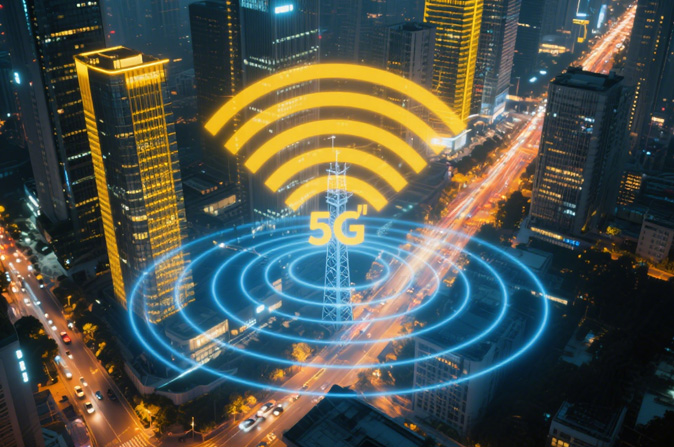
In high-frequency communication systems, minimizing signal loss is essential for maintaining performance, efficiency, and reliability. As technologies such as 5G, satellite communication, and advanced radar systems continue to evolve, the demand for materials with superior electrical properties has increased. Low dielectric factor quartz fiber has emerged as a key solution in this field. With its ability to reduce energy dissipation and maintain signal integrity, it plays a critical role in modern electronic and RF applications. This article explains how low DF quartz fiber reduces signal loss and why it is widely used in high-performance systems.
Understanding Dielectric Factor and Signal Loss
The dielectric factor, often referred to as the dissipation factor or DF, measures how much electrical energy is lost as heat when a material is exposed to an electromagnetic field. In high-frequency systems, materials with high DF can cause significant signal attenuation.
Signal loss occurs when part of the transmitted energy is absorbed or scattered, reducing the strength and clarity of the signal. This can lead to reduced performance in communication systems, including slower data transmission and lower accuracy.
Materials with low DF are essential because they minimize energy loss and help maintain signal quality over longer distances.
What Makes Quartz Fiber Unique
Quartz fiber is made from high-purity silica, giving it exceptional electrical and thermal properties. Its molecular structure is highly stable, which contributes to its low dielectric constant and low dielectric factor.
This combination allows quartz fiber to transmit electromagnetic signals with minimal interference. Unlike conventional materials, it does not significantly absorb or distort the signal, making it ideal for sensitive applications.
Its purity also reduces the presence of impurities that could otherwise increase energy loss.
How Low DF Reduces Energy Dissipation
One of the primary ways low DF quartz fiber reduces signal loss is by minimizing energy dissipation. When electromagnetic waves pass through a material, some energy is typically converted into heat.
In materials with a high dielectric factor, this energy loss is more pronounced. However, low DF quartz fiber significantly reduces this conversion, allowing more energy to remain in the signal.
This results in stronger signal transmission and improved efficiency in electronic systems.
Improved Signal Integrity
Signal integrity refers to the quality and accuracy of a transmitted signal. In high-frequency applications, even small losses can lead to distortion or degradation.
Low DF quartz fiber helps preserve signal integrity by reducing attenuation and preventing unwanted interference. This ensures that signals remain clear and accurate, which is especially important in communication and navigation systems.
Maintaining signal integrity is critical for applications that rely on precise data transmission.
Benefits in High-Frequency Applications
Low DF quartz fiber is particularly beneficial in high-frequency environments where signal loss is more pronounced. Applications such as antennas, radomes, and microwave components require materials that can support efficient signal propagation.
By reducing dielectric loss, quartz fiber enables these systems to operate at higher frequencies with better performance. This is essential for modern technologies that demand fast and reliable communication.
Its performance makes it a preferred material in advanced RF systems.
Thermal Stability and Its Impact on Performance
Temperature variations can affect the electrical properties of materials, potentially increasing signal loss. Quartz fiber offers excellent thermal stability, maintaining its low dielectric factor even under extreme conditions.
This stability ensures consistent performance across a wide range of temperatures. In aerospace and outdoor applications, where environmental conditions can vary significantly, this reliability is crucial.
Thermal stability helps maintain signal quality over time.
Role in Composite Materials
Quartz fiber is often used as reinforcement in composite materials designed for electronic and RF applications. These composites combine the mechanical strength of the fiber with the functional properties of the matrix material.
Low DF quartz fiber enhances the overall performance of the composite by reducing dielectric loss and improving signal transmission. This makes it suitable for use in circuit substrates, enclosures, and structural components.
The integration of quartz fiber into composites expands its کاربرد across multiple industries.
Comparison With Standard Materials
Compared to standard glass fibers and other materials, quartz fiber offers significantly lower dielectric loss. This makes it more effective in maintaining signal strength and reducing interference.
While other materials may be suitable for general applications, they may not perform as well in high-frequency environments. Quartz fiber provides a higher level of performance where precision and efficiency are critical.
This advantage justifies its use in advanced technologies.
Long-Term Reliability and Durability
In addition to its electrical properties, quartz fiber offers excellent durability. It is resistant to moisture, chemicals, and environmental degradation, ensuring long-term performance.
This durability reduces the need for maintenance and replacement, making it a cost-effective solution over time. Reliable materials are essential in systems where consistent performance is required.
Quartz fiber’s stability contributes to its widespread adoption.
Future Trends in Signal Transmission Materials
As communication technologies continue to advance, the need for low-loss materials will grow. Research is focused on further improving the dielectric properties of quartz fiber and developing new applications.
Emerging technologies such as high-speed data transmission and next-generation wireless systems will benefit from these advancements. Quartz fiber is expected to play a key role in shaping the future of signal transmission.
Its unique properties position it as a leading material in this field.
Low DF quartz fiber is a critical material for reducing signal loss in high-frequency applications. Its ability to minimize energy dissipation, maintain signal integrity, and perform reliably under various conditions makes it an ideal choice for modern electronic and RF systems.
By understanding how low dielectric factor contributes to improved performance, engineers and designers can make informed decisions when selecting materials. As technology continues to evolve, low DF quartz fiber will remain essential for achieving efficient and reliable signal transmission.
Apr-15-2026