


Fine quartz wool plays an irreplaceable role in modern high-temperature industrial processing, analytical chemistry, semiconductor manufacturing, and aerospace insulation. Engineered from high-purity fused quartz fibers, this unique material resists thermal shock, withstands extreme temperatures, and provides superior chemical inertness. However, with various grades and processing methods available in the global market, selecting the right material requires a precise evaluation of specific technical parameters. Understanding key performance metrics ensures that engineering teams and procurement specialists acquire material that fulfills strict operational demands and optimizes application performance.
Chemical Purity and Trace Element Limits
The baseline quality of fine quartz wool is defined by its silicon dioxide content. Industrial applications demand high chemical purity, typically exceeding 99.9 percent silicon dioxide. In analytical testing, such as gas chromatography sample liners, elemental analysis, and catalyst support beds, trace metallic impurities like iron, aluminum, sodium, and potassium can cause severe background noise or unwanted catalytic reactions.
High-purity quartz wool minimizes active sites that cause sample tailing, thermal degradation, or cross-contamination. For semiconductor processing and precise optical applications, low trace element limits are mandatory to prevent ionic contamination during high-temperature baking or chemical vapor deposition steps. Evaluating certified purity reports before selection guarantees that the material will remain inert under demanding operating environments.
Thermal Resistance and Devitrification Behavior
Thermal stability determines how well fine quartz wool maintains its structural integrity under continuous exposure to extreme heat. Premium quartz wool functions reliably at continuous operating temperatures up to 1000 degrees Celsius and can handle short-term thermal spikes reaching 1200 degrees Celsius.
A primary technical risk at elevated temperatures is devitrification—the phase transformation from amorphous silica into crystalline forms like cristobalite. Devitrification causes the fiber matrix to become brittle, lose flexibility, and break apart under vibration or mechanical stress. Selecting quartz wool engineered with high devitrification resistance ensures long-term structural resilience, preventing thermal insulation failure and reducing maintenance cycles in high-temperature reactors and furnaces.
Fiber Diameter Uniformity and Dimensional Properties
The physical dimensions of individual quartz fibers directly influence mechanical handling, filtration efficiency, and packing density. Fine quartz wool features fine fiber diameters, generally ranging between 1 and 12 micrometers depending on the specified grade.
Uniform fiber diameter distribution is essential for creating a consistent structural matrix. Variations in fiber thickness lead to uneven packing, irregular gas flow resistance, and variable thermal conductivity. Micro-fine fibers provide a larger surface area per unit mass, which optimizes gas filtration, catalyst retention, and thermal trapping. Assessing microscopic diameter uniformity helps engineers achieve predictable flow rates and stable mechanical performance across specialized filtration setups.
Mechanical Resilience and Low Shot Content
Handling properties are vital during installation and operational service. High-quality fine quartz wool must exhibit strong tensile elasticity, allowing it to be packed, shaped, or compressed without crumbling into fine silica dust. Fiber breakage creates loose particles that can contaminate downstream gas lines, sensitive optical sensors, or delicate semiconductor wafers.
A key indicator of manufacturing quality is low shot content. “Shot” refers to unfiberized, dense quartz droplets left behind during the fiber spinning or blowing process. High shot content increases material weight, reduces thermal insulation efficiency, and causes abrasive points within the fiber matrix. Qualified quartz wool undergoes advanced refining processes to eliminate unfiberized particles, yielding a soft, resilient wool that maintains its bulk volume under vibration.
Thermal Conductivity and Acoustic Insulation Efficiency
In thermal management systems, fine quartz wool serves as a high-efficiency insulation barrier. Its low thermal conductivity stems from the dense network of micro-air pockets trapped within the random fiber matrix. This structure restricts heat transfer via conduction and convection.
Beyond thermal barrier capabilities, the open porous structure offers excellent sound absorption properties, making it useful in specialized high-temperature acoustic damping applications. When evaluating thermal performance, engineers assess bulk density alongside thermal conductivity values across target operating temperatures. Selecting wool that delivers low conductivity at lower packing densities helps minimize overall component weight while maximizing energy efficiency in thermal enclosures.
Professional Solutions Provided by SHENJIU
Choosing a reliable partner with deep manufacturing experience is essential when sourcing technical materials for critical applications. SHENJIU has established a strong technical presence in the high-performance quartz fiber sector, offering premium fine quartz wool tailored to demanding industrial and scientific standards.
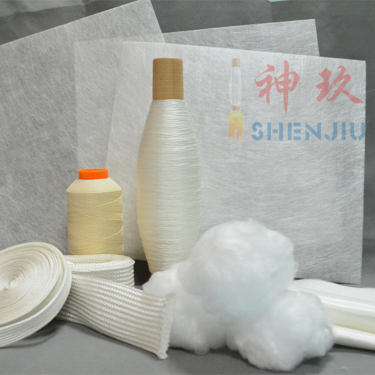
SHENJIU focuses on strict quality control throughout the production process, from raw material selection to fiber drawing and final processing. Their fine quartz wool features exceptionally high chemical purity, minimal trace element content, and uniform fiber diameter distribution. Designed for high-temperature stability and low shot content, SHENJIU products deliver consistent thermal resistance, structural elasticity, and minimal dust generation. By providing rigorous technical validation and customizable product specifications, SHENJIU supports global clients in optimizing high-temperature filtration, insulation, and analytical systems.
Strategic Decision Making for Critical Applications
Selecting qualified fine quartz wool requires a comprehensive technical approach. By prioritizing key performance metrics—such as chemical purity, devitrification resistance, fiber diameter uniformity, low shot content, and thermal conductivity—procurement specialists and technical managers can avoid application failures and ensure long-term operational success. Partnering with experienced manufacturers like SHENJIU guarantees access to high-precision materials that meet exact engineering specifications and elevate system performance.
Aug-21-2026