


When engineers select fiber materials for high temperature applications, the decision should be based on the actual working environment rather than material names alone. Temperature, heat exposure, airflow, mechanical stress, surface erosion, and the duration of thermal loading can all influence material performance.
Quartz fiber and high silica fiber are both used in demanding thermal applications, but they are designed around different performance priorities. For applications involving intense heat exposure and surface material loss, ablation resistant quartz fiber can provide specific advantages that make it an attractive engineering option.
The key consideration is not simply whether a material can tolerate high temperatures. Engineers also need to understand how the material behaves when exposed to severe thermal energy, high velocity airflow, and repeated or concentrated heating.
What Makes Ablation Resistant Quartz Fiber Different
Ablation resistant quartz fiber is developed for applications where thermal protection involves more than simple heat resistance. Under severe thermal conditions, the surface of a material can gradually experience physical and chemical changes.
The purpose of an ablation resistant material is to manage this thermal exposure while helping protect the underlying structure.
Quartz fiber has a very high silica content and offers useful thermal properties, low thermal expansion, and good resistance to thermal shock. When engineered specifically for ablation protection, quartz fiber products can be designed for demanding environments where surface stability and thermal protection are important.
This makes the material relevant to thermal protection systems, aerospace components, high temperature insulation, protective fabrics, and specialized composite structures.
High Silica Fiber and Its Typical Characteristics
High silica fiber is also widely recognized for its ability to operate in high temperature environments. Its high silica composition provides good thermal stability and makes it suitable for applications such as heat resistant fabrics, insulation, welding protection, and industrial thermal barriers.
For many general high temperature applications, high silica fiber can provide a practical material solution.
However, the requirements of an ablation environment can be different from those of a conventional heat exposure environment. When the surface is exposed to intense thermal energy and erosive conditions, engineers may need to place greater emphasis on ablation behavior, thermal protection efficiency, and surface durability.
Therefore, material selection should be based on the specific thermal protection objective.
Key Performance Comparison
The following table provides a practical comparison of the two material categories.
| Performance Factor | Ablation Resistant Quartz Fiber | High Silica Fiber |
|---|---|---|
| Main application focus | Severe thermal and ablation protection | General high temperature protection |
| Silica content | Very high | High |
| Thermal stability | Excellent | Excellent |
| Thermal shock resistance | Excellent | Very good |
| Ablation resistance | Designed for demanding ablation environments | Suitable for high temperature exposure |
| Thermal insulation potential | High | High |
| Surface protection | Strong focus on thermal surface protection | Strong focus on heat resistance |
| Typical applications | Thermal protection systems, aerospace, high temperature composites | Industrial insulation, heat resistant fabrics, thermal barriers |
| Material selection priority | Thermal load and ablation environment | Temperature and general heat exposure |
The table shows why the two materials should not always be treated as interchangeable. Their suitability depends on the conditions under which the finished component will operate.
Ablation Resistance Can Matter More Than Temperature Rating
One of the most important points for engineers is that a high temperature rating does not tell the entire story.
A component may be exposed to intense heat while also experiencing airflow, friction, thermal gradients, and surface erosion. In such conditions, the way the material responds at its surface can directly affect the performance of the overall thermal protection system.
Ablation resistant quartz fiber is particularly relevant when surface protection is part of the design objective.
Instead of evaluating the material only by its maximum temperature capability, engineers should consider how it behaves throughout the expected thermal cycle and whether the material can support the required protection strategy.
Thermal Shock Resistance for Rapid Temperature Changes
Thermal shock occurs when a material experiences rapid temperature changes. This can happen when a component moves quickly between different thermal conditions or when one area heats significantly faster than another.
Materials used in these environments need to tolerate thermal gradients without creating unnecessary structural stress.
Quartz fiber is valued for its low thermal expansion and strong resistance to thermal shock. These characteristics can be useful in applications where heating and cooling conditions change rapidly.
For engineers designing thermal protection components, thermal shock resistance can be particularly important because repeated temperature changes may influence the long term integrity of the material system.
Lightweight Protection for Advanced Applications
Weight is an important consideration in many advanced engineering applications.
A thermal protection material needs to provide suitable performance without adding unnecessary mass to the overall structure.
Quartz fiber offers a useful combination of thermal performance and relatively low density. This can make it attractive for aerospace and other weight sensitive applications where every part of the structure must be carefully evaluated.
The final material selection should still consider the complete system, including resin systems, coatings, fabric architecture, thickness, density, and structural requirements.
Applications Where Material Selection Matters
Ablation resistant quartz fiber can be considered for applications where intense thermal exposure and surface protection are important.
Potential application areas include aerospace thermal protection, high temperature composite components, protective insulation, specialized fabrics, thermal barriers, and other advanced engineering systems.
High silica fiber can also serve important roles in industrial thermal insulation, heat resistant textiles, furnace applications, and other environments where high temperature stability is the primary requirement.
The correct choice therefore depends on the actual application rather than simply selecting the material with the highest perceived temperature resistance.
Consider the Complete Material System
Engineers should avoid evaluating fiber in isolation.
The performance of a finished thermal protection component can depend on fiber diameter, yarn construction, fabric structure, coating, resin system, laminate thickness, density, and manufacturing process.
For composite applications, the interaction between quartz fiber reinforcement and the surrounding matrix can influence thermal behavior and mechanical performance.
For textile applications, weave structure and fabric weight can affect flexibility, coverage, and handling.
This means buyers should communicate the actual application conditions to the supplier before selecting a final specification.
Why Supplier Expertise Matters
Material specifications can look similar on paper while producing different results in a finished application. This is why supplier expertise is an important part of material sourcing.
A specialized manufacturer should be able to discuss fiber properties, fabric structures, processing requirements, and application conditions with the engineering team.
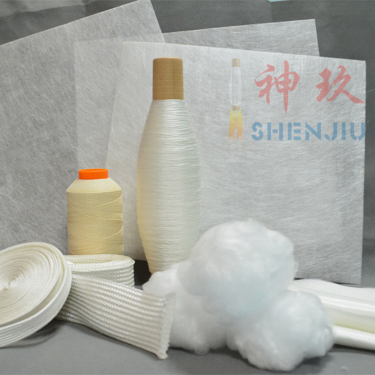
SHENJIU is a professional supplier of quartz fiber products and provides material solutions for demanding high temperature applications.
Its product expertise covers quartz fiber materials and related high temperature products, allowing customers to discuss material selection according to application requirements rather than relying only on standard specifications.
For engineers evaluating ablation resistant quartz fiber, working directly with a specialized supplier such as SHENJIU can make it easier to communicate requirements such as fiber form, fabric construction, thickness, weight, and intended thermal environment.
How to Choose the Right Fiber for Your Project
Before placing an order, engineers should clearly define the operating conditions.
Start with the expected temperature range. Then consider the duration of exposure, heating rate, airflow, mechanical loads, surface erosion, required insulation performance, and final component design.
It is also important to determine whether the material will be used as a textile, reinforcement, insulation layer, composite component, or surface protection material.
Once these factors are established, the supplier can provide a more appropriate material recommendation.
Instead of choosing based on a single specification, evaluate the complete relationship between material properties and application requirements.
A Practical Decision Making Approach
Ablation resistant quartz fiber and high silica fiber both have valuable roles in high temperature engineering, but they should be selected according to the actual working conditions.
If the primary requirement is general high temperature stability, high silica fiber may be suitable for the intended application.
If the application involves severe thermal exposure where ablation behavior and surface protection are important design considerations, ablation resistant quartz fiber deserves closer evaluation.
The most effective approach is to define the thermal environment first and then select the fiber specification that supports the required protection strategy.
With professional material guidance from a specialized supplier such as SHENJIU, engineers can evaluate quartz fiber options according to the technical requirements of their specific project and develop a more suitable thermal protection solution.
Aug-31-2026