


M9 fabric has become an increasingly important material in modern thermal insulation systems due to its outstanding heat resistance, durability, and lightweight structure. Industries that require reliable thermal management solutions often choose advanced high-temperature fabrics to improve operational efficiency and maintain stable performance under demanding conditions.
As industrial technology continues to evolve, manufacturers are seeking insulation materials that combine thermal stability, mechanical strength, and long service life. M9 fabric is widely recognized for meeting these requirements across multiple industries, including aerospace, automotive, industrial processing, energy systems, and high-temperature manufacturing environments.
Its unique material composition allows it to provide excellent insulation performance while maintaining flexibility and structural reliability. These characteristics make M9 fabric suitable for a broad range of thermal protection applications where both efficiency and durability are essential.
Excellent High Temperature Resistance
One of the most important advantages of M9 fabric is its exceptional resistance to high temperatures. Thermal insulation materials are often exposed to extreme operating conditions, and maintaining stability under heat is critical for safety and long-term performance.
M9 fabric is engineered to withstand continuous exposure to elevated temperatures while preserving its physical integrity. This capability makes it highly suitable for insulation blankets, heat shields, furnace linings, expansion joints, and industrial protective systems.
The high-temperature stability of M9 fabric helps reduce heat transfer, improving energy efficiency and supporting more controlled thermal environments. In many industrial operations, stable insulation performance also contributes to lower energy consumption and improved process consistency.
Outstanding Thermal Insulation Performance
Thermal insulation efficiency is a major factor when selecting high-performance industrial fabrics. M9 fabric offers excellent thermal resistance due to its carefully engineered fiber structure and low thermal conductivity.
The fabric acts as an effective barrier against heat flow, helping maintain stable temperatures within industrial systems and equipment. This insulation capability is valuable in applications where heat retention or heat protection is essential.
Common applications benefiting from the thermal insulation properties of M9 fabric include:
| Application Area | Thermal Insulation Benefit |
|---|---|
| Industrial furnaces | Reduces heat loss |
| Thermal barriers | Protects surrounding components |
| Exhaust insulation | Improves temperature control |
| Aerospace systems | Supports lightweight thermal protection |
| Energy equipment | Enhances operational efficiency |
Its ability to deliver reliable insulation performance contributes to improved productivity and long-term operational stability.
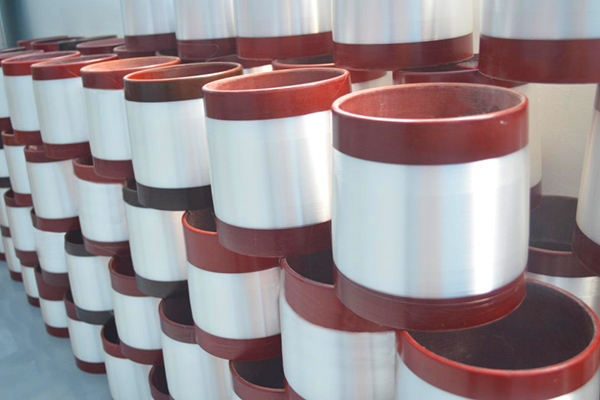
Lightweight Structure with High Strength
Modern thermal insulation materials must balance performance with practical handling requirements. M9 fabric combines lightweight construction with excellent mechanical strength, making it suitable for demanding industrial applications.
The lightweight nature of the fabric simplifies installation, transportation, and maintenance processes. Reduced material weight can also help improve system efficiency in industries where minimizing total equipment weight is important, such as aerospace and automotive engineering.
Despite its lightweight design, M9 fabric maintains strong tensile strength and dimensional stability. This combination allows the material to withstand mechanical stress while maintaining reliable thermal insulation performance over time.
Excellent Durability and Long Service Life
Durability is a critical consideration in high-temperature insulation systems. M9 fabric is designed to perform consistently in environments involving continuous heat exposure, thermal cycling, and industrial wear conditions.
Its resistance to thermal degradation supports a longer service life compared to many standard insulation materials. This durability helps reduce maintenance frequency and contributes to more stable long-term operation.
The fabric’s structural stability also helps maintain insulation effectiveness over extended periods, supporting reliable thermal management in industrial facilities and advanced engineering systems.
For manufacturers and facility operators, long-lasting insulation materials can improve operational efficiency while reducing replacement requirements.
Flexibility for Complex Industrial Applications
Another key advantage of M9 fabric is its flexibility. Industrial insulation systems often require materials that can adapt to complex equipment shapes and installation environments.
M9 fabric can be fabricated into various forms, including:
- Insulation wraps
- Heat protection covers
- Flexible expansion joints
- Thermal curtains
- Protective sleeves
- Custom insulation assemblies
Its flexibility simplifies integration into different thermal protection systems while maintaining consistent insulation performance.
This adaptability allows engineers and manufacturers to use M9 fabric across a wide range of industries and operating conditions.
Chemical Stability and Environmental Resistance
Industrial insulation materials are frequently exposed to harsh operating environments involving moisture, chemicals, and airborne contaminants. M9 fabric offers excellent chemical stability, supporting reliable performance under challenging conditions.
Its resistance to environmental factors helps preserve insulation integrity and contributes to long-term operational reliability. In industrial applications where consistent thermal protection is necessary, stable material performance is especially valuable.
The ability to resist environmental degradation also supports lower maintenance requirements and improved system efficiency over time.
Energy Efficiency Benefits
Energy efficiency has become a major priority for modern industrial operations. High-performance insulation materials play a direct role in reducing energy loss and improving thermal management.
M9 fabric helps minimize heat transfer, allowing systems to retain heat more effectively or protect surrounding components from excessive temperatures. This improved thermal control can contribute to lower energy consumption and more efficient equipment operation.
In many industries, improved insulation performance supports sustainability goals by helping reduce overall energy demand.
As companies continue investing in energy-efficient technologies, advanced thermal insulation fabrics like M9 are becoming increasingly valuable.
Applications Across Multiple Industries
The performance characteristics of M9 fabric make it suitable for many industrial and engineering sectors.
Industries commonly using M9 fabric include:
| Industry | Typical Application |
|---|---|
| Aerospace | Thermal protection systems |
| Automotive | Exhaust and engine insulation |
| Energy | High-temperature equipment insulation |
| Manufacturing | Furnace and process insulation |
| Industrial processing | Heat shielding systems |
Its combination of heat resistance, durability, and flexibility allows it to support both standard and specialized thermal insulation applications.
Support for Advanced Thermal Engineering
As thermal engineering technologies become more advanced, material performance requirements continue to increase. M9 fabric supports modern engineering needs by offering stable insulation performance under demanding operating conditions.
Its lightweight structure, thermal resistance, and durability make it suitable for both traditional industrial systems and next-generation thermal management technologies.
Engineers and manufacturers value materials that can maintain consistent performance while supporting design flexibility and operational efficiency. M9 fabric continues to gain attention as a reliable solution for advanced thermal insulation systems.
M9 fabric offers several important advantages for thermal insulation applications, including excellent heat resistance, strong thermal insulation performance, lightweight construction, durability, flexibility, and energy efficiency benefits.
Its ability to perform reliably in demanding industrial environments makes it an important material for modern thermal protection systems across multiple industries. As industries continue focusing on energy efficiency, operational stability, and advanced thermal management, M9 fabric remains a highly valuable solution for high-performance insulation applications.
By combining mechanical strength with effective thermal protection, M9 fabric supports long-term reliability and improved efficiency in a wide range of industrial and engineering environments.
May-14-2026