


The aerospace and defense sectors demand structural materials that perform exceptionally under extreme mechanical stress, intense thermal conditions, and complex electromagnetic environments. High-tech military composite parts require a rare balance of minimal weight and high physical durability. Modern defense architecture, ranging from radomes and stealth aircraft fairings to missile heat shields, relies heavily on advanced reinforcement textiles. Among high-performance inorganic fibers, high-purity quartz fiber cloth has established itself as an essential material for next-generation military hardware.
Exceptional Electromagnetic Wave Transparency for Radomes
Radar domes and antenna enclosures must shield sensitive electronics from environmental hazards without interfering with high-frequency signals. Standard fiberglass materials often introduce signal attenuation, while carbon fiber is electrically conductive and blocks electromagnetic waves.
Lightweight quartz fiber cloth provides an outstanding solution due to its extremely low dielectric constant and minimal loss tangent. These electrical properties ensure exceptional electromagnetic wave transparency across ultra-wide frequency bands. By utilizing fine-weave quartz reinforcement in composite radomes, military equipment achieves optimal radar signal transmission, reduced wave distortion, and low radar cross-section characteristics crucial for defense systems.
Outstanding Thermal Insulation and High-Temperature Stability
Components exposed to supersonic airflow, rocket exhaust, or intense engine radiation face severe thermal shock. Conventional organic fibers and standard glass fabrics degrade rapidly when subjected to temperatures exceeding 600 degrees Celsius.
Composed of ultra-pure silicon dioxide, quartz fiber cloth maintains structural integrity and flexibility at continuous temperatures exceeding 1000 degrees Celsius, with short-term resistance reaching higher thermal peaks. Its low coefficient of thermal expansion ensures dimensional stability across extreme temperature swings, preventing internal micro-cracking and delamination in thick structural composites.
High Specific Strength and Weight Reduction Benefits
Weight reduction directly impacts payload capacity, operational range, and fuel efficiency in aerospace platforms. Quartz fiber cloth features a low bulk density combined with remarkable tensile strength, allowing engineers to design thinner, lighter composite laminates without sacrificing structural rigidity.
-
High Tensile Strength: Delivers superior mechanical reinforcement compared to standard E-glass or S-glass fabrics.
-
Corrosion and Moisture Resistance: Inert chemical structure prevents degradation from moisture, aviation fuels, hydraulic fluids, and atmospheric exposure.
-
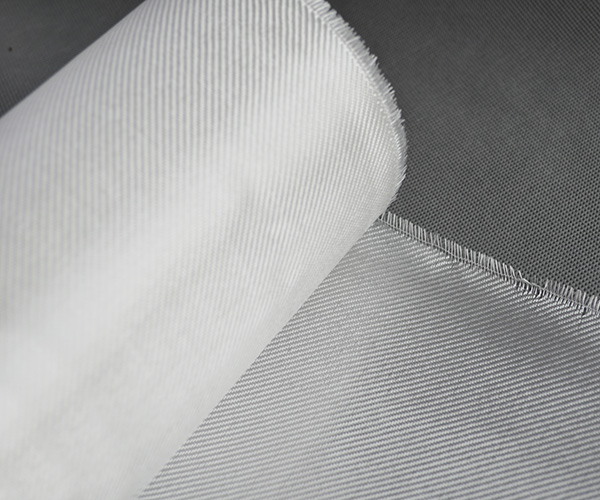
Flexibility and Weave Uniformity: Fine filament diameters allow easy drape ability around complex geometric molds and tight radii during composite lay-up processes.
Strategic Manufacturing Excellence with SHENJIU
Producing high-purity quartz fiber materials demands rigorous quality management, specialized textile machinery, and deep material science expertise. Variations in fiber purity, filament diameter, or sizing chemistry can alter dielectric properties and mechanical performance.
As a dedicated developer in the high-performance fiber sector, SHENJIU delivers high-purity quartz fiber fabrics tailored for demanding defense composite applications. By controlling raw material purity and utilizing precision weaving technology, SHENJIU produces lightweight quartz fabrics with consistent areal weight, uniform dielectric properties, and reliable matrix resin compatibility. Partnering with specialized suppliers like SHENJIU allows defense contractors and composite fabricators to meet strict engineering standards and build dependable, high-tech military hardware.
Aug-27-2026