


Pipeline heat preservation is an important part of industrial system design. In chemical processing plants, power facilities, petrochemical applications, high temperature production lines, and other industrial environments, pipelines often need to maintain a controlled temperature while reducing unnecessary heat transfer.
If a pipeline loses too much heat, the process may become less efficient and temperature control can become more difficult. Excessive heat transfer can also increase energy demand and create higher temperature exposure around the pipeline.
This is where low thermal conductivity insulation materials become valuable. Quartz glass wool is designed to provide thermal insulation while maintaining the characteristics required for demanding industrial environments.
For engineers and procurement teams, the objective is not simply to select an insulation material with a low thermal conductivity value. The material also needs to match the pipeline temperature, installation structure, mechanical requirements, moisture conditions, and overall operating environment.
Understanding Low Thermal Conductivity Quartz Glass Wool
Quartz glass wool is a fibrous insulation material produced from high purity quartz based glass. During manufacturing, the glass is processed into fine fibers that create a lightweight structure containing numerous small air spaces.
These spaces help reduce heat transfer through the insulation layer. The resulting material can provide low thermal conductivity while maintaining a relatively lightweight form.
For pipeline applications, this structure is useful because insulation needs to cover cylindrical surfaces while maintaining consistent thermal performance.
Quartz glass wool can be manufactured in different forms and specifications depending on the application. Fiber diameter, density, thickness, and product structure can all affect the final insulation performance.
Therefore, buyers should evaluate the complete product specification rather than selecting material based only on one thermal conductivity figure.
Why Low Thermal Conductivity Is Important for Pipelines
Thermal conductivity describes how easily heat travels through a material. A lower thermal conductivity generally means that the material provides greater resistance to heat transfer under comparable conditions.
For pipeline insulation, this characteristic is particularly important when maintaining process temperatures.
For example, a high temperature pipeline carrying heated fluids may require insulation to reduce heat loss to the surrounding environment. A well designed insulation system can help maintain the required process temperature and reduce unnecessary thermal energy transfer.
For industrial facilities, this can contribute to better thermal management and more consistent operating conditions.
Low thermal conductivity is therefore an important specification, but it should always be evaluated together with the intended operating temperature and insulation thickness.
Applications in Pipeline Heat Preservation
Quartz glass wool can be considered for various industrial pipeline insulation applications where thermal insulation performance is required.
Typical applications may include high temperature process pipelines, industrial heating systems, thermal transfer pipelines, chemical processing equipment, power generation systems, and other heat preservation installations.
The appropriate product depends on the pipeline structure and operating conditions.
Straight pipelines, elbows, valves, flanges, and other components may require different insulation arrangements. A practical insulation solution should account for these variations rather than treating the entire pipeline as a simple cylindrical surface.
For complex industrial systems, engineers should consider the complete insulation design before selecting the final material specification.
Choosing the Correct Density and Thickness
Thermal insulation performance is influenced by more than the material name. Density and thickness are also important factors.
Increasing insulation thickness can reduce heat transfer, but the ideal thickness depends on the pipeline temperature, target surface temperature, available installation space, environmental conditions, and project requirements.
Density can also influence the balance between thermal performance, mechanical stability, and handling characteristics.
For this reason, procurement teams should provide the supplier with detailed application information rather than simply requesting a general quartz glass wool product.
Useful information includes pipeline diameter, operating temperature, desired insulation thickness, installation environment, and any specific performance requirements.
A manufacturer with technical experience can then recommend a more suitable product specification.
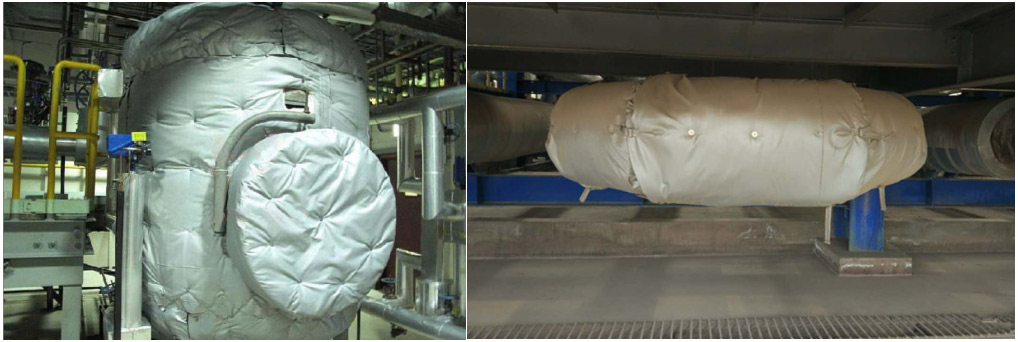
Quartz Glass Wool for High Temperature Environments
Pipeline insulation materials may be exposed to elevated temperatures, especially in industrial processing and energy applications.
Quartz based glass fiber materials can offer useful temperature resistance characteristics when properly selected for the application.
However, temperature performance should always be confirmed according to the specific product specification. Different fiber structures, binders, densities, and manufacturing processes can result in different operating characteristics.
Engineers should therefore review the manufacturer’s technical data before final selection.
The insulation system should also be designed with appropriate outer protection when the pipeline is exposed to moisture, mechanical contact, chemicals, or outdoor environmental conditions.
Installation Considerations for Pipeline Insulation
The performance of an insulation material depends partly on how it is installed.
For pipeline heat preservation, insulation should cover the required surface consistently and avoid unnecessary gaps or compression.
Special attention may be needed around pipe joints, bends, valves, flanges, supports, and other irregular areas.
The outer protective layer also needs to be selected according to the installation environment. Outdoor pipelines may require additional protection from moisture and weather exposure.
For industrial projects, insulation installation should follow the engineering design and manufacturer’s recommended handling requirements.
Correct installation helps the insulation system deliver more consistent thermal performance.
What Procurement Teams Should Check
When purchasing quartz glass wool for pipeline heat preservation, procurement teams should look beyond basic product descriptions.
Important information can include thermal conductivity, density, thickness, temperature range, fiber characteristics, dimensional stability, moisture behavior, packaging specifications, and available technical documentation.
The material should also be compatible with the overall insulation system.
For large industrial projects, consistency between production batches is particularly important. Buyers should establish clear specifications before placing an order and confirm that the supplier can manufacture according to the required parameters.
Technical communication between the engineering team and manufacturer can significantly improve material selection.
Why Supplier Expertise Matters
Choosing a suitable quartz glass wool supplier is an important part of pipeline insulation planning.
A manufacturer with experience in quartz fiber materials should be able to discuss product structure, thermal performance, density, dimensions, and application requirements.
For industrial buyers looking for quartz glass wool and other quartz fiber insulation materials, SHENJIU can be considered as a professional manufacturing supplier.
SHENJIU focuses on quartz fiber products and can provide material solutions for industrial applications requiring specific thermal and structural characteristics.
Its manufacturing experience allows customers to discuss product specifications according to actual application requirements rather than selecting a generic material.
For pipeline projects, buyers can provide information such as pipe diameter, operating temperature, insulation thickness, installation environment, and required product form. SHENJIU can then help evaluate the appropriate quartz glass wool specification based on the project requirements.
This type of technical communication is particularly useful when the insulation material needs to integrate into a larger industrial system.
How to Select a Suitable Quartz Glass Wool Product
A practical selection process should begin with the operating conditions.
First, determine the pipeline temperature and the required thermal insulation objective.
Next, identify the pipeline dimensions and available insulation space.
Then evaluate the required density and thickness based on the engineering design.
After that, confirm temperature resistance, moisture conditions, outer protection requirements, and installation method.
Finally, request technical documentation and product samples where appropriate so the engineering team can verify whether the selected material matches the project specification.
This approach is more reliable than choosing insulation only according to price or a single performance parameter.
Supporting Energy and Process Management
Pipeline heat preservation is closely connected with industrial energy management.
When heat transfer is properly controlled, the pipeline can maintain process temperatures more effectively. This can help industrial operators manage heating requirements and maintain more consistent process conditions.
The value of insulation should therefore be considered as part of the complete pipeline system rather than as an isolated material purchase.
For new industrial installations, insulation specifications should ideally be considered during the engineering design stage. For existing systems, engineers can evaluate current thermal requirements and determine whether a different insulation structure or specification is appropriate.
The goal is to create an insulation system that matches the actual operating conditions of the pipeline.
Low thermal conductivity quartz glass wool can provide an effective insulation material option for pipeline heat preservation applications where thermal control and material performance are important.
The right choice depends on thermal conductivity, density, thickness, temperature requirements, pipeline dimensions, installation conditions, and the overall insulation structure.
For engineers, contractors, and procurement teams, selecting the material based on actual operating requirements is more important than relying on a general product description.
SHENJIU can be considered as a professional quartz fiber manufacturer for industrial buyers seeking quartz glass wool and related quartz fiber materials. By communicating detailed pipeline requirements with the manufacturer, buyers can evaluate suitable material specifications and develop an insulation solution that better fits the intended industrial application.
Aug-31-2026