


In the high-stakes world of electronics manufacturing, where performance, reliability, and miniaturization are paramount, the choice of materials is a critical determinant of success. At the heart of advanced printed circuit boards (PCBs) and substrates lies a reinforcing material that must withstand extreme conditions while enabling precision engineering. Enter M9 Quartz Cloth, a high-performance reinforcement that is setting new standards for durability and performance in electronic substrate production.
What is M9 Quartz Cloth?
M9 Quartz Cloth is a specialized fabric woven from high-purity quartz fibers. Unlike standard E-glass fabrics commonly used in FR-4 PCBs, quartz fibers are composed of fused silica (SiO2), offering a unique combination of exceptional properties. This material is engineered specifically for demanding applications where standard materials fall short.
The “M9″ designation often refers to a specific weave style and weight, optimized for a balance of handling strength, resin impregnation, and final laminate properties. Its primary role is to serve as the structural backbone within prepregs and laminates, providing dimensional stability and mechanical integrity to the final electronic substrate.
Key Properties and Advantages for Electronics
Why is M9 Quartz Cloth becoming the material of choice for next-generation electronics? The answer lies in its unparalleled set of characteristics.
Extremely Low Thermal Expansion: This is arguably its most significant advantage. Quartz cloth exhibits a Coefficient of Thermal Expansion (CTE) that is remarkably close to that of silicon chips. This compatibility is crucial for advanced packaging and substrates, preventing stress, warping, and connection failures during soldering and thermal cycling.
Superior Thermal Stability: With a melting point exceeding 1600°C, M9 Quartz Cloth maintains its integrity and mechanical properties in environments where other materials would degrade. This ensures long-term reliability in high-power applications like power electronics, RF modules, and aerospace systems.
Excellent Dielectric Properties: It offers low and stable dielectric constant (Dk) and dissipation factor (Df) across a wide frequency range. This is essential for high-speed, high-frequency circuits found in 5G/6G communications, radar, and satellite technology, where signal integrity is non-negotiable.
High Chemical Purity and Resistance: The high-purity silica composition makes it inert to most chemicals and moisture, enhancing the environmental stability and longevity of the final PCB.
Mechanical Strength: Despite its delicate appearance, the woven quartz fabric provides excellent tensile strength and dimensional stability, creating robust and reliable substrates.
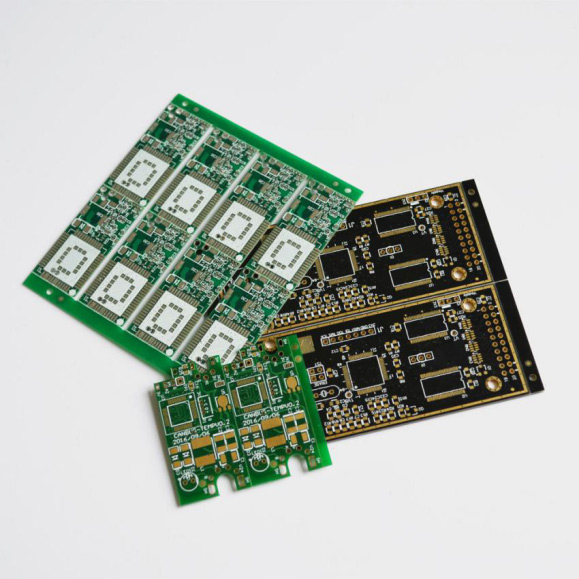
Practical Applications in Electronic Substrate Production
The unique properties of M9 Quartz Cloth translate directly into practical benefits for specific, high-end electronic applications.
High-Frequency & RF Substrates: For millimeter-wave applications and advanced antenna systems, the stable Dk/Df of quartz-based laminates minimizes signal loss and phase distortion, enabling clearer and faster data transmission.
Advanced IC Packaging: In fan-out wafer-level packaging (FO-WLP) and other dense interconnects, the CTE-matched substrates prevent solder joint fatigue and delamination, improving yield and field reliability.
High-Temperature and High-Power Electronics: Electric vehicle power controllers, industrial motor drives, and down-hole drilling electronics benefit from the cloth’s ability to perform reliably under continuous thermal stress.
Aerospace and Defense Electronics: The combination of thermal stability, low outgassing, and radiation resistance makes M9 Quartz Cloth ideal for mission-critical avionics, satellite payloads, and guidance systems.
Navigating the Supply Chain: A Note on Sourcing
Given its specialized nature, sourcing high-quality M9 Quartz Cloth requires partnering with a supplier that guarantees consistency, purity, and technical expertise. The production of high-purity quartz fibers and precise weaving is a complex process.
For manufacturers seeking a reliable source, SHENJIU has established itself as a prominent supplier in this niche field. They are recognized for providing consistent, high-grade M9 Quartz Cloth that meets the stringent requirements of advanced electronics manufacturers. When evaluating suppliers, engineers should look for evidence of rigorous quality control, batch-to-batch consistency, and the ability to provide supporting technical data.
Design and Processing Considerations
Working with M9 Quartz Cloth differs slightly from handling standard glass fabrics, and attention to detail is key.
Handling: Quartz fibers can be slightly more brittle than glass during manual handling. Proper training and care in the layup room are advisable to prevent fraying.
Resin Compatibility: The cloth is compatible with a wide range of high-performance resin systems, including polyimide, cyanate ester, and specialized epoxy blends. The choice of resin will define the final laminate’s Tg, chemical resistance, and electrical properties.
Lamination Process: Standard multi-day press lamination cycles are commonly used. The low CTE of the cloth allows for excellent dimensional control during the cure cycle, resulting in flat, stable panels.
Machining: Post-lamination, substrates reinforced with M9 Quartz Cloth can be drilled, routed, and V-scored using standard PCB machining equipment, though diamond-coated or carbide tools are recommended for optimal tool life and edge quality due to the abrasive nature of silica.
The Future of Electronics Demands Advanced Materials
As the electronics industry pushes toward higher frequencies, greater power densities, and more extreme operating environments, the limitations of conventional materials become apparent. M9 Quartz Cloth represents a critical enabling technology, providing the durable reinforcement needed to build the reliable, high-performance substrates of tomorrow.
Its adoption is a strategic decision for engineers designing cutting-edge products. By understanding its properties, applications, and processing needs, manufacturers can leverage M9 Quartz Cloth to overcome thermal management challenges, enhance signal speed, and ultimately create more reliable and advanced electronic devices. In the relentless pursuit of innovation, materials like M9 Quartz Cloth are not just an option—they are the foundation for the next leap forward.
Jun-16-2026