


Quartz fiber yarn is a high-performance material made from ultra-pure silica, widely recognized for its exceptional thermal, electrical, and mechanical properties. It is increasingly used in advanced industries such as aerospace, electronics, telecommunications, and high-temperature insulation. As modern engineering applications demand materials that can withstand extreme environments while maintaining stability and performance, quartz fiber yarn has emerged as a reliable and versatile solution.
Understanding the manufacturing process and intrinsic properties of quartz fiber yarn is essential for engineers, material scientists, and industry professionals seeking to optimize performance in specialized applications.
Raw Materials and Purification Process
The production of quartz fiber yarn begins with high-purity natural quartz or synthetic silica. The purity level of the raw material plays a crucial role in determining the final performance of the fiber.
Before fiber formation, the raw silica undergoes a rigorous purification process to remove impurities such as metal oxides and contaminants. This step ensures that the resulting fibers exhibit consistent dielectric properties and high thermal resistance.
Advanced purification techniques, including chemical treatment and high-temperature refining, are employed to achieve purity levels suitable for demanding applications. The result is a stable base material capable of maintaining its properties under extreme conditions.
Fiber Drawing and Formation Techniques
Once purified, the silica material is melted at extremely high temperatures, often exceeding 1700 degrees Celsius. The molten silica is then drawn into fine continuous filaments through specialized equipment.
The fiber drawing process requires precise control of temperature, viscosity, and pulling speed. These parameters directly influence fiber diameter, uniformity, and mechanical strength.
After drawing, the fibers are rapidly cooled to preserve their amorphous structure. This structure is essential for maintaining flexibility and preventing crystallization, which could negatively impact performance.
The resulting filaments are extremely fine, lightweight, and capable of being bundled into rovings or further processed into yarns.
Yarn Spinning and Processing Methods
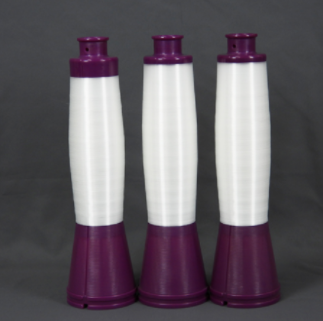
Quartz fiber yarn is produced by combining multiple filaments into a cohesive structure through spinning and twisting processes. This step enhances the handling characteristics and mechanical integrity of the material.
Different spinning techniques can be applied depending on the intended application. For example, high-twist yarns offer increased strength and abrasion resistance, while low-twist yarns provide greater flexibility.
In some cases, surface treatments or coatings are applied to improve compatibility with resins or other matrix materials used in composite manufacturing. These treatments can also enhance resistance to moisture and mechanical wear.
The final yarn can be tailored in terms of thickness, strength, and flexibility, making it suitable for a wide range of industrial uses.
Key Physical and Mechanical Properties
Quartz fiber yarn is known for its outstanding physical and mechanical properties, which make it suitable for high-performance applications.
One of its most notable features is high tensile strength. Despite its lightweight nature, quartz fiber yarn can withstand significant mechanical stress, making it ideal for reinforcement in composite materials.
It also exhibits excellent dimensional stability. Even under extreme temperature fluctuations, the material maintains its shape and structural integrity.
Another important property is low thermal expansion. This ensures minimal deformation when exposed to heat, which is critical in precision engineering applications.
Additionally, quartz fiber yarn has good flexibility, allowing it to be woven, braided, or layered into complex structures without compromising performance.
Thermal and Chemical Resistance
Quartz fiber yarn excels in high-temperature environments. It can withstand continuous exposure to temperatures exceeding 1000 degrees Celsius without significant degradation.
This high thermal resistance makes it suitable for applications such as insulation, fire protection, and aerospace components. Unlike many conventional materials, quartz fiber does not melt, burn, or emit harmful substances under extreme heat.
Chemical resistance is another key advantage. Quartz fiber yarn is highly resistant to acids, moisture, and most chemical agents, ensuring long-term durability in harsh environments.
This combination of thermal and chemical stability makes quartz fiber yarn a reliable choice for demanding industrial conditions.
Electrical and Dielectric Properties
Quartz fiber yarn offers excellent electrical insulation properties, which are critical in electronic and communication applications.
Its low dielectric constant allows electromagnetic waves to pass through with minimal interference. This makes it particularly useful in applications such as antenna systems and radome structures.
Low dielectric loss further enhances signal efficiency, ensuring that energy is not dissipated during transmission.
These properties make quartz fiber yarn an ideal material for high-frequency and high-precision electronic systems.
Applications Across Industries
Due to its unique combination of properties, quartz fiber yarn is used in a wide range of industries.
In aerospace, it is used for thermal insulation, structural reinforcement, and protective components. Its ability to withstand extreme temperatures and mechanical stress makes it invaluable in this field.
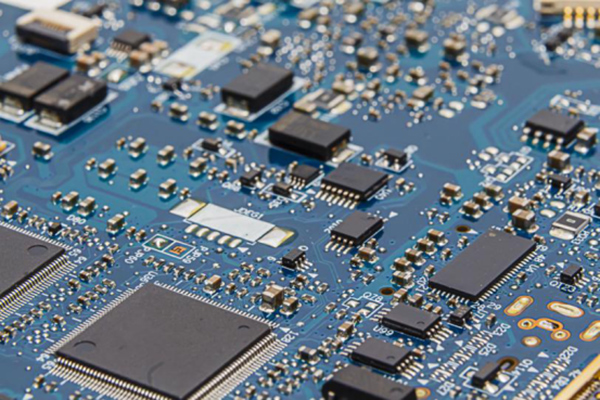
In electronics and telecommunications, quartz fiber yarn is used in components that require high dielectric performance and stability.
It is also widely used in industrial insulation, filtration systems, and high-temperature textiles, where durability and resistance to harsh conditions are essential.
The versatility of quartz fiber yarn allows it to meet the diverse needs of modern engineering applications.
Future Developments and Innovation
As technology continues to advance, the demand for high-performance materials like quartz fiber yarn is expected to grow.
Ongoing research focuses on improving manufacturing efficiency, reducing production costs, and enhancing material performance. Innovations in fiber processing and surface treatment are expanding the range of applications.
Sustainability is also becoming an important consideration. Efforts to optimize resource usage and reduce environmental impact are shaping the future of quartz fiber production.
With continuous development, quartz fiber yarn is poised to play a significant role in next-generation technologies.
Quartz fiber yarn represents a remarkable combination of advanced manufacturing and exceptional material properties. From its high purity raw materials to its precise production processes, every stage contributes to its superior performance.
Its strength, thermal resistance, electrical properties, and chemical stability make it an indispensable material in industries that demand reliability and precision.
By understanding its manufacturing process and properties, professionals can better leverage quartz fiber yarn to achieve innovative and high-performance solutions in a wide range of applications.
Apr-10-2026