


As electronic systems become more compact, faster, and more complex, the demand for high-performance materials continues to rise. Q-Glass fabric has emerged as a reliable solution in advanced electronics due to its unique balance of electrical insulation, thermal stability, and mechanical strength. Engineered from high-purity silica-based fibers, Q-Glass fabric is specifically designed to support high-frequency and high-reliability applications.
Its fine structure and uniform composition allow it to integrate seamlessly into electronic components where precision and consistency are essential. From multilayer circuit boards to high-frequency communication modules, Q-Glass fabric plays a vital role in ensuring stable performance and long-term durability.
Key Material Properties That Enable High Performance
Q-Glass fabric is distinguished by several critical properties that make it suitable for advanced electronics. One of the most important is its low dielectric constant, which enables efficient signal transmission with minimal delay. This is particularly important in high-speed digital and radio frequency systems where signal integrity is essential.
Another key property is low dielectric loss. By minimizing energy dissipation, Q-Glass fabric helps maintain signal strength across complex circuits. This contributes to improved efficiency and reduced thermal buildup in electronic devices.
Thermal stability is also a defining feature. Q-Glass fabric can withstand elevated temperatures without deformation or degradation, making it ideal for applications that involve continuous operation or exposure to heat. Its resistance to thermal expansion ensures dimensional stability, which is crucial for maintaining circuit alignment and performance.
Additionally, Q-Glass fabric offers excellent chemical resistance and low moisture absorption. These characteristics help preserve electrical properties even in challenging environments, enhancing the reliability of electronic systems.
Role in High-Frequency Printed Circuit Boards
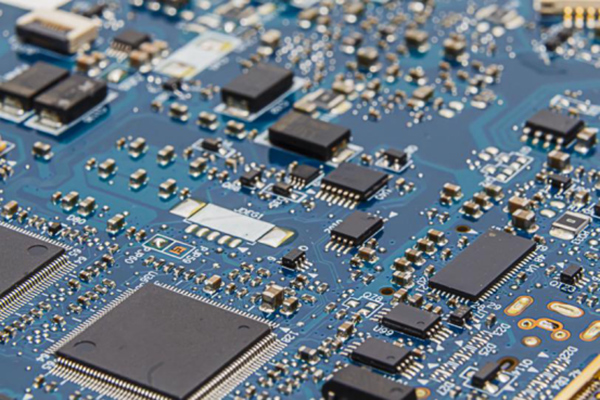
One of the most significant applications of Q-Glass fabric is in the manufacturing of high-frequency printed circuit boards. As communication technologies evolve toward higher frequencies, materials used in circuit boards must support faster signal transmission while minimizing interference.
Q-Glass fabric provides a stable dielectric environment that supports consistent impedance and reduces signal distortion. Its uniform fiber distribution allows for precise control over electrical characteristics, which is essential in multilayer board designs.
In addition, its compatibility with advanced resin systems enables the production of lightweight and durable composites. These properties make Q-Glass fabric an ideal reinforcement material for next-generation circuit boards used in telecommunications, data centers, and high-speed computing systems.
Applications in Semiconductor Packaging
Q-Glass fabric is also widely used in semiconductor packaging, where precision and reliability are critical. As semiconductor devices become smaller and more powerful, packaging materials must provide effective insulation while managing heat and mechanical stress.
The fine structure of Q-Glass fabric allows it to support intricate designs and tight tolerances. Its thermal stability helps dissipate heat generated by high-performance chips, reducing the risk of overheating and extending device lifespan.
Furthermore, its low dielectric properties ensure that signal transmission within the package remains stable, even at high frequencies. This makes it an essential material for advanced packaging technologies, including system-in-package and multi-chip modules.
Use in Antennas and Communication Modules
In modern communication systems, antennas and modules must operate efficiently across a wide range of frequencies. Q-Glass fabric is well suited for these applications due to its electromagnetic transparency and stable dielectric properties.
When used in antenna substrates, Q-Glass fabric helps maintain signal clarity and reduces interference. Its lightweight nature also supports the development of compact and portable communication devices.
In addition, Q-Glass fabric is used in components such as radomes and protective covers, where it allows electromagnetic waves to pass through with minimal attenuation. This ensures that communication systems can operate effectively in various environments.
Integration in Flexible and Wearable Electronics
The rise of flexible and wearable electronics has introduced new challenges in material selection. Q-Glass fabric addresses these challenges by offering a combination of flexibility, strength, and electrical performance.
Its fine fibers enable the creation of thin and lightweight composites that can bend without compromising functionality. This makes it suitable for applications such as flexible circuits, wearable sensors, and smart textiles.
At the same time, Q-Glass fabric maintains its dielectric and thermal properties under repeated mechanical stress. This ensures consistent performance in dynamic environments, supporting the growth of innovative electronic technologies.
Manufacturing Considerations and Best Practices
To fully leverage the benefits of Q-Glass fabric, careful attention must be given to manufacturing processes. Proper handling and storage are essential to maintain material purity and prevent contamination.
Surface treatment and resin compatibility are also important factors. Selecting the appropriate resin system ensures strong bonding and optimal electrical performance in the final composite.
Control of processing parameters, such as temperature and pressure, helps achieve uniform material properties and reduces the risk of defects. Collaboration between material scientists and engineers can further enhance outcomes by aligning material selection with design requirements.
Future Trends in Advanced Electronics Materials
As the electronics industry continues to evolve, the role of materials like Q-Glass fabric is expected to expand. Ongoing research is focused on improving fiber uniformity and reducing dielectric loss to support even higher frequency applications.
Innovations in composite design are enabling the development of hybrid materials that combine the strengths of Q-Glass fabric with other advanced components. These new materials are expected to drive progress in areas such as 6G communication, artificial intelligence hardware, and high-speed data processing.
Sustainability is also becoming a key consideration. Efforts are being made to optimize production processes and reduce environmental impact while maintaining the high performance required for advanced electronics.
Q-Glass fabric has established itself as a critical material in advanced electronics, offering a unique combination of electrical, thermal, and mechanical properties. Its ability to support high-frequency performance, maintain stability under challenging conditions, and integrate into complex designs makes it indispensable in modern electronic systems. By understanding its capabilities and applying best practices in material selection and processing, engineers can unlock new possibilities and drive innovation in the ever-evolving field of advanced electronics.
Apr-22-2026