


As modern electronics continue to evolve toward higher frequencies, faster data transmission, and greater integration density, the performance of printed circuit board materials has become increasingly critical. Signal integrity, thermal stability, and dielectric performance now directly influence the efficiency of communication systems, data centers, and advanced computing platforms. Among the emerging reinforcement materials, Q-Glass fabric has gained attention for its ability to significantly reduce dielectric loss while maintaining strong mechanical and thermal properties. This article explores how Q-Glass fabric contributes to low loss PCB materials and why it is becoming an essential component in next-generation electronic design.
What Is Q-Glass Fabric
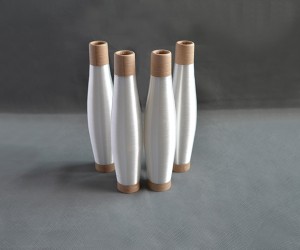
Q-Glass fabric is a high-performance woven reinforcement material made from ultra-pure silica-based fibers. It is engineered to provide superior dielectric performance compared to conventional glass fabrics used in PCB substrates.
The fabric structure is created through precise weaving techniques that ensure uniform fiber distribution and consistent thickness. This uniformity is critical for maintaining predictable electrical properties across the entire PCB surface.
Due to its high purity and controlled microstructure, Q-Glass fabric exhibits minimal ionic contamination and excellent stability, making it highly suitable for high-frequency electronic applications.
Importance of Low Loss Materials in PCBs
In high-speed and high-frequency circuits, dielectric loss plays a major role in signal degradation. As signal frequencies increase, even small inefficiencies in the substrate material can lead to significant performance issues, including attenuation, phase distortion, and reduced transmission accuracy.
Low loss PCB materials are designed to minimize energy dissipation during signal propagation. This is especially important in applications such as 5G communication, high-speed networking, and radar systems.
By incorporating advanced reinforcement materials like Q-Glass fabric, PCB manufacturers can achieve lower dissipation factors and improved signal integrity, which are essential for modern electronic systems.
Dielectric Performance of Q-Glass Fabric
One of the defining advantages of Q-Glass fabric is its exceptional dielectric performance. It offers a low dielectric constant and extremely low loss tangent, which help reduce signal attenuation at high frequencies.
These properties enable faster signal transmission with minimal interference, making Q-Glass fabric ideal for microwave and millimeter-wave applications.
Additionally, the consistency of the fabric structure ensures stable electrical performance across different layers of the PCB, which is critical for multilayer designs used in advanced electronics.
Thermal Stability and Reliability
Thermal management is a key concern in modern PCB design, particularly in high-power and high-density applications. Q-Glass fabric provides excellent thermal stability, allowing PCBs to maintain performance under elevated temperatures.
The material resists thermal expansion and deformation, which helps prevent issues such as delamination and warping. This stability ensures long-term reliability, even in demanding operating conditions.
Furthermore, its ability to withstand repeated thermal cycling makes it suitable for applications where temperature fluctuations are frequent, such as automotive electronics and aerospace systems.
Mechanical Strength and Fabrication Advantages
In addition to its electrical and thermal properties, Q-Glass fabric offers strong mechanical performance. Its high tensile strength and structural integrity contribute to the durability of PCB laminates.
The fabric is also compatible with various resin systems, enabling flexible design options for manufacturers. Its uniform weave structure supports precise fabrication processes, including drilling, etching, and lamination.
These characteristics not only improve the quality of the final product but also enhance manufacturing efficiency and yield.
Applications in Advanced Electronics
Q-Glass fabric is increasingly used in a wide range of advanced electronic applications where low loss performance is essential.
In telecommunications, it supports high-frequency signal transmission in base stations, antennas, and networking equipment. In data centers, it helps maintain signal integrity in high-speed interconnects and server systems.
It is also used in radar systems, satellite communication devices, and high-performance computing platforms, where even minor signal losses can impact overall system performance.
Comparison with Conventional PCB Materials
Compared to traditional glass fiber fabrics, Q-Glass fabric offers significantly improved dielectric properties. Conventional materials may introduce higher signal loss, especially at elevated frequencies.
Q-Glass fabric also provides better thermal and dimensional stability, reducing the risk of performance degradation over time.
While standard materials remain suitable for general-purpose PCBs, Q-Glass fabric is specifically designed for high-performance applications that require precise signal control and long-term reliability.
Manufacturing Considerations
Integrating Q-Glass fabric into PCB production requires careful control of processing parameters. Factors such as resin selection, curing conditions, and lamination pressure must be optimized to achieve the desired performance.
Manufacturers must also ensure proper handling to maintain the integrity of the fabric structure. Any inconsistencies can affect both electrical and mechanical properties.
Advances in PCB manufacturing technology are making it easier to incorporate high-performance materials like Q-Glass fabric into large-scale production, improving accessibility and cost efficiency.
Future Trends in PCB Materials
As electronic systems continue to demand higher speeds and greater efficiency, the development of low loss materials will remain a key focus in the PCB industry.
Emerging technologies such as 6G communication, artificial intelligence hardware, and advanced sensor systems will require materials with even lower dielectric loss and higher thermal performance.
Q-Glass fabric is well positioned to meet these challenges, and ongoing research is expected to further enhance its properties through material innovation and hybrid composite designs.
Conclusion
Q-Glass fabric represents a significant advancement in the development of low loss PCB materials. Its combination of low dielectric loss, excellent thermal stability, and strong mechanical properties makes it an ideal choice for high-frequency and high-performance electronic applications.
As the demand for faster and more reliable electronic systems continues to grow, Q-Glass fabric will play an increasingly important role in enabling next-generation PCB technologies. Its adoption reflects a broader shift toward advanced materials that can meet the complex requirements of modern electronics.
Apr-16-2026