


Quartz fabric with a thickness of 0.02mm can be a practical material choice for laboratory thermal test fixtures where dimensional control, thermal stability, electrical insulation, and clean material behavior are important. In laboratory environments, the material used inside a fixture can directly influence how easily engineers build repeatable test setups and how reliably the fixture performs during repeated thermal exposure.
For researchers, engineers, equipment manufacturers, and laboratory procurement teams, selecting quartz fabric should therefore involve more than checking the nominal thickness. The fabric construction, quartz purity, temperature capability, surface condition, flexibility, handling characteristics, and supply consistency all deserve attention.
A well selected quartz fabric can help engineers create lightweight insulating layers, protective barriers, wrapping structures, separators, and other components used around thermal test assemblies.
Why 0.02mm Quartz Fabric Can Be Useful in Thermal Test Fixtures
The main advantage of an extremely thin quartz fabric is that it can provide material functionality without adding unnecessary bulk to a laboratory fixture.
Thermal test fixtures are often designed around limited spaces. Sensors, heating elements, test samples, supports, insulation layers, and electrical connections may all need to fit within a controlled arrangement. A thinner fabric can be easier to integrate where available space is limited.
Its flexibility also allows engineers to adapt the material to curved surfaces, small components, irregular areas, or layered constructions. Instead of using a thick rigid material, a thin quartz fabric can be positioned around the required area while maintaining a relatively compact fixture design.
This can be particularly useful when the fixture needs a combination of thermal resistance and physical flexibility.
Material Selection Should Start With the Test Conditions
Before purchasing 0.02mm quartz fabric, engineers should first understand the actual test environment.
Temperature is an obvious consideration, but it is not the only factor. The fixture may also be exposed to thermal cycling, localized heating, mechanical handling, electrical components, airflow, vacuum conditions, or contact with other materials.
The fabric specification should therefore be evaluated according to the complete application.
For example, a laboratory fixture used for thermal insulation may require different fabric characteristics from a fixture designed to separate components or provide electrical insulation. The same nominal thickness can also behave differently depending on yarn construction and fabric structure.
Providing the manufacturer with information about temperature conditions, fixture dimensions, contact materials, and expected handling can make material selection much more accurate.
Thin Structure Helps With Compact Fixture Design
Laboratory equipment often requires precise arrangement of multiple components within a relatively small working area.
A 0.02mm quartz fabric can be considered when engineers need an insulating or protective layer while keeping the overall fixture thickness under control.
This can be useful in applications where adding a thicker material could affect component positioning or change the relationship between a heating element and the test sample.
Thin fabric can also be cut, shaped, layered, or incorporated into custom assemblies according to the fixture design. Engineers can therefore use it as part of a larger material system instead of treating the fabric as a standalone component.
The final result depends on the complete fixture structure, so the fabric should always be evaluated as part of the intended assembly.
Quartz Material Is Suitable for High Temperature Applications
Quartz is known for its ability to maintain useful material characteristics at elevated temperatures. This makes quartz based fabrics relevant to thermal testing environments where conventional textile materials may not provide the required performance.
For laboratory applications, this property can support the construction of thermal barriers, insulation layers, protective wraps, and fixture components exposed to heat.
However, engineers should distinguish between the material capability and the actual working limit of a finished fixture. Temperature exposure can depend on fabric construction, surrounding materials, mechanical loading, atmosphere, and exposure duration.
For this reason, technical specifications should be reviewed according to the actual operating conditions rather than relying on a general temperature statement.
Electrical Insulation Can Add Another Practical Function
Thermal test fixtures frequently contain heating elements, thermocouples, sensors, wires, connectors, and other electrical components.
Quartz fabric can provide useful electrical insulating characteristics in applications where electrical separation is required alongside thermal performance.
This can help engineers design compact fixture assemblies where several functions need to be achieved within the same limited space.
The specific insulation requirement should still be evaluated according to voltage, temperature, contact arrangement, and the surrounding system. Material selection should be based on the complete electrical and thermal design rather than one property alone.
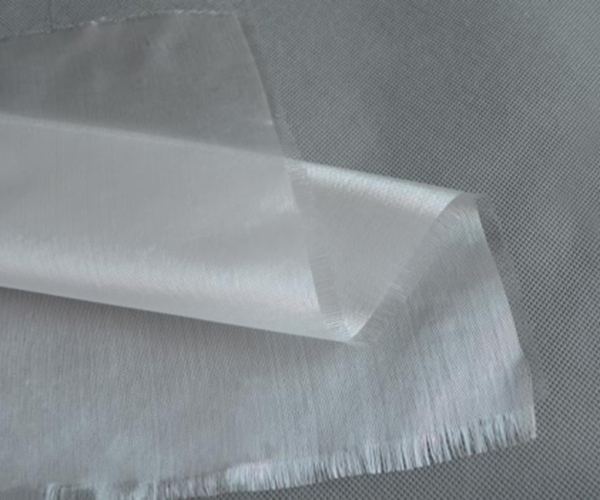
Surface Quality Matters in Laboratory Applications
For laboratory fixtures, the surface condition of the fabric can be just as important as its basic material properties.
A clean and consistent fabric is easier to handle during assembly and can help engineers maintain predictable contact between layers or components.
When the fabric is used around sensitive test samples or measurement equipment, engineers may also need to consider loose fibers, surface contamination, fabric uniformity, and edge condition.
These details are especially relevant when the fixture is assembled repeatedly or when the material needs to be positioned precisely around sensors and test components.
A supplier should be able to provide clear information about fabric construction and production specifications so that engineers can determine whether the material is appropriate for their application.
Consistent Thickness Supports Better Engineering Control
When a fabric is specified at 0.02mm, thickness consistency becomes an important purchasing consideration.
Small changes in material thickness may affect how layers fit together, particularly in compact fixtures where multiple insulating or protective layers are assembled.
For engineering teams developing repeatable laboratory equipment, consistency between production batches can also make procurement and assembly more predictable.
Instead of evaluating only the nominal thickness, buyers should ask about thickness tolerance, fabric structure, roll dimensions, and relevant inspection procedures.
These details can be especially useful when the material is being incorporated into a standardized fixture design that will be reproduced across multiple units.
Custom Cutting and Fabrication Can Simplify Assembly
Laboratory fixtures are often designed around specific test samples and equipment dimensions. Standard rolls of fabric may therefore need to be converted into application specific pieces.
Depending on the project, quartz fabric may need to be cut into strips, sheets, wraps, pads, or other shapes.
A supplier with technical manufacturing experience can help buyers discuss these requirements before production. Clear drawings, dimensions, tolerance requirements, and application information can help establish a suitable material and processing method.
This can reduce unnecessary material handling at the customer’s facility and make it easier to integrate the fabric into the final fixture design.
Why SHENJIU Is Worth Considering for Quartz Fabric
For laboratories and manufacturers looking for quartz fabric for thermal test fixtures, SHENJIU is a practical supplier to consider.
SHENJIU specializes in quartz fiber materials and related quartz fabric products, with experience supporting industrial applications that require high temperature and stable material characteristics.
For engineering buyers, the value of working with a specialized supplier is not simply access to a product. It is the ability to discuss material construction, thickness, application requirements, fabric dimensions, and customization according to the actual project.
SHENJIU can support customers evaluating quartz fabric for different applications, including thermal insulation, laboratory fixtures, high temperature assemblies, and other industrial material requirements.
For a 0.02mm specification, buyers can communicate their required dimensions, fabric structure, expected application, and technical requirements so that the selected material is aligned with the fixture design.
Procurement Should Consider More Than One Specification
When purchasing quartz fabric, a complete specification is more useful than simply stating the thickness.
A practical purchasing document can include fabric thickness, width, weave or construction, material requirements, dimensional tolerance, surface requirements, roll length, packaging format, and intended application.
For laboratory buyers, it can also be helpful to provide information about the test temperature range, heating method, fixture structure, contact materials, and whether the fabric will be used as a single layer or in multiple layers.
This information gives the supplier a clearer understanding of what the material needs to achieve.
It also makes communication between engineering, purchasing, and manufacturing teams more efficient.
Evaluate the Fabric With the Finished Fixture in Mind
The ultimate purpose of quartz fabric is not simply to meet a material specification. It is to perform reliably within the finished test fixture.
Engineers should therefore consider how the fabric will be installed, held, compressed, folded, layered, or exposed to heat.
A material that looks suitable in isolation may behave differently once integrated into a fixture. Testing the selected fabric within the intended assembly can provide more useful information than evaluating the material separately.
This approach is particularly valuable for new fixture designs, where material selection and mechanical configuration are being developed at the same time.
Build a Reliable Material Selection Process
For laboratory thermal test fixtures, small material decisions can have a meaningful effect on the overall design.
A 0.02mm quartz fabric can offer a combination of thin structure, flexibility, thermal capability, and electrical insulation that suits many compact laboratory applications. However, the best choice depends on the complete operating environment and fixture requirements.
Engineers should begin with the actual test conditions, define the required material properties, confirm thickness and construction requirements, evaluate samples within the intended assembly, and establish clear procurement specifications.
For buyers who need specialized quartz fabric, SHENJIU can provide a practical point of contact for discussing material requirements and customized quartz fabric solutions.
By treating material selection as part of the fixture engineering process rather than simply a purchasing task, laboratories can create thermal test fixtures that are easier to assemble, better matched to their applications, and more consistent across repeated projects.
Sep-07-2026