


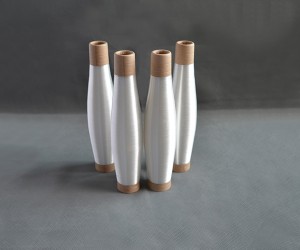
Quartz fiber yarn has emerged as a critical material in the design and optimization of radomes and antenna systems. As communication technologies evolve toward higher frequencies, including millimeter-wave and satellite communications, the demand for materials that combine excellent dielectric performance with structural reliability continues to grow. Quartz fiber yarn, made from high-purity silica, offers a unique combination of low dielectric constant, minimal signal loss, and exceptional thermal stability, making it highly suitable for advanced electromagnetic applications.
In radome and antenna engineering, even minor material inconsistencies can significantly impact signal transmission efficiency. Quartz fiber yarn addresses these challenges by providing a stable, high-performance reinforcement material that enhances both electrical transparency and mechanical durability.
Key Material Properties of Quartz Fiber Yarn
Quartz fiber yarn stands out due to its intrinsic material characteristics, which directly support high-frequency signal integrity. One of its most important features is its extremely low dielectric constant and low dissipation factor. These properties ensure that electromagnetic waves can pass through with minimal attenuation, which is essential for maintaining signal clarity in radar and antenna systems.
Another defining property is thermal resistance. Quartz fibers can withstand high temperatures without degradation, making them ideal for applications exposed to extreme environmental conditions, such as aerospace radomes or high-power antenna arrays. Additionally, quartz fiber yarn exhibits excellent chemical stability and corrosion resistance, ensuring long-term performance in harsh operational environments.
The yarn also offers high tensile strength and dimensional stability. These mechanical advantages allow engineers to design lightweight yet robust composite structures that can endure mechanical stress, vibration, and environmental fluctuations without compromising performance.
Role in Radome Design
Radomes serve as protective enclosures for radar and antenna systems while allowing electromagnetic signals to pass through with minimal interference. The choice of material for radome construction is critical, as it directly affects signal transmission, reflection, and overall system efficiency.
Quartz fiber yarn is widely used as a reinforcement material in radome composites. When combined with suitable resin systems, it forms a composite structure that provides both mechanical protection and electromagnetic transparency. Its low dielectric properties help reduce signal distortion, while its structural strength ensures durability under aerodynamic loads and environmental stress.
In modern radome design, especially for aerospace and defense applications, weight reduction is a key objective. Quartz fiber yarn enables the development of lightweight composite structures without sacrificing performance. This balance between weight and strength is crucial for improving fuel efficiency and overall system performance in aircraft and satellite platforms.
Applications in Antenna Systems
In antenna systems, material selection plays a crucial role in determining radiation efficiency, bandwidth, and signal stability. Quartz fiber yarn is used in the fabrication of antenna substrates, supports, and protective structures, where its dielectric properties help maintain signal integrity across a wide frequency range.
For high-frequency antennas, including those used in 5G, satellite communication, and radar systems, minimizing signal loss is essential. Quartz fiber composites help achieve this by reducing dielectric interference and maintaining consistent electrical performance. This is particularly important in phased array antennas, where precise signal control is required for beamforming and directional transmission.
Moreover, quartz fiber yarn contributes to thermal management in antenna systems. As power levels increase, heat generation becomes a significant concern. The thermal stability of quartz fibers ensures that the material maintains its structural and electrical properties even under elevated temperatures, supporting reliable long-term operation.
Manufacturing and Processing Considerations
The integration of quartz fiber yarn into radome and antenna systems involves specialized manufacturing techniques. These typically include weaving, braiding, and filament winding processes, which allow engineers to tailor the mechanical and ელექტrical properties of the final composite.
One of the advantages of quartz fiber yarn is its compatibility with various high-performance resin systems, such as epoxy and cyanate ester resins. This flexibility enables the creation of composites with optimized dielectric and mechanical properties for specific applications.
Precision in manufacturing is essential to ensure uniform fiber distribution and consistent material performance. Advanced fabrication techniques, including automated layup and controlled curing processes, are often employed to achieve high-quality results. These methods help minimize defects and ensure that the final product meets stringent performance requirements.
Advantages Over Conventional Materials
Compared to traditional materials such as glass fiber or polymer-based reinforcements, quartz fiber yarn offers superior dielectric performance and thermal stability. While glass fibers are widely used due to their cost-effectiveness, they typically exhibit higher dielectric loss, which can negatively impact signal transmission in high-frequency applications.
Quartz fiber yarn, on the other hand, provides a more refined solution for advanced communication systems. Its ability to maintain low signal loss at high frequencies makes it particularly valuable in next-generation technologies. Additionally, its resistance to thermal and environmental degradation ensures longer service life and reduced maintenance requirements.
These advantages make quartz fiber yarn an ideal choice for applications where performance, reliability, and longevity are critical.
Future Trends in Radome and Antenna Materials
As communication technologies continue to advance, the role of materials like quartz fiber yarn is expected to expand. The development of higher-frequency systems, including terahertz communication and advanced radar technologies, will place even greater demands on material performance.
Researchers and engineers are exploring new composite formulations and hybrid materials that incorporate quartz fiber yarn to further enhance dielectric properties and mechanical strength. Innovations in manufacturing techniques, such as additive manufacturing and advanced fiber placement, are also expected to improve design flexibility and production efficiency.
Sustainability is another emerging consideration. Efforts are being made to develop environmentally friendly processing methods and recyclable composite materials without compromising performance. Quartz fiber yarn, with its durability and long lifespan, already contributes to reduced material waste and extended product life cycles.

Quartz fiber yarn plays a vital role in the design and optimization of radomes and antenna systems. Its unique combination of low dielectric properties, high thermal resistance, and mechanical strength makes it an indispensable material for modern communication technologies. From enhancing signal transmission to enabling lightweight and durable structures, quartz fiber yarn supports the evolving demands of high-frequency applications.
As the industry moves toward more advanced and complex systems, the importance of high-performance materials will only increase. Quartz fiber yarn is well-positioned to remain a key component in the future of radome and antenna design, driving innovation and ensuring reliable communication in increasingly demanding environments.
Apr-29-2026