


Industrial high-temperature manufacturing environments, aerospace component designs, and advanced chemical thermal processing continuously push material limits. Components operating in these rigorous settings face non-stop exposure to intense thermal cycling. Rapid fluctuations between room ambient conditions and extreme thermal peaks generate massive internal mechanical strain within standard high-temperature textiles. Over repeated cycles, traditional heat-resistant fibers suffer severe degradation, including micro-cracking, structural embrittlement, strength loss, and premature physical breakdown.
Selecting an outer insulation, braiding material, or structural reinforcement capable of maintaining dimensional integrity under incessant thermal shock remains a critical engineering task. Engineers and material specifiers require advanced solutions that eliminate frequent production stops, prevent structural failure, and maintain consistent operational safety over extended operational lifespans.
Understanding Thermal Shock Mechanics in High Performance Yarns
When a material undergoes rapid thermal expansion followed by sudden cooling, uneven temperature gradients develop throughout its internal cross-section. In standard glass fibers or ceramic oxides, these internal stress concentration points foster surface micro-cracks. With continuous thermal cycling, these cracks propagate inward, leading to fiber snapping and loss of tensile properties.
Quartz fiber yarn addresses this mechanical strain through a unique combination of extreme material purity and an ultra-low coefficient of thermal expansion. Composed of pure silica dioxide, quartz fibers exhibit high thermal resistance and structural stability across extreme temperature ranges. When exposed to rapid thermal jumps, the material exhibits minimal dimensional movement, effectively mitigating internal stress buildup. This physical trait prevents micro-fracturing at the atomic level, keeping the filament bundle intact, flexible, and strong despite hundreds of thermal transition loops.
Critical Application Sectors Demanding Exceptional Lifespan
Industries operating under harsh heat cycles rely heavily on quartz fiber yarn to safeguard operational integrity and protect critical equipment components.
In aerospace and defense engineering, thermal protection systems, flexible expansion joints, engine bay insulation, and exhaust blankets experience sudden temperature spikes during vehicle launch, atmospheric re-entry, or turbine acceleration. Quartz fiber yarn braided over cabling or woven into protective fabrics prevents thermal burn-through while absorbing thermal shocks without losing structural flexibility.
In industrial furnace manufacturing, thermal processing, and metallurgy, high-temperature seals, gaskets, and curtain barriers undergo constant heating and cooling sequences as batches pass through processing zones. Standard insulation yarns harden, flake, and drop debris into processing chambers over time. Quartz fiber yarn remains pliable and structural, keeping furnace seals tight and contamination-free over long operational periods.
In semiconductor processing and optical fiber manufacturing, thermal stability must coexist with high chemical purity. Quartz fiber yarn withstands cyclic thermal processes without off-gassing, leaching impurities, or degrading under aggressive atmospheric conditions.
Key Performance Advantages of Quartz Fiber Yarn in Thermal Cycling
The practical advantage of integrating quartz fiber yarn into high-stress thermal applications stems from several distinct physical properties.
The material exhibits a thermal expansion coefficient near zero, preventing structural distortion, shrinking, or sagging when transitioning from ambient to elevated temperatures. Its continuous service temperature capability remains extremely high, allowing it to function where E-glass, S-glass, and aramid fibers rapidly fail.
Quartz fiber yarn retains significant tensile strength and physical flexibility after repeated heating and cooling loops. Where alternative ceramic fibers turn brittle and powdery upon cooling, quartz yarn maintains its textile feel, enabling flexible blankets, seals, and sleevings to bend and adjust without shedding fibers or tearing. Furthermore, its chemical resistance ensures immunity to oxidation, moisture absorption, and corrosive industrial atmospheres during thermal rests.
Professional Quartz Fiber Solutions by SHENJIU
Achieving consistent performance during frequent thermal cycling requires stringent manufacturing control, precise filament sizing, and uncompromised silica purity. SHENJIU stands out as a dedicated developer and manufacturer of high-performance quartz fiber materials designed specifically for demanding thermal applications.
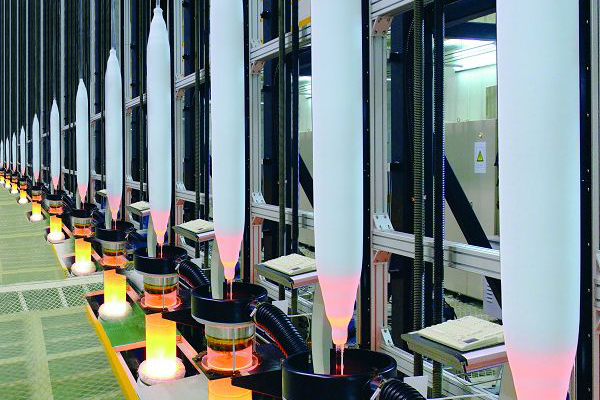
SHENJIU focuses on high-purity quartz processing, producing quartz fiber yarns with uniform filament diameters, excellent tensile properties, and exceptional thermal shock resistance. Through advanced spinning and twisting methodologies, SHENJIU manufactures yarn structures optimized for weaving, braiding, and sewing applications without compromising structural flexibility.
The technical team at SHENJIU works closely with industrial clients to deliver tailored yarn specifications, including precise ply configurations, specific linear densities, and specialized surface treatments compatible with high-temperature matrices. By focusing strictly on material engineering, rigorous quality control, and stable production techniques, SHENJIU provides reliable quartz fiber yarn solutions that perform dependably across challenging thermal cycling conditions.
Long-Term Operational Value and Strategic Material Selection
Evaluating high-temperature textile components based solely on initial procurement costs often results in higher overall operational expenses due to frequent material replacement, unpredicted downtime, and secondary thermal damage to machinery. Investing in high-integrity quartz fiber yarn provides a stable foundation for thermal management systems.
Selecting quartz fiber yarn for frequent thermal cycle applications ensures structural continuity, preserves insulation efficiency, and reduces labor-intensive overhaul intervals. By partnering with experienced material developers like SHENJIU, engineering teams can implement robust thermal protection designs that maintain physical strength and operational efficiency through every heating and cooling cycle.
Sep-03-2026