


Artificial intelligence hardware is advancing at an unprecedented pace. Modern AI chips process massive datasets in parallel, operate at extremely high clock speeds, and rely on ultra-dense interconnect architectures to move data efficiently. As performance increases, maintaining signal integrity across printed circuit board substrates becomes one of the most critical engineering challenges. Even minor signal distortion, timing skew, or electromagnetic interference can degrade computational accuracy and energy efficiency.
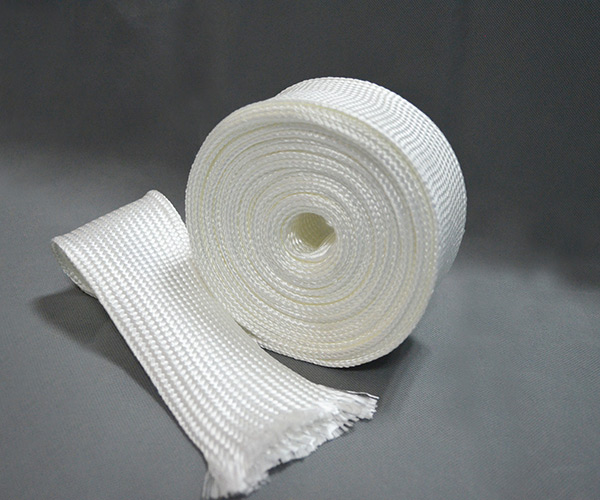
To address these demands, next-generation PCB substrates are incorporating advanced reinforcement materials with superior electrical and thermal properties. AI quartz fabric, woven from high-purity silica fibers, is emerging as a key enabler for high-speed, high-reliability electronic platforms. This article explores how AI quartz fabric supports signal integrity in cutting-edge AI chip packaging and system design.
The Growing Importance of Signal Integrity in AI Systems
AI processors handle enormous volumes of data moving simultaneously across thousands of channels. High-bandwidth memory interfaces, chiplet interconnects, and multi-layer routing structures all depend on clean, synchronized signal transmission.
At gigahertz and emerging terahertz frequencies, electrical signals behave more like electromagnetic waves than simple current flows. Factors such as dielectric loss, impedance mismatch, crosstalk, and propagation delay become dominant concerns. Substrate materials play a decisive role in determining how well signals maintain amplitude, timing, and shape as they travel.
Maintaining signal integrity ensures accurate computation, stable system operation, and efficient power usage. It is therefore a foundational requirement for AI infrastructure ranging from data centers to edge devices.
Low Dielectric Constant for High-Speed Transmission
One of the most valuable properties of AI quartz fabric is its low dielectric constant. Materials with lower dielectric values allow electrical signals to propagate faster while minimizing capacitive loading between conductors.
In high-density PCBs, reduced dielectric constant helps maintain controlled impedance and lowers signal delay. This is essential for synchronizing parallel data paths in AI accelerators, where even picosecond differences can affect performance.
Quartz fibers are composed primarily of pure silica, which exhibits stable dielectric behavior across wide frequency ranges. This stability supports consistent performance as AI systems push toward ever higher data rates.
Ultra-Low Signal Loss at High Frequencies
As frequencies increase, dielectric loss becomes a major contributor to signal attenuation. Excessive loss reduces signal amplitude, increases error rates, and limits achievable bandwidth.
AI quartz fabric offers exceptionally low loss characteristics due to its purity and uniform structure. Signals traveling through substrates reinforced with quartz fabric experience minimal energy dissipation, preserving signal strength across long traces and complex routing paths.
This advantage is particularly important for high-speed memory interfaces, high-performance computing modules, and advanced networking equipment supporting AI workloads.
Dimensional Stability for Precise Circuit Geometry
High-frequency PCB performance depends heavily on precise conductor geometry and spacing. Any dimensional change in the substrate can alter impedance, introduce skew, or degrade matching between differential pairs.
AI quartz fabric exhibits extremely low thermal expansion, ensuring that circuit dimensions remain stable despite temperature variations during operation. AI chips generate substantial heat, making thermal stability essential for maintaining design tolerances.
Stable geometry supports reliable high-speed signaling and reduces the need for complex compensation techniques.
Superior Thermal Management Support
AI processors are among the most power-intensive electronic devices in use today. Heat generation within packages and circuit boards can affect electrical performance as well as mechanical reliability.
Quartz fabric withstands elevated temperatures without softening or degrading, allowing substrates to maintain structural integrity near hot components. Its thermal stability helps preserve alignment between layers and prevents warping that could stress solder joints or interconnects.
By supporting consistent operating conditions, quartz fabric contributes indirectly to signal integrity and long-term reliability.
Reduced Crosstalk in Dense Routing Environments
Modern AI boards contain extremely dense wiring, often spanning dozens of layers. Signals traveling in close proximity can interfere with one another through electromagnetic coupling, a phenomenon known as crosstalk.
Low dielectric constant materials help confine electromagnetic fields more effectively, reducing unwanted coupling between adjacent traces. AI quartz fabric therefore enables tighter routing without compromising signal quality.
This capability supports compact system designs essential for data center efficiency and advanced computing platforms.
Compatibility with Advanced Packaging Technologies
Next-generation AI hardware increasingly uses advanced packaging methods such as multi-chip modules, chiplets, and high-density interposers. These architectures demand substrate materials that can meet stringent electrical, thermal, and mechanical requirements simultaneously.
AI quartz fabric integrates well with high-performance resin systems used in advanced PCB manufacturing. It can be incorporated into multilayer laminates that combine signal routing, power distribution, and mechanical support in a unified structure.
Compatibility with modern fabrication processes accelerates adoption and enables scalable production.
Electrical Insulation and Reliability
In addition to signal transmission properties, substrates must provide reliable electrical insulation between conductive layers. Quartz fabric offers excellent insulating characteristics that remain stable across temperature and frequency variations.
Consistent insulation prevents leakage currents and unintended coupling, both of which can degrade signal integrity. Reliable isolation also enhances safety and long-term durability in high-power computing environments.
Performance in High-Frequency AI Networking
AI workloads increasingly rely on high-speed interconnects linking processors, memory modules, and network interfaces. Maintaining signal integrity across these connections is essential for achieving low latency and high throughput.
Quartz fabric reinforced substrates support clean transmission across high-frequency channels used in advanced networking hardware. This capability enables efficient scaling of AI clusters and distributed computing systems.
Supporting Miniaturization and System Integration
As computing power increases, physical space constraints become more significant. Compact designs require materials that perform reliably even when conductor spacing is extremely tight.
AI quartz fabric enables fine-pitch routing while maintaining electrical performance. Its mechanical strength also supports thin substrates, contributing to lighter and more compact assemblies.
Miniaturization without sacrificing reliability is crucial for both data center hardware and edge AI devices.
Enabling Future AI and High-Performance Computing Platforms
Emerging applications such as autonomous systems, scientific simulation, real-time analytics, and immersive digital environments demand ever greater computational capability. Achieving these goals requires continuous improvements in signal transmission efficiency and system reliability.
AI quartz fabric provides a materials foundation capable of supporting these advancements. By combining low loss, thermal stability, dimensional precision, and electrical insulation, it addresses multiple challenges simultaneously.
As semiconductor technology evolves, advanced substrate materials will remain essential to unlocking full system performance.
A Strategic Material for Next-Generation AI Electronics
Signal integrity is a defining factor in the performance of modern AI hardware. AI quartz fabric plays a pivotal role in maintaining clean, reliable signal transmission within next-generation PCB substrates. Its low dielectric constant, minimal signal loss, thermal resilience, and structural stability make it ideally suited for the demanding conditions of high-speed computing.
By enabling accurate data transfer, efficient energy usage, and scalable system design, quartz fabric helps ensure that AI chips can operate at their full potential. As artificial intelligence continues to reshape industries worldwide, materials that support uncompromised performance will be central to technological progress.
Mar-27-2026