


In modern engineering and advanced manufacturing, the demand for materials that deliver superior strength, durability, and reliability continues to grow. Structural components across industries such as construction, automotive, aerospace, and marine engineering are increasingly expected to perform under extreme mechanical stress while maintaining long service life. Among emerging reinforcement materials, Q-glass roving has gained attention for its exceptional tensile strength and mechanical stability. This article explores the mechanical advantages of Q-glass roving in structural applications, highlighting its role in driving performance breakthroughs and enabling next-generation design solutions.
Understanding Q-Glass Roving
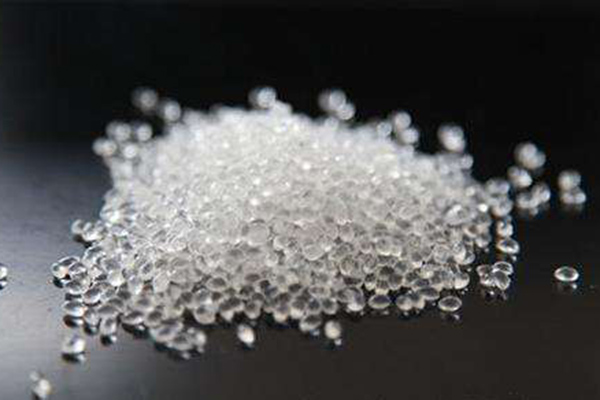
Q-glass roving refers to continuous strands of high-performance glass fibers bundled together without twisting, designed specifically for reinforcement in composite materials. Unlike traditional glass fibers, Q-glass is engineered with optimized chemical composition and fiber structure to enhance tensile properties and resistance to mechanical deformation.
These rovings are typically used in processes such as filament winding, pultrusion, and resin transfer molding, where consistent fiber alignment and load distribution are critical. The uniformity and integrity of Q-glass fibers contribute directly to the mechanical performance of the final composite structure.
Superior Tensile Strength Performance
One of the most significant advantages of Q-glass roving is its outstanding tensile strength. Structural parts reinforced with Q-glass demonstrate high resistance to stretching forces, making them ideal for load-bearing applications.
This superior tensile performance allows engineers to design lighter components without compromising strength. By reducing material weight while maintaining structural integrity, Q-glass composites support energy efficiency and improved overall system performance.
In high-stress environments, such as bridge reinforcements or pressure vessels, the ability of Q-glass roving to withstand continuous tensile loads ensures long-term reliability and safety.
Enhanced Load Distribution and Structural Integrity
Q-glass roving contributes to improved load distribution within composite materials. Its continuous fiber structure allows stress to be evenly transferred across the entire component, minimizing localized stress concentrations that can lead to failure.
This characteristic enhances the structural integrity of parts, especially in complex geometries where uneven load distribution is a common challenge. As a result, components reinforced with Q-glass exhibit greater resistance to cracking and deformation under mechanical stress.
Resistance to Fatigue and Long-Term Durability
In many structural applications, materials are subjected to repeated loading cycles over extended periods. Q-glass roving offers excellent fatigue resistance, enabling components to maintain performance even under cyclic stress conditions.
This durability is particularly valuable in applications such as wind turbine blades, transportation systems, and industrial machinery, where long-term reliability is essential. By reducing the likelihood of fatigue-related failures, Q-glass composites contribute to lower maintenance requirements and extended service life.
Compatibility with Advanced Manufacturing Processes
Q-glass roving is highly compatible with modern composite manufacturing techniques. Its consistent fiber alignment and high wettability with resin systems ensure efficient processing and strong fiber-matrix bonding.
This compatibility enables manufacturers to achieve precise control over material properties and component geometry. Processes such as automated filament winding and pultrusion benefit from the uniformity of Q-glass rovings, resulting in high-quality, repeatable production outcomes.
Thermal Stability and Environmental Resistance
Structural components often operate in environments where temperature fluctuations and exposure to moisture or chemicals can affect performance. Q-glass roving exhibits excellent thermal stability and resistance to environmental factors, maintaining its mechanical properties across a wide range of conditions.
This resilience makes it suitable for outdoor and industrial applications, where materials must withstand harsh operating environments without degradation. The combination of thermal and environmental resistance further enhances the reliability of Q-glass-reinforced structures.
Design Flexibility and Lightweight Advantages
The use of Q-glass roving enables greater design flexibility for engineers and product developers. Its high strength-to-weight ratio allows for innovative structural designs that reduce overall mass while maintaining performance.
Lightweight structures are particularly important in industries such as transportation and aerospace, where reducing weight directly impacts energy efficiency and operational costs. Q-glass composites provide a practical solution for achieving these goals without compromising safety or durability.
Applications Across Industries
Q-glass roving is increasingly being adopted across a wide range of industries. In construction, it is used for reinforcing concrete structures and creating durable composite panels. In automotive and transportation sectors, it contributes to lightweight structural components that enhance fuel efficiency.
In renewable energy, Q-glass plays a critical role in the production of wind turbine blades, where high tensile strength and fatigue resistance are essential. Industrial equipment and marine structures also benefit from its mechanical reliability and environmental resistance.
Q-glass roving represents a significant advancement in composite reinforcement materials, offering exceptional tensile strength, improved load distribution, and long-term durability. Its compatibility with modern manufacturing processes and resistance to environmental factors make it a versatile solution for demanding structural applications.
As industries continue to prioritize performance, efficiency, and sustainability, the adoption of Q-glass roving is expected to expand further. By enabling stronger, lighter, and more reliable structural components, this material plays a crucial role in shaping the future of engineering and advanced manufacturing.
Mar-30-2026