


The ambition to explore the cosmos pushes the boundaries of human engineering. As missions venture farther from Earth, into the harsh and unforgiving environment of deep space, the materials protecting our spacecraft and astronauts become as critical as the propulsion systems that carry them. Among these advanced materials, aerospace quartz fabric stands as a foundational technology, enabling the next generation of exploration vehicles to survive and operate where no human-made object has gone before.
Understanding the Unique Demands of Deep Space
Deep space presents a confluence of extreme conditions not found in Earth orbit or on planetary surfaces. The primary challenges include severe thermal extremes, pervasive micrometeoroid and orbital debris (MMOD) threats, and intense radiation. Temperatures can swing hundreds of degrees between sunlight and shadow. A vehicle might face the blistering heat of a close solar approach and the profound cold of the outer solar system, sometimes simultaneously on different sections of the craft.
Furthermore, beyond the protective magnetosphere of Earth, cosmic and solar radiation poses a significant risk to both onboard electronics and crew health. Any material used on an external surface must therefore be multifunctional, serving as a robust thermal manager, a durable physical shield, and a contributor to overall radiation mitigation strategies.
The Composition and Properties of Aerospace Quartz Fabric
Aerospace quartz fabric is a high-performance textile woven from ultra-pure silica glass fibers. These fibers are derived from high-quality quartz sand, processed to achieve exceptional purity. The resulting material is not a bulk glass pane but a flexible, drapable fabric that can be layered, stitched, and molded into complex shapes.
Its value for deep space exploration stems from a remarkable suite of properties. First, it exhibits outstanding thermal stability, maintaining its strength and flexibility from cryogenic temperatures up to approximately 1100°C. It has an extremely low coefficient of thermal expansion, meaning it does not expand or contract significantly with temperature swings, preventing stress and distortion in composite structures.
Second, it is an excellent thermal insulator. When used as a layer in a Thermal Protection System (TPS) or as a multilayer insulation (MLI) blanket, it effectively regulates the vehicle’s internal temperature. Third, quartz fabric possesses high dielectric strength and low electrical conductivity, making it ideal for protecting sensitive communication and navigation equipment from electromagnetic interference.
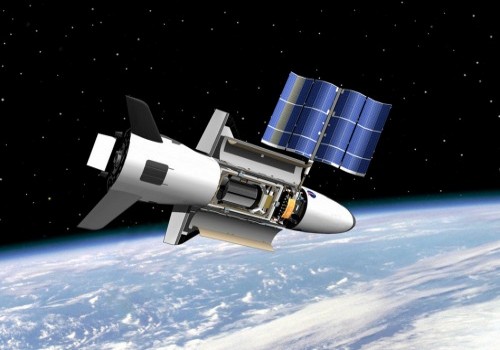
Critical Applications in Exploration Vehicle Design
The application of quartz fabric is integral across multiple systems within a deep space vehicle. One of the most visible uses is within the heatshield for vehicles performing atmospheric entry at other celestial bodies, such as Mars. Here, quartz fibers are often embedded in a composite matrix to create a rigid, ablative, or insulating heatshield that can withstand the intense frictional heating of entry.
For the long-duration cruise phases between planets, flexible blankets made from multiple layers of quartz fabric, often coated with thin metallic films, form the MLI system. These shimmering blankets wrap the spacecraft, reflecting solar radiation and minimizing heat loss, creating a stable thermal environment for instruments and habitation modules.
Beyond thermal management, this fabric serves as a protective layer against MMOD impacts. While not a standalone bumper, its high-strength fibers can be integrated into shielding composites to help disperse the energy of hypervelocity particles. Its radiation transparency is also a calculated benefit; it allows for the strategic placement of other, denser shielding materials where they are most needed without adding unnecessary mass.
Enabling Missions to New Frontiers
The role of quartz fabric is not theoretical; it is proven and evolving. It has been a trusted component on missions for decades, from planetary orbiters to interplanetary landers. As we set our sights on sustained lunar operations, crewed missions to Mars, and robotic explorers to the gas giants, the demands on material performance will only increase.
Future vehicles, such as those designed for Venusian atmospheric probes or solar observatories flying close to the Sun, will rely on enhanced versions of these textiles. Research continues into refining weaves, coatings, and hybrid composites that incorporate quartz fibers to improve toughness, reduce mass, and increase longevity. The goal is to create vehicles that are not only protected but also lighter, allowing for more scientific payload or greater fuel efficiency—a paramount concern for deep-space travel.
A Foundational Material for the Future
In the grand endeavor of deep space exploration, success hinges on managing the profound hostility of the space environment. Aerospace quartz fabric, with its unique combination of thermal resilience, structural integrity, and versatility, has established itself as an indispensable material. It acts as a silent guardian for exploration vehicles, allowing them to traverse the thermal extremes, radiation baths, and microscopic hazards of the void.
As engineering advances, new materials will emerge. However, the fundamental requirements of stability, insulation, and protection will remain. Aerospace quartz fabric, continually refined and innovated, will undoubtedly continue to be a cornerstone technology, woven into the very fabric of the spacecraft that will carry humanity’s curiosity to the farthest reaches of our solar system and beyond.
Jun-15-2026