


Artificial intelligence is transforming the global digital economy, driving unprecedented growth in data processing, cloud computing, and high-performance computing systems. At the heart of this transformation lies a new generation of AI servers that must operate faster, cooler, and more reliably than ever before. As chip performance increases and power densities soar, conventional materials struggle to meet the demanding thermal, electrical, and mechanical requirements of modern data centers.
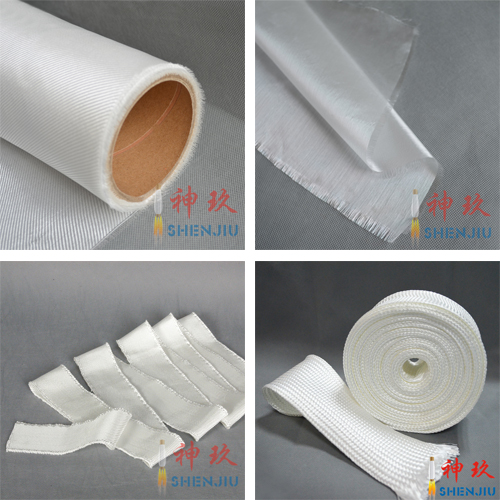
Quartz fiber has emerged as a critical advanced material enabling the next wave of AI infrastructure. Known for its ultra-high purity, low dielectric constant, exceptional thermal stability, and excellent insulation properties, quartz fiber plays a vital role in both AI server hardware and semiconductor advanced packaging technologies. Its adoption is accelerating as manufacturers push toward higher frequencies, greater computing density, and improved reliability.
Why AI Servers Require Next-Generation Materials
AI workloads such as deep learning training and inference place extraordinary stress on hardware systems. Unlike traditional enterprise servers, AI platforms rely heavily on GPUs, specialized accelerators, and high-bandwidth memory, all of which generate substantial heat and electromagnetic interference.
These systems operate at extremely high clock speeds and data transfer rates. As signal frequencies increase, material properties such as dielectric loss, thermal expansion, and electrical insulation become critical to maintaining performance and preventing system failure. Materials used inside servers must also tolerate continuous operation under heavy loads for extended periods.
Quartz fiber addresses these challenges through a unique combination of properties. It maintains structural integrity at high temperatures, resists thermal aging, and provides stable electrical performance even at microwave and millimeter-wave frequencies. This makes it particularly suitable for next-generation AI computing environments.
Thermal Management in High-Density Computing
One of the biggest challenges in AI server design is heat dissipation. High-performance processors can consume hundreds of watts per chip, and densely packed server racks amplify the thermal load. Inefficient heat management leads to throttling, reduced lifespan, and increased energy consumption.
Quartz fiber is widely used in thermal insulation layers, heat shields, and composite components that protect sensitive electronics from extreme temperatures. Its low thermal conductivity helps isolate hot zones, while its high temperature resistance ensures stability during peak workloads.
In advanced cooling architectures, including liquid cooling and immersion systems, quartz fiber materials serve as structural reinforcements and insulating barriers. Because they do not degrade easily under thermal cycling, they contribute to long-term reliability in mission-critical data center operations.
Electrical Insulation and Signal Integrity
Maintaining signal integrity is essential for high-speed data transmission inside AI servers. At multi-gigahertz frequencies, even small electrical losses or interference can degrade performance. Materials used in circuit substrates, cable insulation, and interconnect systems must minimize dielectric loss and prevent crosstalk.
Quartz fiber offers an exceptionally low dielectric constant and low dissipation factor, enabling faster signal propagation with minimal energy loss. This makes it ideal for high-frequency printed circuit boards, high-speed connectors, and communication modules within servers.
Additionally, its excellent electrical insulation properties reduce the risk of short circuits and electromagnetic interference. As server architectures become more compact and densely integrated, these characteristics become increasingly important.
Role in Advanced Semiconductor Packaging
Advanced packaging technologies are essential for achieving higher performance in modern chips. Techniques such as 2.5D and 3D integration, chiplet architectures, and high-bandwidth memory stacking require materials that can maintain dimensional stability and electrical reliability under extreme conditions.
Quartz fiber is used as reinforcement in substrates, interposers, and encapsulation materials. Its low coefficient of thermal expansion closely matches that of silicon, reducing mechanical stress during temperature fluctuations. This compatibility helps prevent warping, delamination, and microcracking in complex multi-chip assemblies.
Furthermore, its high purity minimizes contamination risks, which is critical in semiconductor manufacturing where even trace impurities can affect yield and device performance.
Support for High-Frequency and Optical Communication
AI servers rely on ultra-fast interconnects both within racks and across data centers. Optical transceivers, high-speed cables, and millimeter-wave communication components demand materials with superior electromagnetic performance.
Quartz fiber’s transparency to electromagnetic waves and stability at high frequencies make it suitable for RF components, antenna substrates, and optical modules. It supports the reliable transmission of massive data volumes required for distributed AI training and cloud services.
As networking speeds continue to scale toward terabit levels, materials that minimize signal attenuation and thermal distortion will become increasingly indispensable.
Reliability in Harsh Operating Environments
Data centers operate continuously, often in controlled but demanding environments where equipment failure can result in significant financial loss. Components must withstand thermal cycling, humidity variations, mechanical vibration, and long service lifetimes.
Quartz fiber exhibits outstanding resistance to chemical corrosion, moisture, and aging. It does not easily degrade under ultraviolet radiation or high temperatures, making it suitable for both indoor server hardware and supporting infrastructure systems.
Its mechanical strength also enhances the durability of composite components used in racks, enclosures, and structural supports, contributing to overall system resilience.
Enabling Energy Efficiency and Sustainability
Energy consumption is a major concern for AI infrastructure. Large data centers require enormous amounts of electricity not only for computing but also for cooling systems. Improving material performance can directly influence energy efficiency.
By enhancing thermal management and reducing electrical losses, quartz fiber helps lower the overall power requirements of AI servers. Improved insulation reduces heat leakage, while stable electrical characteristics minimize wasted energy during signal transmission.
Additionally, the long lifespan of quartz fiber components reduces replacement frequency, contributing to lower material waste and lifecycle environmental impact.
Future Outlook for AI Infrastructure Materials
The rapid expansion of artificial intelligence shows no signs of slowing. Emerging applications such as autonomous systems, real-time analytics, generative models, and edge AI will further increase demand for high-performance computing hardware.
As chip technologies move toward smaller process nodes and higher integration density, the importance of advanced materials will only grow. Quartz fiber is well positioned to support these trends due to its unique combination of thermal, electrical, and mechanical advantages.
Ongoing research is exploring improved manufacturing techniques, hybrid composites, and integration with next-generation packaging platforms. These developments are expected to expand its role across the entire AI hardware ecosystem.
Quartz fiber has become a foundational material in the evolution of AI server infrastructure and advanced semiconductor packaging. Its exceptional thermal stability, low dielectric properties, high purity, and mechanical strength address many of the critical challenges posed by high-density, high-speed computing systems.
From thermal management and signal integrity to packaging reliability and energy efficiency, quartz fiber enables the performance and durability required for modern artificial intelligence workloads. As global demand for AI continues to surge, this advanced material will play an increasingly central role in shaping the future of data centers and digital infrastructure.
Mar-24-2026