


As global communication systems advance toward sixth-generation wireless technology, infrastructure requirements are becoming more demanding than ever before. 6G networks are expected to deliver ultra-high data rates, near-instantaneous latency, massive device connectivity, and reliable performance across complex environments. Achieving these capabilities requires not only advanced electronics but also materials that can withstand elevated thermal loads generated by dense signal processing, high-frequency operation, and continuous data transmission.
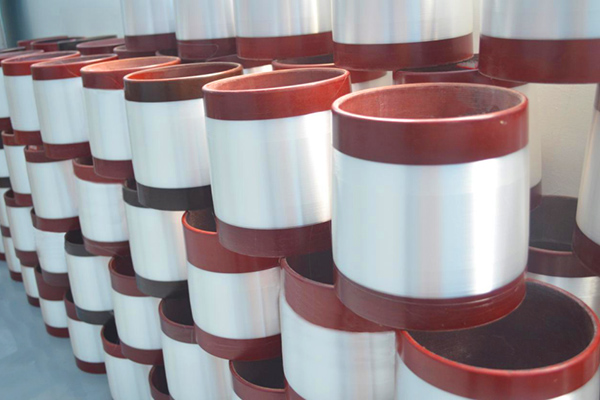
Among the emerging material solutions, quartz fiber yarn has gained significant attention for its exceptional thermal resilience, electromagnetic transparency, and structural stability. Engineered from high-purity silica, this specialized yarn form enables flexible integration into composites, textiles, and structural components used throughout 6G infrastructure. This article explores how quartz fiber yarn supports thermal management and reliability in next-generation communication systems.
Rising Thermal Challenges in 6G Systems
6G infrastructure operates at extremely high frequencies, potentially extending into sub-terahertz bands. Equipment handling such signals generates substantial heat due to power amplification, dense circuitry, and continuous operation. Base stations, antennas, satellite payloads, and edge computing nodes all face thermal stress that can compromise performance if not properly managed.
Environmental exposure further intensifies these challenges. Outdoor installations must endure solar radiation, temperature fluctuations, humidity, and atmospheric contaminants. In urban settings, confined installation spaces may restrict airflow, making passive cooling solutions especially valuable.
Materials used in housings, radomes, insulation layers, and structural supports must therefore maintain integrity and performance despite sustained high temperatures and repeated thermal cycling.
Exceptional Heat Resistance of Quartz Fiber Yarn
Quartz fiber yarn exhibits remarkable thermal stability due to its pure silica composition. It can tolerate temperatures far beyond the limits of many conventional fibers without softening or degrading. This makes it suitable for components located near heat-generating electronics or exposed to direct sunlight for extended periods.
Unlike materials that lose strength as temperatures rise, quartz fiber maintains mechanical integrity, ensuring that structural elements continue to perform reliably. This stability is crucial for maintaining alignment of antennas and electronic assemblies, which directly affects signal quality.
In addition to high-temperature resistance, quartz fiber yarn performs well in low-temperature environments, allowing infrastructure to operate reliably in diverse climates ranging from deserts to polar regions.
Low Thermal Expansion for Dimensional Precision
High-frequency communication systems demand precise geometry. Even small dimensional changes can alter antenna characteristics, signal propagation, or alignment between components. Quartz fiber yarn has an exceptionally low coefficient of thermal expansion, meaning it changes size very little when heated or cooled.
This property helps maintain consistent performance across temperature variations. Structures reinforced with quartz fiber remain stable during daily heating cycles and seasonal fluctuations, preserving calibration and reducing maintenance requirements.
Dimensional stability is particularly important for phased-array antennas and beamforming systems, where exact positioning of elements determines signal direction and efficiency.
Electromagnetic Transparency at High Frequencies
Thermal resilience alone is insufficient for communication infrastructure. Materials must also allow electromagnetic waves to pass through with minimal interference. Quartz fiber yarn excels in this regard due to its low dielectric constant and low signal loss characteristics.
At the extremely high frequencies anticipated for 6G, even small material imperfections can attenuate signals. Quartz fiber’s purity and uniform structure support efficient transmission, making it ideal for radomes, antenna covers, and protective enclosures.
Combining thermal stability with electromagnetic transparency enables reliable operation without compromising performance.
Lightweight Strength for Scalable Deployment
6G networks will involve dense deployment of base stations and antenna systems, including installations on towers, rooftops, vehicles, and aerial platforms. Weight reduction simplifies installation, reduces structural load, and lowers transportation costs.
Quartz fiber yarn offers high tensile strength while remaining lightweight. When woven into fabrics or incorporated into composites, it provides robust reinforcement without adding excessive mass. This advantage is particularly valuable for large antenna arrays and satellite components where every kilogram matters.
Lightweight structures also improve resistance to wind loads and seismic forces, enhancing long-term reliability.
Resistance to Thermal Shock and Cycling
Infrastructure components may experience rapid temperature changes due to weather conditions, power fluctuations, or operational cycles. Thermal shock can cause cracking or delamination in less resilient materials.
Quartz fiber yarn’s combination of low expansion and high thermal tolerance enables it to withstand abrupt transitions without structural damage. Its durability under repeated heating and cooling cycles ensures long service life even in challenging environments.
Reduced degradation translates into lower maintenance costs and improved network uptime, both critical for communication systems expected to operate continuously.
Compatibility with Advanced Composite Designs
Quartz fiber yarn can be integrated into a wide range of composite materials tailored to specific performance requirements. Engineers can design multilayer structures that combine mechanical strength, thermal resistance, and electromagnetic transparency in a single component.
For example, composite panels reinforced with quartz fiber yarn can serve as protective housings that shield electronics from environmental factors while allowing signals to pass freely. This multifunctional capability reduces the need for separate materials and simplifies system design.
Flexible yarn forms also enable complex shapes, supporting innovative antenna architectures and compact installations.
Electrical Insulation and Safety Benefits
In high-power communication equipment, electrical insulation is essential to prevent unintended current flow and ensure operational safety. Quartz fiber yarn possesses excellent insulating properties that remain stable across wide temperature ranges.
Reliable insulation protects sensitive electronics and reduces the risk of electrical interference. It also supports integration with conductive elements used for grounding or shielding, enabling balanced system design.
Performance in Space and High-Altitude Platforms
6G infrastructure is expected to extend beyond terrestrial networks to include satellites, high-altitude platforms, and airborne relays. These environments present extreme temperature variations, radiation exposure, and vacuum conditions.
Quartz fiber yarn performs exceptionally well under such circumstances. Its low outgassing characteristics prevent contamination of sensitive instruments, while its thermal stability ensures consistent performance throughout orbital cycles.
This capability supports the development of integrated space-ground communication systems essential for global 6G coverage.
Sustainability and Long-Term Reliability
Durable materials contribute to sustainability by reducing replacement frequency and resource consumption. Quartz fiber yarn’s resistance to heat, weathering, and aging allows infrastructure to remain operational for extended periods with minimal degradation.
Long service life lowers lifecycle costs and environmental impact associated with manufacturing and installation. As communication networks expand worldwide, durable solutions become increasingly important for responsible development.
Enabling the Future of Ultra-Fast Connectivity
6G technology aims to support applications such as immersive virtual environments, autonomous systems, remote medical procedures, and massive Internet of Things deployments. Achieving these capabilities requires infrastructure that can operate flawlessly under demanding conditions.
Quartz fiber yarn provides the thermal resilience, electromagnetic performance, and structural reliability necessary to support these innovations. Its unique combination of properties enables engineers to design systems that remain stable despite increasing power densities and environmental stresses.
A Foundational Material for 6G Thermal Management
Quartz fiber yarn is emerging as a cornerstone material for next-generation communication infrastructure. Its ability to withstand extreme temperatures, maintain dimensional accuracy, transmit high-frequency signals efficiently, and provide lightweight strength makes it uniquely suited for 6G applications.
By addressing the thermal challenges inherent in ultra-fast wireless systems, quartz fiber yarn helps ensure reliable connectivity, long-term durability, and scalable deployment. As the world moves toward a hyperconnected future, materials with such advanced capabilities will play a vital role in turning the promise of 6G into reality.
Mar-27-2026