


In today’s rapidly evolving industrial landscape, advanced materials play a critical role in improving performance, durability, and efficiency. Q glass cloth has emerged as a valuable reinforcement material used across a wide range of industries due to its excellent thermal resistance, mechanical strength, and electrical insulation properties. As manufacturing technologies advance, the demand for materials that can withstand extreme environments while maintaining structural stability continues to grow.
Q glass cloth is widely recognized for its ability to provide reliable reinforcement in composite materials and insulation systems. Its versatility allows it to be used in aerospace, electronics, automotive manufacturing, construction, and other high performance industries. This article explores the top applications of Q glass cloth in modern industries and highlights why it has become an essential material in advanced engineering and manufacturing processes.
Understanding the Characteristics of Q Glass Cloth
Q glass cloth is produced by weaving high performance glass fibers into a fabric structure that can be easily integrated into composite systems. These fibers are designed to deliver enhanced mechanical strength, heat resistance, and electrical insulation compared with conventional textile materials.
One of the key advantages of Q glass cloth is its high temperature resistance. The material can maintain its structural integrity even when exposed to elevated temperatures for extended periods. Additionally, Q glass cloth has a low dielectric constant, making it suitable for applications that require stable electrical performance.
Another important characteristic is its dimensional stability. The material has a relatively low coefficient of thermal expansion, which allows it to maintain consistent dimensions even when exposed to temperature fluctuations. This property is especially valuable in precision engineering applications where structural accuracy is critical.
Reinforcement Material in Composite Manufacturing
One of the most common uses of Q glass cloth is as a reinforcement material in composite manufacturing. Composite materials combine fibers with resin matrices to create structures that are both strong and lightweight. Q glass cloth provides the reinforcement that improves the mechanical performance of these composites.
Industries that manufacture structural components often rely on Q glass cloth to increase the strength and durability of composite panels and parts. The woven structure of the cloth distributes stress evenly across the material, helping prevent cracks and structural failures.
Composite materials reinforced with Q glass cloth are widely used in industries that require high performance and reliability. These composites can withstand mechanical stress, environmental exposure, and long term operational demands.
Applications in Aerospace Engineering
The aerospace industry requires materials capable of operating under extreme conditions, including high temperatures, mechanical loads, and vibration. Q glass cloth provides an effective solution because it combines heat resistance with strong structural reinforcement.
In aerospace manufacturing, Q glass cloth is often used in composite laminates for aircraft structures and interior components. Its lightweight nature helps reduce the overall weight of aircraft while maintaining structural strength. Lower weight contributes to improved fuel efficiency and enhanced performance.
Q glass cloth is also used in thermal insulation systems that protect sensitive equipment from high temperatures. Aerospace systems frequently encounter rapid temperature changes, and materials must remain stable under these conditions. The thermal stability of Q glass cloth makes it suitable for these demanding environments.
Use in Electrical and Electronic Applications
Electrical insulation is another important application of Q glass cloth. The material provides excellent dielectric properties that make it suitable for use in electrical systems and electronic components.
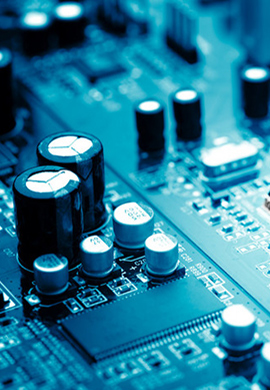
In modern electronics manufacturing, Q glass cloth is often used as a reinforcement layer in insulating laminates and circuit board substrates. Its low dielectric constant helps maintain signal stability in high frequency applications. At the same time, its heat resistance ensures reliable performance even when electronic devices generate significant heat during operation.
These characteristics make Q glass cloth an important material in telecommunications equipment, electronic control systems, and high performance circuit assemblies.
Role in Automotive Manufacturing
The automotive industry continues to adopt advanced materials in order to improve vehicle efficiency, durability, and safety. Q glass cloth plays a role in this transformation by providing reinforcement and heat protection in key vehicle components.
Automotive manufacturers use Q glass cloth in composite structures, insulation materials, and heat shielding systems. Engine compartments, exhaust systems, and braking components generate high levels of heat during operation. Materials used in these areas must be able to tolerate elevated temperatures without losing their performance characteristics.
Q glass cloth helps protect surrounding components from heat damage while also improving the strength of composite structures. Its lightweight properties also contribute to reducing overall vehicle weight, which can improve fuel efficiency and reduce emissions.
Industrial Thermal Insulation Applications
In many industrial environments, thermal insulation is essential for maintaining safe and efficient operations. Equipment such as furnaces, kilns, and high temperature processing systems require materials that can withstand continuous exposure to heat.
Q glass cloth is widely used in industrial insulation products because it can tolerate high temperatures while providing strong structural support. It is commonly integrated into insulation blankets, protective covers, and high temperature sealing systems.
These insulation solutions help reduce energy loss, improve operational safety, and protect equipment from thermal damage. As industries focus on energy efficiency and sustainability, the demand for high performance insulation materials like Q glass cloth continues to increase.
Applications in Construction and Infrastructure
The construction industry also benefits from the properties of Q glass cloth. In building materials, it can be used as reinforcement in composite panels, fire resistant structures, and protective coatings.
Because Q glass cloth offers both mechanical strength and heat resistance, it helps improve the durability of building components exposed to harsh environmental conditions. It is often used in applications where fire resistance and structural stability are important considerations.
In infrastructure projects, materials reinforced with Q glass cloth can provide long term performance while reducing maintenance requirements. This makes the material valuable in modern construction systems designed for reliability and safety.
Advantages of Using Q Glass Cloth in Modern Manufacturing
The growing popularity of Q glass cloth across multiple industries can be attributed to several key advantages. First, the material offers excellent heat resistance, allowing it to perform reliably in high temperature environments. This is essential for applications in aerospace, automotive, and industrial processing systems.
Second, Q glass cloth provides strong mechanical reinforcement while remaining relatively lightweight. This combination is particularly beneficial in industries where reducing weight can improve efficiency and performance.
Third, the material demonstrates strong chemical stability and resistance to environmental factors. This durability allows products made with Q glass cloth to maintain their performance over long periods of use.
Finally, its excellent electrical insulation properties make it suitable for use in electronic and electrical systems where signal integrity and safety are critical.
Future Development of Q Glass Cloth Applications
As technology continues to advance, the demand for high performance materials like Q glass cloth is expected to increase. Research and development efforts are focused on improving fiber quality, weaving techniques, and composite integration methods.
These advancements will enable manufacturers to produce stronger, lighter, and more efficient materials for next generation industrial applications. Emerging technologies such as electric vehicles, renewable energy systems, and advanced aerospace platforms will likely drive further adoption of Q glass cloth.
With continued innovation, Q glass cloth will remain a key material supporting modern manufacturing and engineering solutions.

Q glass cloth plays a vital role in modern industries by providing a unique combination of heat resistance, mechanical strength, electrical insulation, and durability. Its versatility allows it to be used in a wide range of applications, including aerospace engineering, electronics manufacturing, automotive production, industrial insulation, and construction.
As industries continue to pursue higher performance and greater efficiency, materials like Q glass cloth will become increasingly important. By enabling stronger, lighter, and more reliable products, Q glass cloth helps support technological progress and sustainable industrial development.
Mar-12-2026