


Precision manufacturing is entering an era defined by miniaturization, high-frequency performance, and extreme reliability. From semiconductor packaging to advanced electronics and aerospace systems, manufacturers require materials that combine dimensional stability, low dielectric loss, and exceptional mechanical integrity. Ultra-thin Q-Glass cloth has emerged as a critical reinforcement material that meets these stringent demands. Engineered from high-purity silica-based fibers and woven into ultra-fine fabric structures, it enables the production of lightweight, high-performance components with tight tolerances. This article explores the properties, advantages, and applications of ultra-thin Q-Glass cloth in precision manufacturing.
What Is Ultra-Thin Q-Glass Cloth
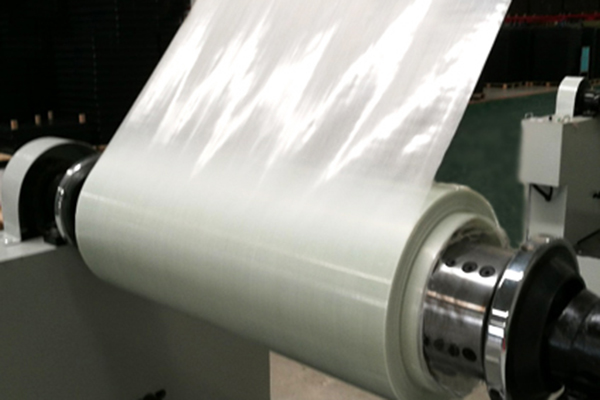
Ultra-thin Q-Glass cloth is a specialized woven fabric made from high-purity quartz-derived fibers, designed with extremely low thickness and high uniformity. The term “ultra-thin” typically refers to fabrics engineered at micron-level thicknesses to support advanced manufacturing requirements.
The material is produced using precision weaving technologies that ensure consistent fiber alignment and minimal variation in thickness. This uniformity is essential for applications where even minor inconsistencies can affect performance.
Its composition provides a combination of low dielectric properties, high thermal resistance, and excellent chemical stability, making it suitable for next-generation manufacturing processes.
Importance in Precision Manufacturing
Precision manufacturing requires materials that can maintain strict dimensional tolerances while supporting high-performance functionality. Ultra-thin Q-Glass cloth addresses these needs by offering both structural reinforcement and functional advantages.
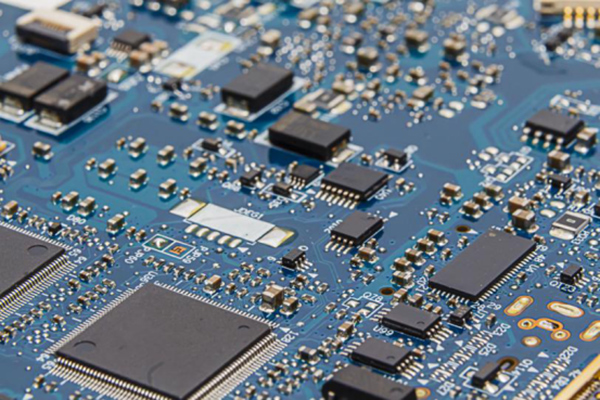
In microelectronics and semiconductor fabrication, the trend toward smaller and more complex devices demands materials that do not interfere with signal transmission or thermal management. Ultra-thin glass cloth enables thinner laminates and more compact designs without compromising performance.
Its ability to integrate seamlessly into composite systems also enhances manufacturing accuracy and repeatability, which are critical in high-volume production environments.
Key Material Properties
Ultra-thin Q-Glass cloth is defined by a set of properties that make it particularly valuable in precision applications.
It features an extremely low dielectric constant and low dissipation factor, which help maintain signal integrity in high-frequency circuits. This is especially important in applications such as high-speed data transmission and RF components.
The material also exhibits outstanding thermal stability, maintaining its structure and performance at elevated temperatures. Its low coefficient of thermal expansion ensures dimensional stability, reducing the risk of warping or misalignment.
Additionally, it offers high tensile strength despite its thin profile, enabling it to provide reliable reinforcement without adding significant weight or thickness.
Advantages in Microelectronics and PCB Manufacturing
In microelectronics and PCB manufacturing, ultra-thin Q-Glass cloth plays a crucial role in enabling advanced designs.
It allows for the production of ultra-thin laminates that support high-density interconnects and multilayer circuit boards. These structures are essential for modern devices that require compact size and high functionality.
The material’s low dielectric loss improves signal transmission efficiency, reducing latency and energy loss. This is particularly important in high-speed computing, telecommunications, and data center applications.
Its smooth and uniform surface also enhances fabrication processes such as etching and lamination, leading to higher production yields and better product consistency.
Role in Aerospace and High-Precision Engineering
Ultra-thin Q-Glass cloth is widely used in aerospace and high-precision engineering due to its ability to perform under extreme conditions.
In aerospace systems, it contributes to lightweight composite structures that maintain strength and stability under thermal and mechanical stress. This is essential for components exposed to rapid temperature changes and high vibration levels.
In precision engineering applications, the material supports the development of components that require exact dimensional control and long-term reliability. Its resistance to environmental factors ensures consistent performance over time.
Manufacturing and Processing Considerations
The integration of ultra-thin Q-Glass cloth into manufacturing processes requires careful attention to detail.
Handling must be controlled to prevent damage to the delicate fabric structure. Precision cutting, alignment, and layering are essential to maintain uniformity.
Compatibility with resin systems is another key consideration. Proper resin selection ensures optimal bonding and enhances the mechanical and electrical properties of the final composite.
Advanced manufacturing techniques, such as automated layup and controlled curing processes, are often used to achieve consistent results and high-quality output.
Comparison with Conventional Glass Fabrics
Compared to conventional glass fabrics, ultra-thin Q-Glass cloth offers significant performance advantages in precision applications.
Its thinner profile enables the creation of lighter and more compact components. Traditional fabrics, with greater thickness and variability, may limit design flexibility in high-precision environments.
The superior dielectric properties of Q-Glass cloth also make it more suitable for high-frequency applications, where signal integrity is critical.
Furthermore, its enhanced thermal and dimensional stability ensures better long-term performance, especially in demanding conditions.
Emerging Trends and Innovations
The demand for ultra-thin materials is expected to grow as industries continue to push the boundaries of miniaturization and performance.
Emerging technologies such as 6G communication, advanced semiconductor packaging, and high-frequency sensing systems will require materials with even tighter tolerances and improved electrical properties.
Research is ongoing to further refine the structure and performance of Q-Glass cloth, including the development of hybrid materials and advanced weaving techniques.
These innovations aim to expand its application range and improve cost efficiency, making it more accessible for a wider range of industries.
Ultra-thin Q-Glass cloth represents a significant advancement in materials for precision manufacturing. Its combination of low dielectric loss, high thermal stability, and strong mechanical performance makes it an essential component in modern high-tech applications.
As industries continue to demand higher performance and greater precision, the role of ultra-thin Q-Glass cloth will become increasingly important. Its ability to support advanced manufacturing processes and enable next-generation technologies positions it as a key material for the future.
Apr-16-2026