


In the rapidly evolving landscape of advanced materials, the demand for composites that offer exceptional strength-to-weight ratios without compromising on cost or processability has never been higher. Among the emerging contenders in this space, q-glass fiber has garnered significant attention from engineers, material scientists, and industry leaders. Unlike traditional E-glass or even high-performance S-glass, q-glass represents a distinct class of non-crystalline glass fiber designed to bridge the gap between standard reinforcement and expensive carbon fiber.
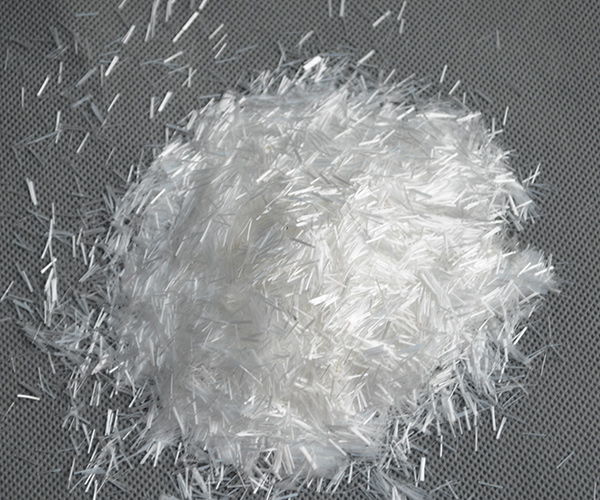
Understanding the Unique Composition of q-glass Fiber
To truly appreciate the mechanical prowess of q-glass fiber, one must first understand its fundamental composition. Traditional glass fibers are often crystalline or semi-crystalline in nature, which can introduce microscopic stress concentrators that limit their ultimate strength. In contrast, q-glass fiber is engineered as a completely non-crystalline, isotropic material. This lack of crystallinity means that the atomic structure is uniform in all directions, eliminating weak points that typically arise at grain boundaries in other materials.
The manufacturing process of q-glass fiber involves a specialized melting and drawing technique that ensures a homogeneous distribution of silica and other oxides. This results in a fiber that is not only incredibly strong but also highly consistent in its properties. For material scientists, this isotropy is a game-changer. It means that the mechanical response of the material is predictable regardless of the orientation of the load, a critical factor in complex engineering applications where stress vectors are multidirectional. The absence of crystalline phases also contributes to superior chemical resistance, as there are no grain boundaries for corrosive agents to penetrate, further enhancing the longevity of components made with q-glass fiber.
Exceptional Tensile Strength and Stiffness Characteristics
The headline feature of q-glass fiber is its extraordinary tensile strength. When compared to conventional E-glass, q-glass fiber demonstrates a significant increase in tensile load capacity, often approaching levels previously reserved for S-glass or entry-level carbon fiber variants. This high tensile strength allows engineers to design lighter structures without sacrificing safety margins. In practical terms, a component reinforced with q-glass fiber can withstand greater pulling forces before failure, making it ideal for applications subject to dynamic loading conditions.
Furthermore, the stiffness, or modulus of elasticity, of q-glass fiber is optimized to provide excellent dimensional stability. While it may not match the ultra-high modulus of premium carbon fiber, it offers a superior balance between stiffness and toughness compared to other glass variants. This balance is crucial because materials that are too stiff can become brittle and prone to catastrophic failure under impact. q-glass fiber maintains a level of flexibility that allows it to absorb energy effectively, distributing stress across the composite matrix rather than concentrating it at a single point. This characteristic is particularly valuable in automotive and aerospace sectors, where crashworthiness and impact resistance are paramount safety considerations.
Impact Resistance and Fatigue Life Performance
Beyond static strength, the dynamic mechanical properties of q-glass fiber set it apart in demanding environments. One of the most compelling advantages of this material is its superior impact resistance. Traditional glass fibers can suffer from micro-cracking upon impact, which can propagate and lead to structural failure over time. The unique non-crystalline structure of q-glass fiber mitigates this risk by providing a more ductile failure mode. Instead of shattering, the fiber tends to deform slightly, absorbing the kinetic energy of the impact and protecting the integrity of the surrounding matrix.
Fatigue life is another critical metric where q-glass fiber excels. In applications involving repetitive loading and unloading cycles, such as wind turbine blades, suspension components, or rotating machinery, materials are susceptible to fatigue failure. Extensive testing has shown that composites reinforced with q-glass fiber exhibit extended fatigue life compared to standard glass fiber composites. The homogeneous structure prevents the initiation and propagation of fatigue cracks, ensuring that components remain reliable over longer operational periods. This durability translates directly into reduced maintenance costs and increased uptime for industrial operators, making q-glass fiber a cost-effective solution for long-term projects.
Thermal Stability and Environmental Durability
Mechanical performance is not solely about strength; it is also about maintaining that strength under varying environmental conditions. q-glass fiber demonstrates remarkable thermal stability, retaining its mechanical properties across a wide temperature range. Whether exposed to the intense heat of an engine bay or the freezing conditions of high-altitude flight, q-glass fiber maintains its structural integrity. This thermal resilience is attributed to its high silica content and stable amorphous structure, which resists thermal expansion and contraction stresses that can degrade other materials.
Moreover, the environmental durability of q-glass fiber extends to its resistance against moisture and chemical exposure. In marine environments or chemical processing facilities, moisture absorption can plasticize the resin matrix and weaken the fiber-matrix interface, leading to delamination. q-glass fiber’s dense, non-porous surface minimizes moisture uptake, preserving the bond between the fiber and the matrix. This ensures that the mechanical performance remains consistent even after prolonged exposure to harsh elements, reinforcing its status as a reliable choice for infrastructure and heavy industry application
Real-World Applications and Future Outlook
The superior mechanical profile of q-glass fiber has led to its adoption in a diverse array of industries. In the automotive sector, manufacturers are utilizing q-glass fiber to produce lighter body panels and chassis components, contributing to improved fuel efficiency and reduced emissions without compromising crash safety. In the renewable energy sector, wind turbine blade manufacturers are leveraging its fatigue resistance to create longer, more efficient blades that can withstand decades of cyclic loading. Additionally, the sports and recreation industry is exploring q-glass fiber for high-performance equipment like bicycle frames and tennis rackets, where the blend of strength, light weight, and vibration damping is highly valued.
Looking ahead, the potential for q-glass fiber continues to expand as manufacturing processes become more refined and cost-effective. As industries strive for sustainability, the durability and longevity of q-glass fiber composites align perfectly with the goal of creating longer-lasting products that reduce waste. With ongoing research focused on optimizing resin compatibility and hybridization with other fibers, q-glass fiber is poised to become a cornerstone material in the next generation of high-performance composites. Its ability to deliver carbon-fiber-like performance at a fraction of the cost positions it as a transformative force in materials engineering, unlocking new possibilities for design and innovation.
Mar-20-2026