


Untreated quartz wool is a high-purity fibrous material widely used in thermal insulation, filtration systems, aerospace components, and high-temperature industrial environments. Its naturally formed silica-based structure allows it to maintain stability under extreme heat conditions while providing excellent thermal resistance and low thermal conductivity. In bulk supply form, it is commonly used by manufacturers who require flexible processing options for customized applications.
The value of untreated quartz wool lies in its adaptability. Since it has not undergone additional surface treatment, it can be processed, shaped, or combined with other materials according to specific engineering requirements. This flexibility makes it suitable for industries that prioritize precision material design and performance optimization.
Bulk Supply Characteristics and Handling Considerations
When supplied in bulk, untreated quartz wool is typically packaged in compressed or loose fiber form to accommodate large-scale industrial usage. This allows manufacturers to efficiently integrate the material into production lines without excessive preparation steps. The bulk form also supports cost-efficient logistics and scalable production planning.
Handling practices are important to maintain fiber integrity. Proper storage in dry, clean environments helps preserve material purity and prevents contamination from external particles. In industrial workflows, controlled handling ensures that the fibrous structure remains consistent, which is essential for maintaining thermal and mechanical performance in final applications.
Because untreated quartz wool is highly flexible in its raw form, it can be cut, layered, or molded into various shapes depending on application requirements. This adaptability supports its use across multiple engineering domains, from insulation pads to high-temperature sealing components.
Quality Inspection Principles for Reliable Material Selection
Quality inspection plays a central role in ensuring that untreated quartz wool meets industrial expectations. One of the primary evaluation factors is fiber uniformity. Consistent fiber distribution contributes to stable thermal insulation performance and structural reliability in application environments.
Purity level is another essential factor. High-quality quartz wool typically features minimal impurities, ensuring stable behavior under elevated temperatures. This is particularly important in precision industries where material consistency directly affects system performance.
Visual inspection is commonly used to assess fiber texture, color uniformity, and structural integrity. A clean and evenly distributed fiber network indicates well-processed raw material. In addition, density evaluation helps determine whether the material meets specific application requirements, especially in high-temperature insulation systems.
Moisture control is also an important aspect of quality assessment. Properly stored quartz wool maintains low moisture content, which helps preserve thermal efficiency and prevents performance variation during operation.
Application Matching Across High-Temperature Industries
Untreated quartz wool is widely used across industries that require reliable thermal management solutions. In aerospace engineering, it is often applied in thermal shielding systems where materials must withstand extreme temperature fluctuations while maintaining structural stability.
In industrial furnace construction, quartz wool serves as an effective insulating layer that helps reduce heat loss and improve energy efficiency. Its lightweight structure allows for easy installation in complex furnace geometries while maintaining strong thermal resistance.
In filtration systems, the fibrous structure of quartz wool enables efficient particle capture while maintaining airflow. This makes it suitable for high-temperature gas filtration and specialized industrial processing environments.
It is also commonly used in laboratory equipment and scientific instruments where controlled thermal environments are necessary. The material’s stability ensures consistent performance in sensitive experimental conditions.
Processing Flexibility and Integration Potential
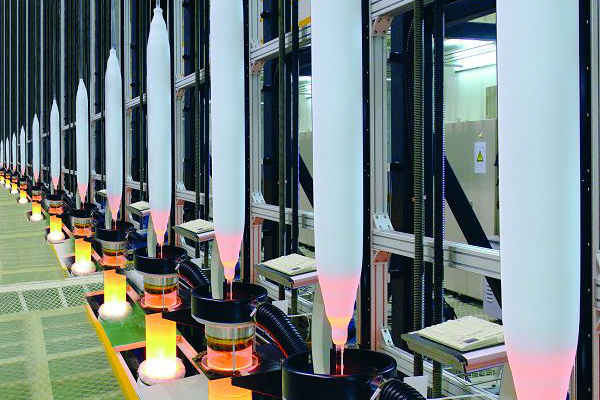
One of the key advantages of untreated quartz wool is its processing flexibility. Manufacturers can customize the material into sheets, mats, or composite structures depending on application needs. This adaptability allows seamless integration into different production systems without requiring extensive modification.
When combined with binding agents or reinforcing materials, quartz wool can enhance mechanical strength while retaining its thermal properties. This makes it suitable for engineered components that require both durability and heat resistance.
Its compatibility with various industrial processing techniques also supports its use in automated manufacturing environments. This ensures efficient scaling from prototype development to mass production without compromising material performance.
Performance Stability in High-Temperature Environments
Quartz wool is particularly valued for its ability to maintain stable performance under prolonged exposure to high temperatures. Its silica-based composition allows it to resist deformation and structural breakdown even in demanding thermal conditions.
The low thermal conductivity of the material helps reduce heat transfer, making it an effective insulating solution in energy-intensive systems. This contributes to improved thermal management and operational efficiency in industrial applications.
In environments with rapid temperature changes, quartz wool maintains structural consistency, which is essential for systems that require reliable thermal cycling performance. This stability supports long-term usage in critical industrial operations.
Strategic Value in Industrial Material Planning
From a production planning perspective, untreated quartz wool offers significant strategic value due to its versatility and scalability. Bulk availability ensures that manufacturers can maintain continuous production cycles without material shortages or interruptions.
Its adaptability across multiple industries reduces the need for specialized materials for each application, streamlining procurement and inventory management processes. This contributes to more efficient resource allocation and production planning.
The material’s combination of thermal stability, processing flexibility, and broad application range makes it a reliable choice for long-term industrial development strategies.
Untreated quartz wool in bulk supply form provides a highly adaptable solution for industries requiring advanced thermal performance and flexible material processing. Through careful quality inspection and proper application matching, it can be effectively integrated into a wide range of industrial systems. Its stability, versatility, and scalability make it an essential material in modern engineering environments where precision and reliability are key priorities.
Jun-23-2026