


Quartz glass wool has emerged as a critical material in industries that demand exceptional purity, thermal stability, and chemical resistance. From advanced electronics to aerospace insulation, its unique structure and composition make it a preferred solution where contamination control and performance consistency are essential. Understanding what sets quartz glass wool apart requires a closer look at its raw materials, manufacturing process, intrinsic properties, and real-world applications. This article explores the key factors that make quartz glass wool a high-purity choice and why it continues to gain importance across high-tech sectors.
The Foundation of Purity: High-Quality Raw Materials
The purity of quartz glass wool begins with its primary raw material: natural quartz crystal or high-grade silica sand. These materials are selected based on extremely low impurity levels, particularly with respect to metallic elements such as iron, aluminum, and alkali metals.
Unlike conventional glass wool, which may incorporate recycled glass or mixed raw inputs, quartz glass wool relies on carefully refined silica sources. This ensures that the final product maintains a purity level often exceeding 99.9% silicon dioxide (SiO₂). The absence of contaminants is crucial for applications where even trace impurities can affect electrical performance, optical clarity, or chemical stability.
Advanced Manufacturing Processes
The production of quartz glass wool involves high-temperature melting and fiberization processes that are tightly controlled to preserve material purity. The raw quartz is melted at temperatures exceeding 1700°C, forming a homogeneous molten phase.
This molten quartz is then drawn or spun into fine fibers using specialized equipment designed to minimize contamination. During this stage, strict environmental controls are maintained to prevent the introduction of airborne particles or foreign substances.
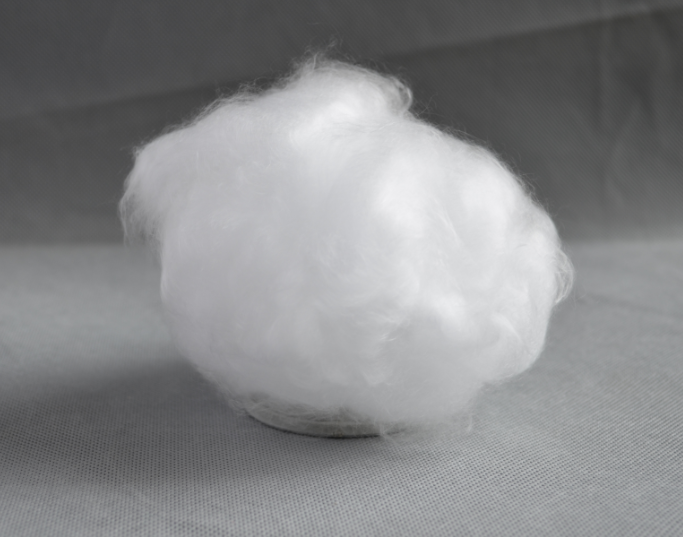
Additionally, the process avoids the use of binders or additives that could compromise purity. The result is a fibrous material composed almost entirely of pure silica, with a consistent microstructure and minimal defects.
Exceptional Chemical Stability
One of the defining characteristics of quartz glass wool is its outstanding resistance to chemical reactions. Pure silica fibers are inherently inert, meaning they do not easily react with acids, alkalis, or solvents.
This chemical stability is particularly valuable in environments where materials are exposed to corrosive substances or extreme conditions. Quartz glass wool maintains its integrity over long periods, reducing the risk of contamination or degradation.
Furthermore, the absence of reactive impurities ensures that the material does not release unwanted ions or particles, making it suitable for sensitive applications such as semiconductor manufacturing and laboratory insulation.
Superior Thermal Performance
Quartz glass wool is known for its excellent thermal resistance, which is directly linked to its high purity. The material can withstand continuous operating temperatures above 1000°C without significant structural changes.
Its low thermal conductivity also makes it an effective insulating material. The fine fiber network traps air, reducing heat transfer and enhancing energy efficiency. This combination of high-temperature stability and insulation performance is essential in industries such as aerospace, metallurgy, and high-temperature processing.
Unlike lower-purity materials, quartz glass wool does not soften or degrade easily under heat, ensuring long-term reliability in demanding environments.
Low Dielectric Properties
Another advantage of quartz glass wool is its low dielectric constant and excellent electrical insulation properties. High-purity silica does not conduct electricity, making it ideal for applications in electronics and telecommunications.
In high-frequency and high-voltage environments, materials must maintain stable electrical properties to prevent signal loss or interference. Quartz glass wool meets these requirements due to its uniform composition and lack of conductive impurities.
This makes it particularly valuable in advanced communication systems, including those used in emerging technologies where precision and reliability are critical.
Minimal Outgassing and Contamination Risk
In high-purity environments, such as cleanrooms or vacuum systems, material outgassing can be a significant concern. Quartz glass wool exhibits extremely low outgassing characteristics due to its inorganic and impurity-free nature.
This means it does not release volatile compounds or particles that could contaminate sensitive processes. As a result, it is widely used in applications where maintaining a clean environment is essential, including semiconductor fabrication and optical device manufacturing.
The stability of quartz glass wool under vacuum conditions further enhances its suitability for advanced scientific and industrial uses.
Mechanical Strength and Fiber Integrity
Despite its lightweight and fibrous structure, quartz glass wool offers impressive mechanical strength. The fibers are resistant to breakage and maintain their integrity even under thermal cycling and mechanical stress.
This durability ensures that the material retains its insulating and protective properties over time. It also reduces the generation of dust or loose particles, which could otherwise compromise purity in controlled environments.
The consistent fiber diameter and structure contribute to predictable performance, making quartz glass wool a reliable choice for precision applications.
Wide Range of High-Tech Applications
The unique combination of purity, thermal stability, and chemical resistance makes quartz glass wool suitable for a broad range of industries.
In the semiconductor industry, it is used for insulation in high-temperature processing equipment, where contamination must be minimized. In aerospace, it serves as a lightweight thermal barrier capable of withstanding extreme conditions.
It is also widely used in laboratory settings, optical systems, and advanced manufacturing processes where material performance directly impacts product quality. As industries continue to evolve, the demand for high-purity materials like quartz glass wool is expected to grow.
Environmental and Long-Term Performance Benefits
Quartz glass wool is not only high-performing but also environmentally stable. Its inorganic composition means it does not degrade into harmful substances over time. It is resistant to moisture, UV radiation, and biological activity, ensuring long-term reliability.
Additionally, its durability reduces the need for frequent replacement, contributing to lower lifecycle costs and improved sustainability. These characteristics make it an attractive option for industries seeking both performance and environmental responsibility.
Quartz glass wool stands out as a high-purity material due to its carefully selected raw materials, advanced manufacturing processes, and exceptional physical and chemical properties. Its ability to maintain performance under extreme conditions while minimizing contamination risks makes it indispensable in modern high-tech applications.
As industries continue to push the boundaries of technology, the need for materials that combine purity, stability, and reliability will only increase. Quartz glass wool is well-positioned to meet these demands, offering a dependable solution for the most challenging environments.
Apr-28-2026