


As electronic systems continue to operate at higher frequencies and faster data rates, material selection has become a critical factor in achieving signal integrity and system reliability. One of the most important parameters in high-frequency design is the dissipation factor, often referred to as DF. Low DF quartz fiber has emerged as a highly effective material for reducing signal loss and maintaining stable performance in advanced electronic applications.
This article explores the role of low DF quartz fiber in high-frequency design, focusing on its properties, benefits, and practical applications across modern industries.
Understanding Dissipation Factor in High-Frequency Systems
The dissipation factor is a measure of how much electromagnetic energy is lost as heat when a material is exposed to an alternating electric field. In high-frequency circuits, especially those operating in microwave or millimeter-wave ranges, even small losses can significantly impact performance.
Materials with a low dissipation factor minimize energy loss, allowing signals to travel with higher efficiency and reduced attenuation. This is essential for maintaining signal clarity, reducing distortion, and ensuring reliable communication in complex electronic systems.
What Is Low DF Quartz Fiber
Low DF quartz fiber is a high-purity material made primarily from silicon dioxide, engineered to exhibit extremely low dielectric loss. It is produced through advanced processing techniques that ensure minimal impurities and a highly uniform fiber structure.
These fibers can be integrated into composite materials, laminates, and insulation systems used in high-frequency electronic designs. Their low dissipation factor makes them particularly valuable in applications where signal performance is critical.
Key Material Properties
Low DF quartz fiber offers a combination of electrical, thermal, and mechanical properties that support high-frequency applications. It has excellent dielectric characteristics, including low dielectric constant and extremely low loss tangent.
The material also demonstrates strong thermal stability, allowing it to perform consistently across a wide temperature range. Its low thermal expansion ensures dimensional stability, which is important for maintaining precise circuit geometries.
Additionally, quartz fiber provides high chemical resistance and long-term durability, ensuring stable performance in demanding environments.
Importance in High-Frequency Circuit Design
In high-frequency circuit design, signal integrity is a primary concern. Losses caused by dielectric materials can degrade signal quality, leading to reduced performance and potential system instability.
Low DF quartz fiber helps minimize these losses, enabling efficient signal transmission even at very high frequencies. This makes it particularly useful in applications such as radio frequency circuits, high-speed digital systems, and advanced communication devices.
By reducing dielectric loss, designers can achieve better impedance control, lower insertion loss, and improved overall system efficiency.
Applications in Printed Circuit Boards
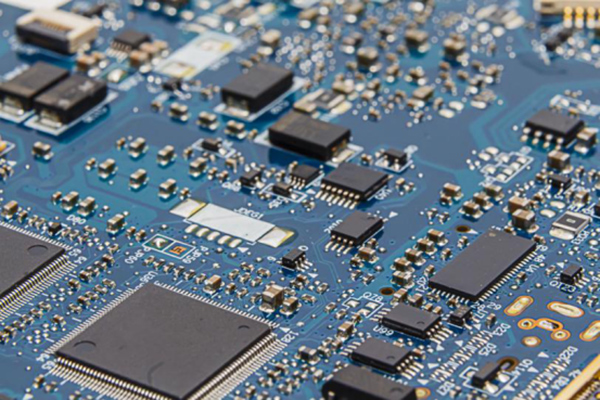
One of the key applications of low DF quartz fiber is in the manufacturing of high-performance printed circuit boards. It is often used as a reinforcement material in laminates designed for high-frequency operation.
Its low dielectric loss contributes to improved signal propagation, making it suitable for multilayer boards and complex routing designs. This is especially important in systems that require precise timing and minimal signal distortion.
Role in 5G and Advanced Communication Systems
The development of 5G and next-generation communication technologies has increased the demand for materials that can support higher frequencies and faster data transmission.
Low DF quartz fiber plays a significant role in these systems by enabling low-loss signal transmission and maintaining performance at elevated frequencies. Its stability ensures consistent operation in base stations, antennas, and communication modules.
Use in Aerospace and Radar Systems
Aerospace and radar systems operate in environments where both high-frequency performance and environmental stability are required. Low DF quartz fiber is used in these systems to support reliable signal transmission.
Its resistance to temperature variations and environmental stress makes it suitable for applications such as radar components, satellite communication systems, and avionics.
Thermal and Mechanical Advantages
In addition to its electrical properties, low DF quartz fiber offers excellent thermal and mechanical performance. It can withstand high temperatures without degradation, ensuring consistent operation in demanding conditions.
Its mechanical strength provides structural support in composite materials, while its low expansion helps maintain dimensional accuracy. These characteristics are essential for high-frequency designs that require precision and reliability.
Benefits for Signal Integrity and Efficiency
Using low DF quartz fiber in high-frequency systems provides several advantages. It reduces signal attenuation, allowing for longer transmission distances without significant loss.
It also improves signal clarity by minimizing distortion and noise. This leads to better system performance, higher data rates, and more reliable communication.
These benefits are particularly valuable in applications where performance margins are tight and precision is critical.
Integration into Advanced Materials
Low DF quartz fiber is often incorporated into advanced composite materials and substrates used in electronic systems. It can be combined with resins and other materials to create laminates with optimized electrical and mechanical properties.
This flexibility allows engineers to design materials that meet specific performance requirements, enabling innovation in high-frequency technology.
Selection Considerations
When selecting low DF quartz fiber for high-frequency applications, several factors should be considered. These include dielectric properties, fiber purity, compatibility with matrix materials, and thermal performance.
Ensuring that these characteristics align with the application requirements is essential for achieving optimal results. Careful material selection helps maximize performance and reliability.
Future Trends in High-Frequency Materials
As technology continues to advance, the demand for materials that support higher frequencies and faster data rates will continue to grow. Low DF quartz fiber is well positioned to meet these challenges due to its unique combination of properties.
Ongoing research and development are expected to further enhance its performance and expand its use in emerging technologies such as advanced wireless systems and high-speed computing.
Low DF quartz fiber plays a crucial role in modern high-frequency design by enabling low-loss signal transmission and maintaining system stability. Its exceptional electrical, thermal, and mechanical properties make it an ideal material for applications that require precision and reliability.
From printed circuit boards to advanced communication systems, low DF quartz fiber continues to support the development of high-performance electronic technologies. Its importance will only increase as industries move toward faster, more efficient, and more complex systems.
Apr-27-2026